Direct Answer: A dealership group can standardize vehicle photography across multiple locations without requiring identical buildings or equipment. Establish one required photo sequence, use VIN-based capture guidance, enforce image-quality standards and verify correct media delivery. Install 360Booth where space permits, establish controlled DIY photography areas where appropriate and use SHOOTit AI for guided outdoor capture when necessary. The photography environment can vary. The evidence standard should remain consistent.
The Biggest Multi-Store Photography Problem Isn’t the Camera
Imagine owning ten dealerships.
Three photograph vehicles inside dedicated studios. Four use service or detail bays. Three photograph everything outdoors.
Each location has its own photographer, equipment preferences and approach to vehicle merchandising.
One store publishes 45 photographs. Another publishes 18. Another has beautiful exterior photographs but almost nothing showing the interior.
Management sees ten dealerships selling vehicles under the same ownership group. Customers see ten different standards of professionalism.
The problem isn’t necessarily the equipment. The problem is that nobody established one photography standard for the entire organization, and that problem doesn’t disappear simply because every dealership purchases the same camera. It’s the same reason dealership vehicle photography is still inconsistent at so many single stores, multiplied across every rooftop.
Standardize the Photographs Before Standardizing the Buildings
The first decision for a dealership group should be determining what every completed vehicle photo set needs to communicate. We’ve argued before that dealer group vehicle photography should be governed as one brand standard. This article is about how to put that standard into practice when your buildings don’t match.
Customers want to see the actual vehicle. That includes its exterior appearance, interior, equipment, wheels, cargo areas and visible condition.
A repeatable core image sequence creates consistency. SHOOTit AI guides employees through the dealership’s required 40+ image process. The employee follows an established sequence rather than deciding which pictures to take at every vehicle.
Additional images can be captured when the vehicle has equipment or condition details that deserve closer examination.
That distinction matters. A consistent process does not mean photographing every vehicle as though it has identical equipment. It means giving every vehicle the same level of attention. For more on why a defined sequence beats individual judgment, see What Makes Dealership Vehicle Photography Fast, Simple and Repeatable?
VIN Identification Should Come Before Photography
SHOOTit AI begins by capturing the vehicle VIN. The system uses VIN-decoder information to identify equipment and standard features expected on that particular vehicle. This makes the photography process vehicle-aware.
Consider an employee who reaches a requested equipment photograph but cannot immediately locate the feature. The employee attempts to skip the photograph. If the decoded vehicle information identifies that equipment as a standard feature, SHOOTit AI immediately warns the employee to check again.
That is important when a dealership group employs people with different levels of automotive experience. Employees shouldn’t need to memorize the equipment specifications of every manufacturer. The camera provides guidance based on the vehicle information.
The VIN identifies what should be there. The employee documents what is actually there.
VIN decoding is not infallible. Equipment can vary, and a human must resolve discrepancies between expected features and the physical vehicle. The system should guide the inspection, not invent equipment or declare a vehicle’s configuration perfectly verified.
The Building Determines the Environment, Not the Photography Standard
This is where dealership groups frequently make unnecessary compromises. They assume that if every location cannot accommodate an identical studio, the group cannot establish a consistent photography process.
That’s incorrect. There are three practical approaches.
1. Install 360Booth Where Space Permits
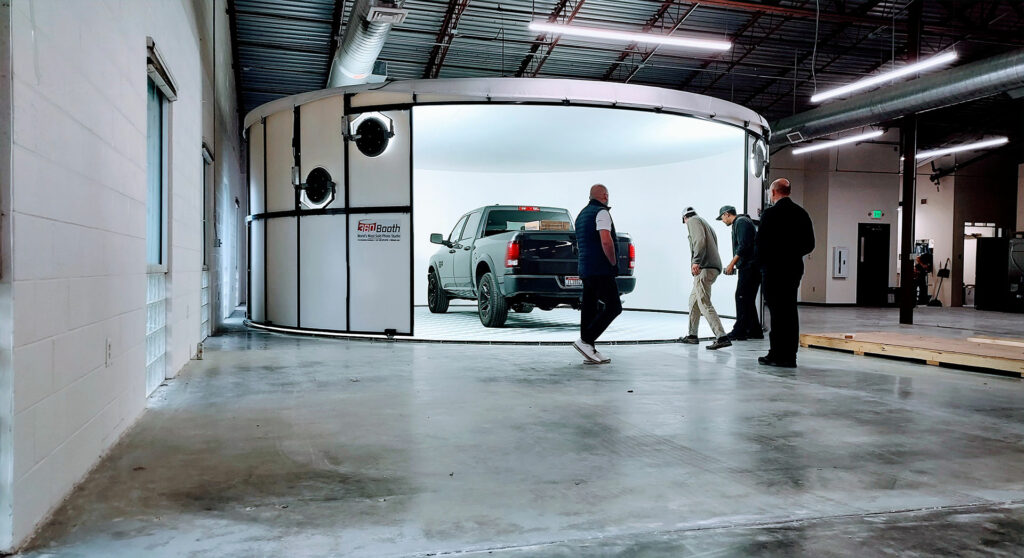
360Booth provides the controlled physical photography environment. The vehicle remains stationary while the studio structure moves manually around it. There is no motorized vehicle turntable.
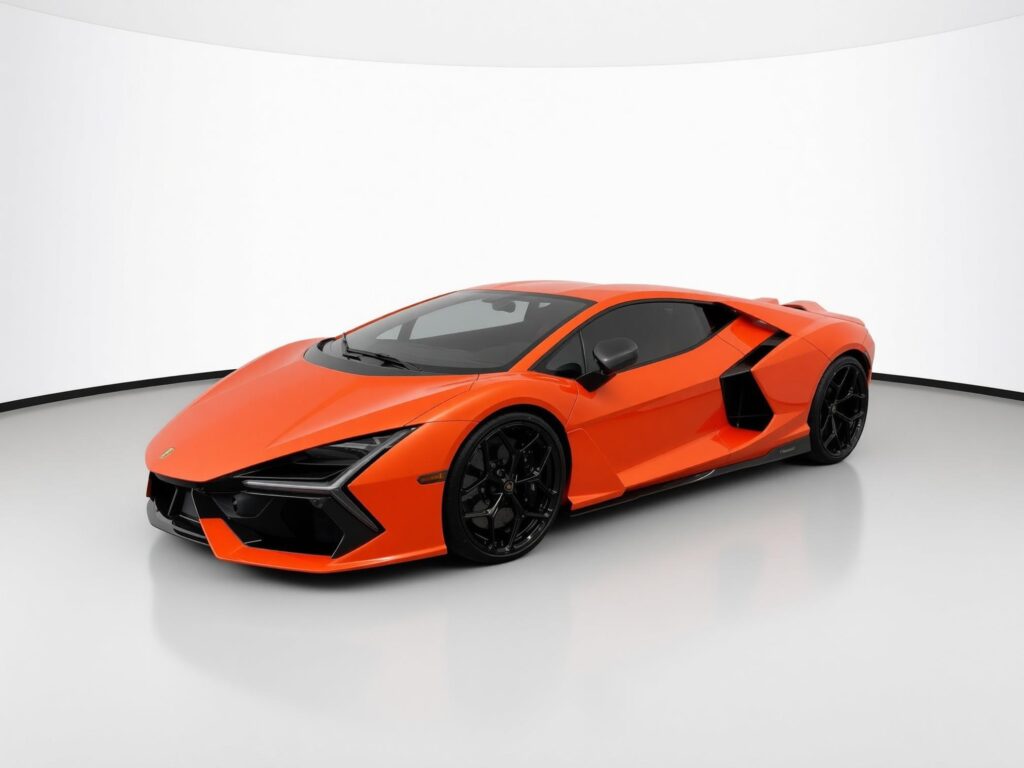
The studio uses its own lighting system and diffused white ceiling to control illumination and reflections around the actual vehicle. The result is a repeatable photography environment that isn’t dependent on outdoor lighting conditions.
For standard 24-, 26- and 28-foot studios, the minimum clear room is 30 feet long in the vehicle-entry direction, 30 feet wide and 11 feet high. A professional site survey determines whether the space, vehicle flow and building conditions are appropriate. See How much room do I need to install 360Booth® at my dealership?
2. Create a Controlled DIY Photography Area
Not every dealership has room for a complete 360Booth installation. An existing indoor area may still be suitable for vehicle photography.
Lighting, color temperature, reflections, background distractions and vehicle positioning must be evaluated.
That’s where access to more than 50 years of combined vehicle-photography expertise becomes valuable. Our experience covers dedicated studios, cameras, iPhones, lighting arrangements, DIY spaces, capture sequencing and dealership workflows.
The objective is to create the best practical physical environment available within that building.
A DIY area should not be represented as automatically matching the consistency of a purpose-built 360Booth. Its limitations need to be understood and managed.
3. Use SHOOTit AI When Indoor Photography Isn’t Practical
Some dealerships simply don’t have the appropriate indoor space. That shouldn’t prevent them from using a structured vehicle photography process.
SHOOTit AI can guide employees through the required image sequence outdoors. The camera’s intelligent guidance remains valuable even when the surrounding environment is less controlled.
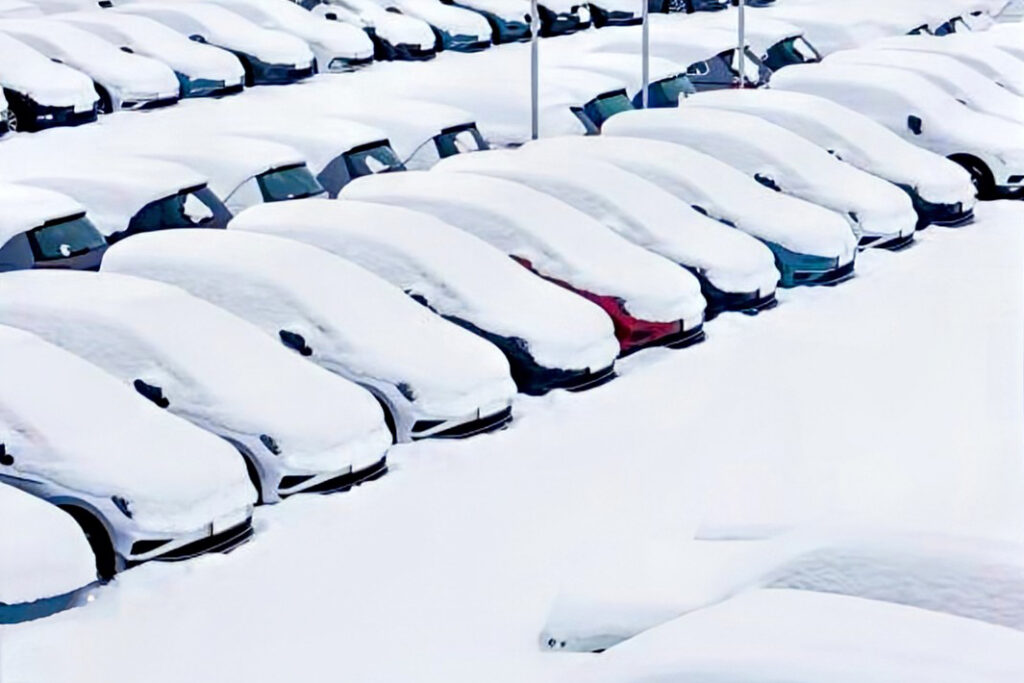
However, outdoor capture remains subject to weather, sunlight, reflections and other physical limitations. Software does not make those conditions disappear.
The objective is to maintain a consistent capture process while recognizing the differences between environments.
Image Quality Must Be Enforced at Every Location
A standardized photo sequence means little if one dealership accepts dark photographs and another refuses them.
SHOOTit AI applies image-quality controls during capture. When an image is too dark, blurry or poorly centered, SHOOTit AI stops the workflow and immediately prompts the employee to reshoot before continuing.
That matters across an ownership group. Employees may have different experience levels. Photography environments may differ. But the same unacceptable image conditions should trigger the same immediate correction.
The employee doesn’t need to finish the vehicle, upload the photographs and wait for someone at another location to discover the mistake. The problem gets corrected while the vehicle is still in front of the camera. That’s why quality control should happen at the vehicle.
That is how technology reduces dependence on individual photography skills.
Management Must Separate Capture From Publication
A dealership group should also distinguish between three different events:
- The vehicle was photographed.
- The photographs were successfully uploaded.
- The photographs appeared on the correct online vehicle listing.
Those events are connected, but they are not identical.
SHOOTit AI supports the capture and upload process. Auto Exact Data Team supports VIN-level media management, inventory feeds and delivery troubleshooting across connected systems, as part of one connected vehicle photography system.
This becomes especially important when dealerships use different inventory management platforms or website providers. A groupwide photography standard should include verifying that the correct images ultimately appear on the correct vehicle detail page.
Otherwise, management may believe a vehicle has been successfully merchandised simply because its photographs were captured.
The customer cannot shop photographs that never reach the listing.
What Should Dealership Group Management Measure?
A dealership group should be able to evaluate its photography operation without relying entirely on individual store managers’ opinions. Useful operational measurements include:
- Vehicles awaiting photography
- Time between photo readiness and completed capture
- Required-image completeness
- Upload exceptions
- Vehicles missing published media
Management should also investigate unusual gaps in camera usage. SHOOTit AI’s five-day inactive-license reporting can help identify accounts that deserve follow-up.
That inactivity does not automatically prove a dealership has stopped photographing vehicles. Employees may be absent, responsibilities may have changed or devices may have been reassigned. But it provides a practical question for management to investigate.
Not every measurement needs to come from one software dashboard. Some require inventory, staffing and website-delivery information from connected systems.
The objective is operational visibility, not another report nobody reads.
Why Authentic Capture™ Matters Across Multiple Dealerships
360Booth Authentic Capture™ starts with evidence of the actual vehicle. That principle should remain consistent whether the vehicle is photographed inside a 360Booth, in a prepared indoor area or outdoors using SHOOTit AI.
The actual equipment matters. Visible wear matters. Vehicle identity matters. Accurate image assignment matters.
A dealership group should never establish consistency by digitally making every vehicle appear newer, cleaner or better equipped than it actually is. AI can organize or interpret vehicle evidence. It should not replace that evidence with imagined condition or equipment.
This is why the relationship between 360Booth and SHOOTit AI is so important. 360Booth is the controlled evidence room. SHOOTit AI is the guided evidence-capture layer. Together, they establish a practical foundation for repeatable vehicle merchandising. Where a studio isn’t feasible, the intelligent capture process remains available.
How Should a Dealer Group Begin?
Start with the photography standard, not the equipment order.
- Define the standard. Determine which views every vehicle requires, which additional equipment and condition images matter, and what constitutes an acceptable finished image set.
- Evaluate each rooftop. Identify the locations that support a 360Booth, those suitable for a DIY indoor area and those that must initially rely on outdoor capture. Our guide to what dealers should really look for in a vehicle photo studio covers the studio decision.
- Train on one sequence. Train employees on the same guided sequence.
- Verify delivery. Confirm that the completed photographs are reaching the correct inventory listings.
The goal isn’t to make every dealership building identical. The goal is to make the photography operation understandable, repeatable and accountable regardless of the building.
The Dealer Wake-Up Call
A dealership group doesn’t need ten identical buildings to operate one photography standard.
It needs one expectation. One repeatable process. Employees who understand that process. And management willing to verify the results.
We’ve spent decades developing vehicle photography systems for dealerships, auctions and large automotive operations. The lesson is straightforward.
Standardize what the customer deserves to see. Adapt the equipment to the building. Never lower the evidence standard simply because one dealership has less space than another.
That’s how vehicle photography becomes a managed operation instead of ten separate experiments.
FAQ
Does every dealership in a group need a 360Booth?
No. A 360Booth provides a controlled studio environment where the building supports installation. SHOOTit AI can also operate in appropriate DIY indoor or outdoor photography environments.
Can different dealerships follow the same SHOOTit AI photography process?
Yes. SHOOTit AI guides the dealership’s required image sequence, allowing locations to follow a consistent capture approach even when their physical photography environments differ.
Does SHOOTit AI use VIN information to guide equipment photography?
Yes. The process begins with VIN capture and uses VIN-decoder information to identify expected equipment. If an employee skips a requested standard-feature image, SHOOTit AI immediately warns them to check again.
Can AI guarantee that every vehicle's equipment and condition have been accurately documented?
No. VIN-decoder information and AI guidance support the process, but physical verification remains necessary. AI should not be represented as perfectly identifying equipment, damage, authenticity or condition.
How can management determine whether a dealership is using its camera?
SHOOTit AI’s inactive-license reporting provides visibility into accounts without recent activity. Management should investigate the reason rather than automatically assuming an employee or location has stopped working.
Should vehicle photos be checked after uploading?
Yes. Correct capture and successful upload do not guarantee correct website publication. Dealerships should verify that the proper media appears on the correct vehicle listing.
Related Reading:
- Dealer group vehicle photography should be governed as one brand standard across every rooftop.
- What Makes Dealership Vehicle Photography Fast, Simple and Repeatable?
- One Connected Vehicle Photography System
- Why Should Dealership Vehicle Photography Quality Control Happen at the Vehicle?
- What Dealers Should Really Look for in a Vehicle Photo Studio
- How much room do I need to install 360Booth® at my dealership?
- Your Dealership Photography Process Should Not Depend on One Person
- Why Is Dealership Vehicle Photography Still Inconsistent?