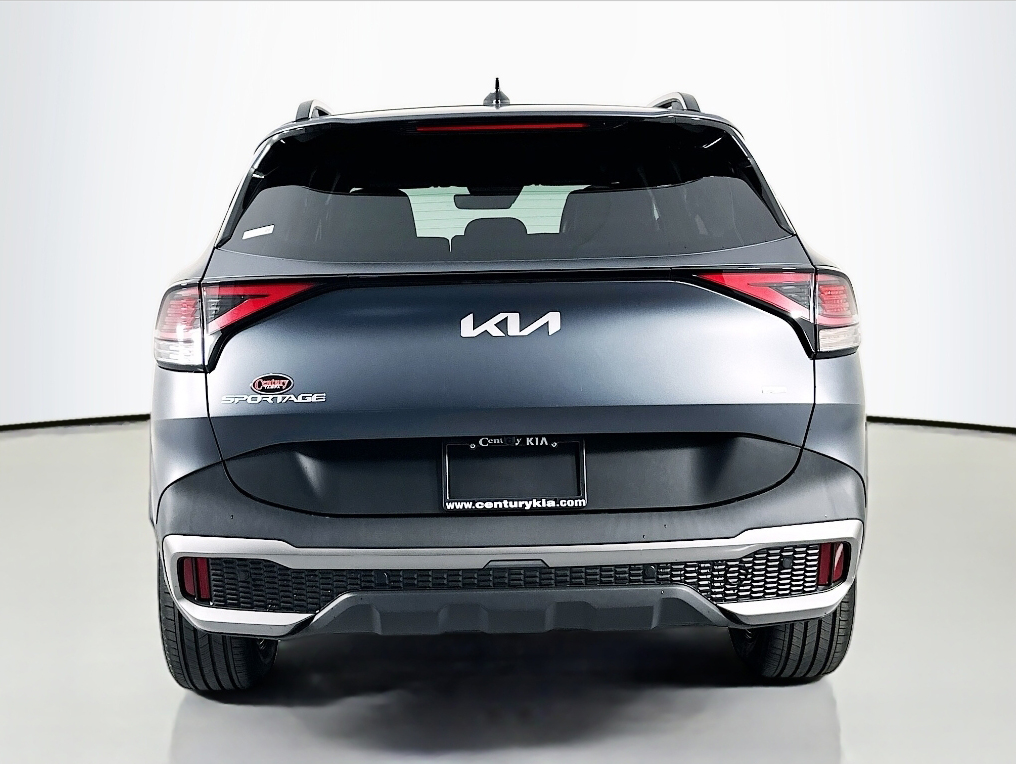
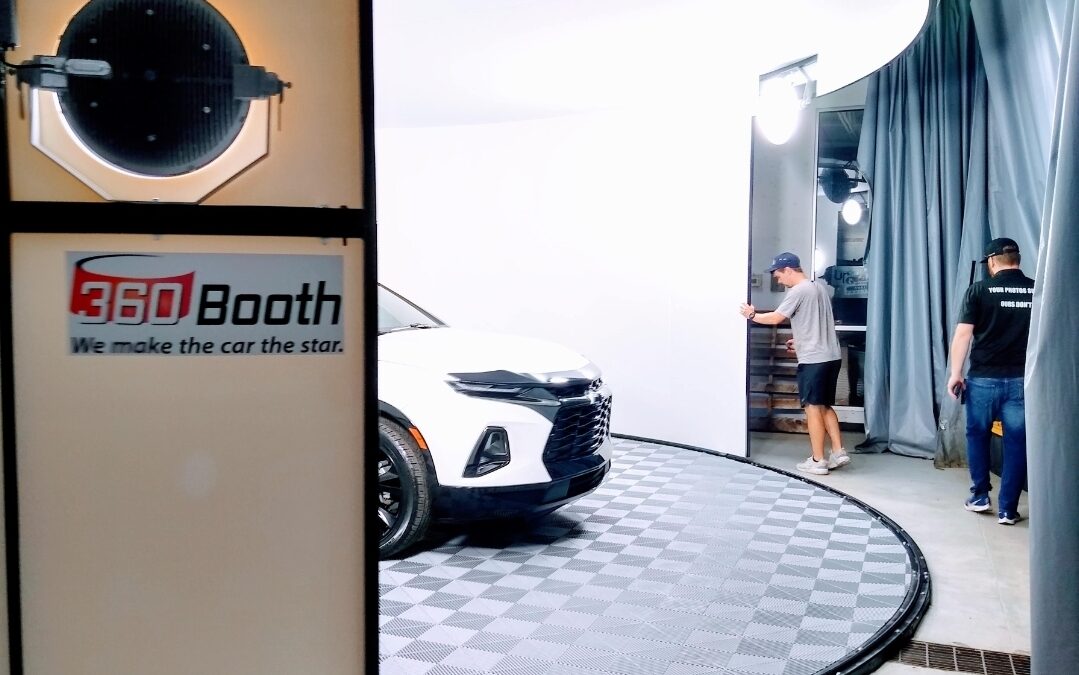
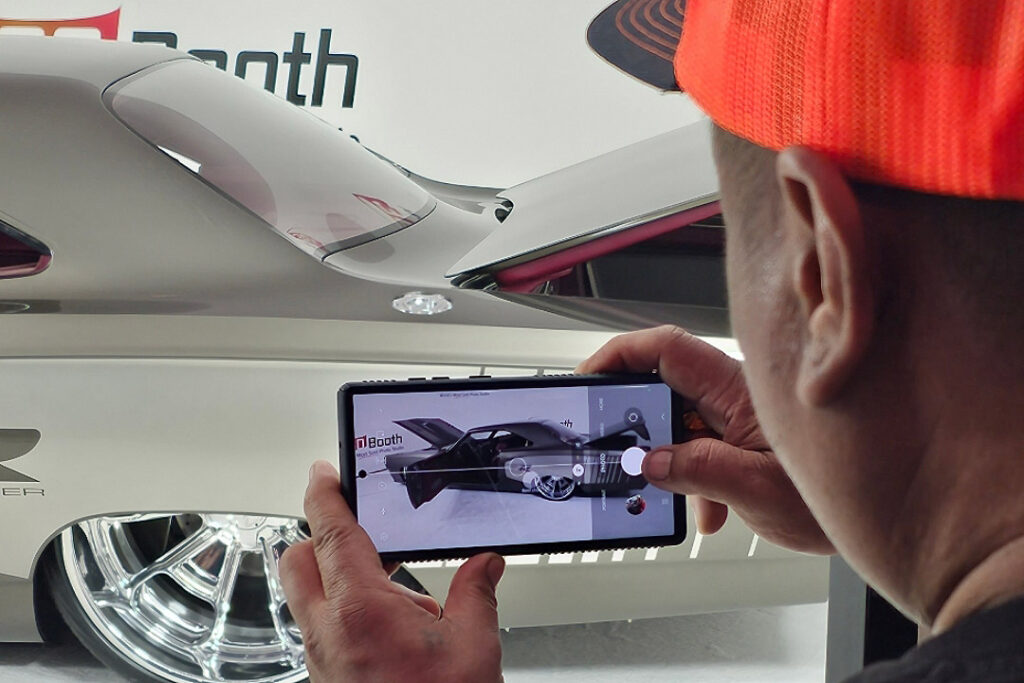
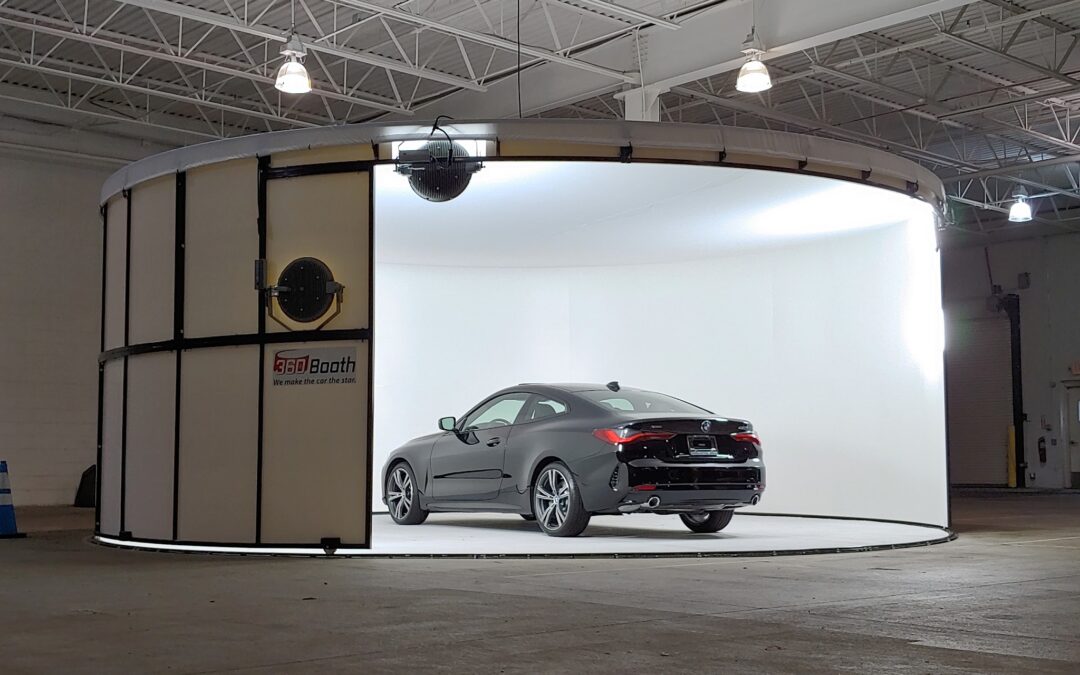
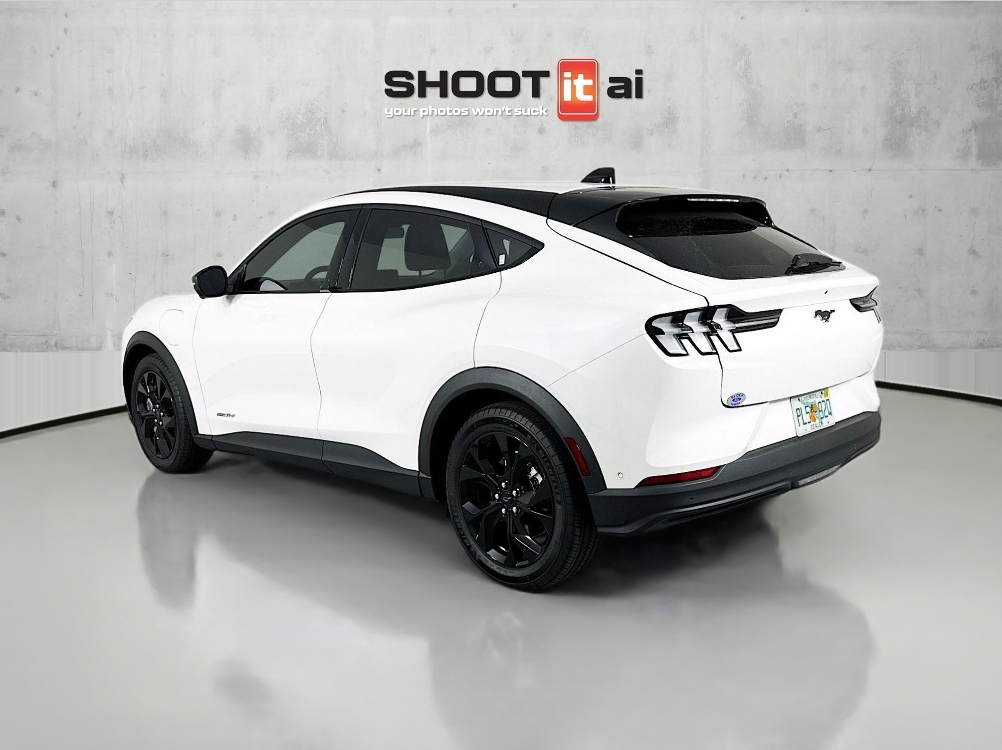
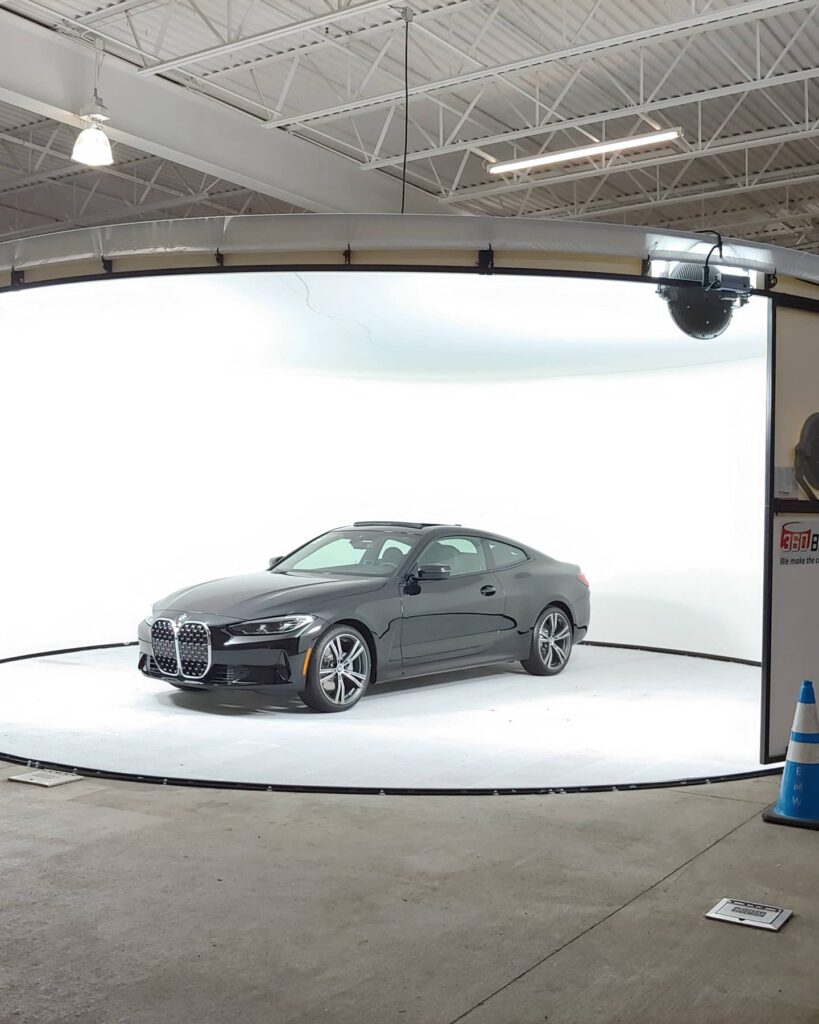
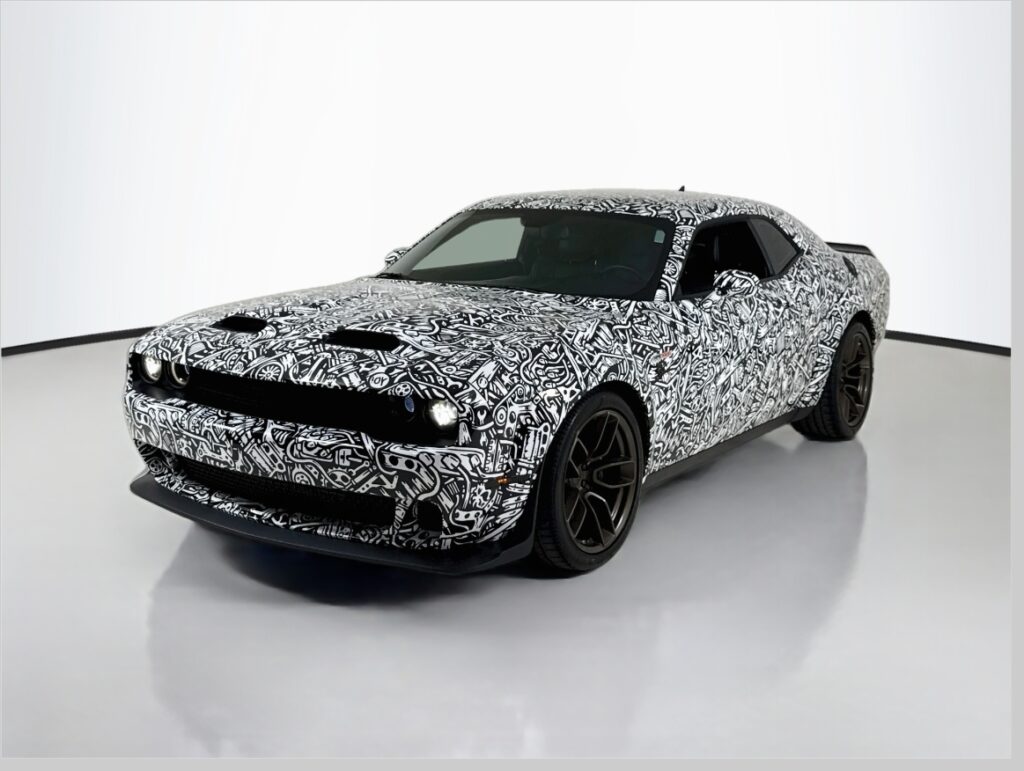
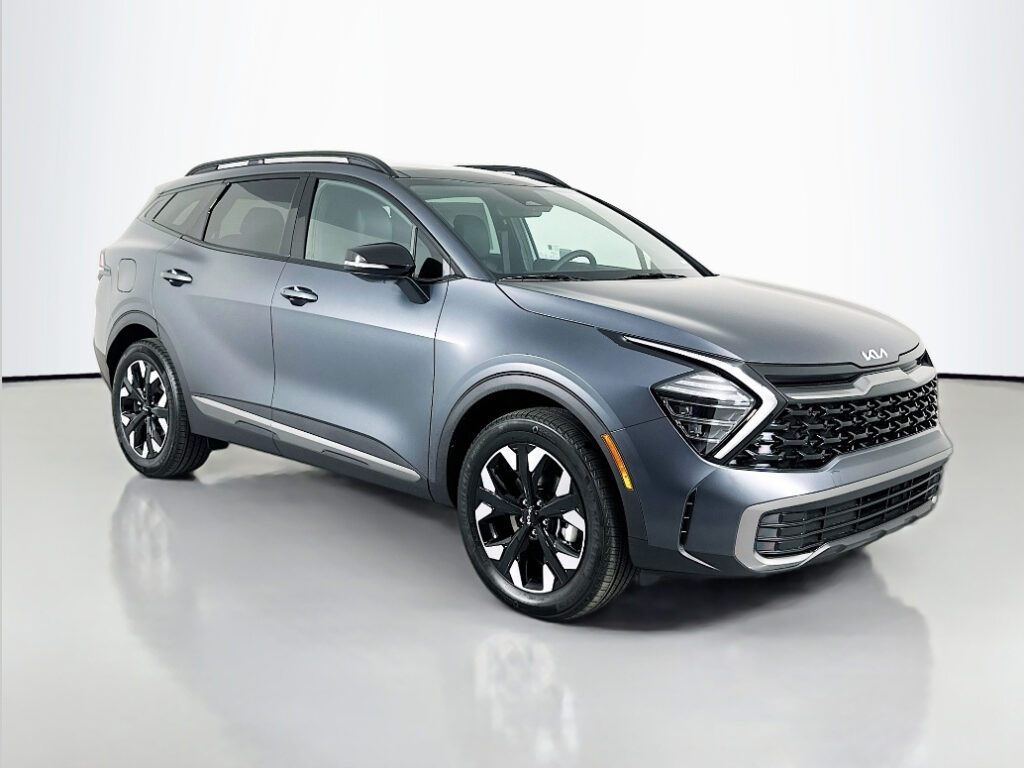
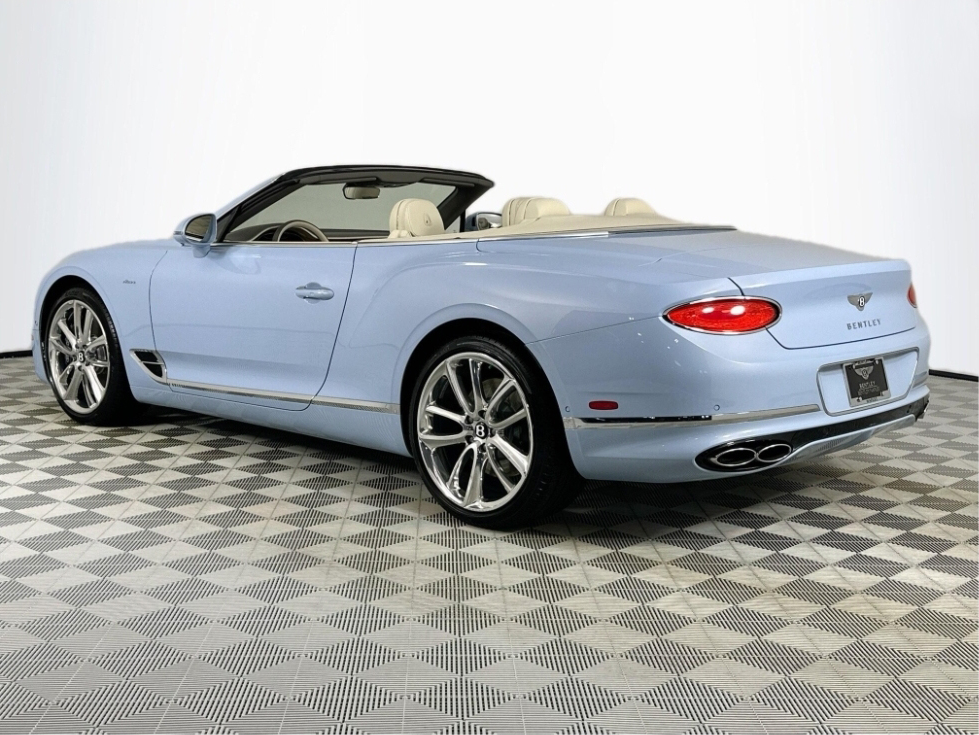
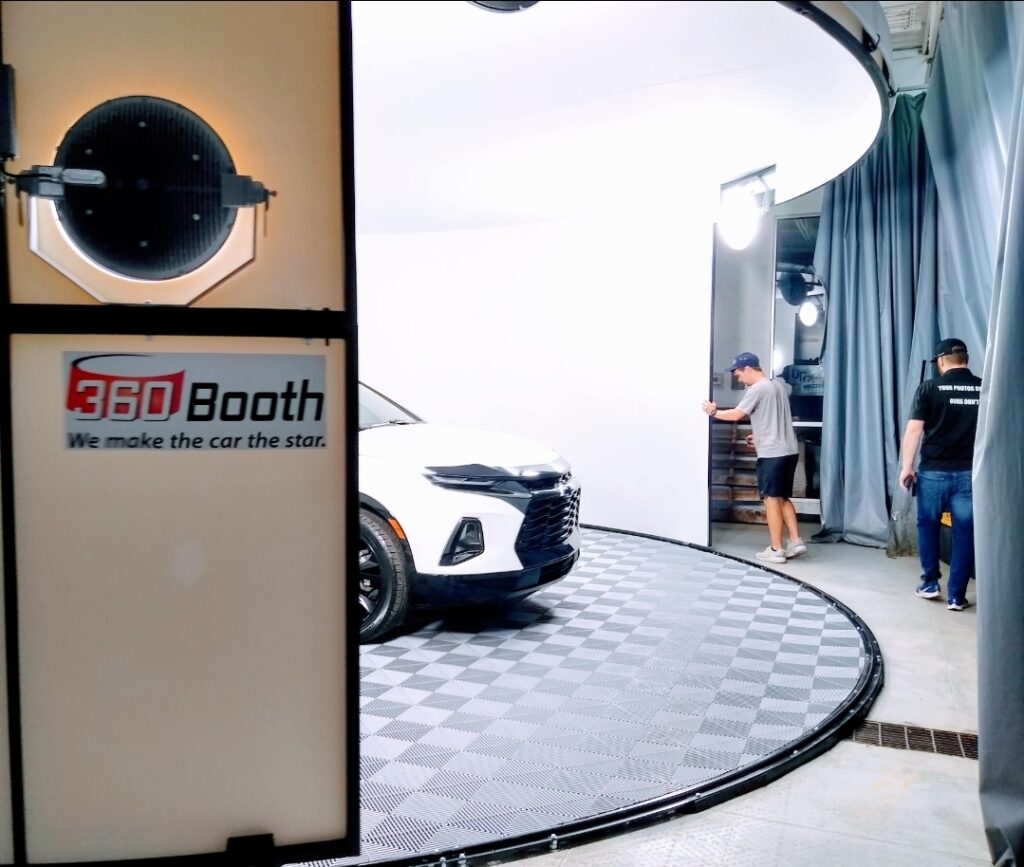
Direct answer: SHOOTit AI’s intelligence starts with an in-house AI modeling team, PhD expertise in computer vision and models trained on tens of millions of vehicle photographs captured inside 360Booth vehicle photo studios. That foundation serves one practical purpose: put automotive photography expertise in the employee’s hands, guiding each shot and catching problems while the vehicle is still in front of the camera.
Trained on Real Dealership Vehicle Photos
Vehicle photography demands attention to framing, exposure, positioning and consistency across an entire inventory. Training on real dealership vehicle photos gives the models a clear target: the images a dealership needs to present its vehicles professionally.
Where the Intelligence Shows Up: On the Dealership Floor
An employee picks up an iPhone, starts with the VIN and follows the prompts. SHOOTit AI guides the required photo sequence, stops dark, blurry or poorly centered images, and prompts an immediate reshoot before moving on.
The best camera app must prove its intelligence where your dealership needs it: during capture.
Your employee follows the prompts. The expertise is already built in. SHOOTit AI. Your photos won’t suck.
FAQ
What is SHOOTit AI trained on?
SHOOTit AI’s models are trained on vehicle photographs captured inside 360Booth vehicle photo studios, where lighting and presentation follow a repeatable standard. That gives the models a consistent reference for the image quality a dealership needs.
What does SHOOTit AI check during capture?
SHOOTit AI guides the employee through the dealership’s required photo sequence and stops dark, blurry or poorly centered images, prompting an immediate reshoot before moving to the next shot.
Does an employee need photography experience to use SHOOTit AI?
No. The employee starts with the VIN and follows the prompts. The automotive photography expertise is built into the app, so another employee can pick it up and follow the same process.
Do I need a 360Booth studio to use SHOOTit AI?
No. SHOOTit AI runs on an iPhone and can guide capture anywhere. Paired with a 360Booth vehicle photo studio, the lighting and background are controlled as well, so every car is shot the same way regardless of weather.
Direct answer: 360Booth uses matte white ePVC wall panels because the surfaces surrounding a vehicle affect its photographed appearance. Matte surfaces reduce sharp reflections from the studio walls, while the neutral white environment supports consistent lighting. Combined with four 5600K LED lighting heads and a diffused white ceiling, the walls help create a repeatable photography environment around the actual vehicle without digitally replacing its surroundings.
Your Vehicle Reflects Everything Around It
A dealership can purchase an expensive camera and still produce inconsistent vehicle photographs.
Why? Because the camera records the light coming from the vehicle, including reflections of its surroundings.
Look closely at a freshly detailed black SUV. You can often see ceiling fixtures, windows, equipment and nearby objects reflected across its painted surfaces.
Move the vehicle into another room, and those reflections change.
The vehicle hasn’t changed. Its surroundings have.
This is one reason the 360Booth vehicle photo studio was designed as a complete physical photography environment instead of simply a white background positioned behind a car.
The room is part of the photography equipment.
Why Matte White Walls Matter
360Booth uses matte white expanded PVC (ePVC) wall panels. The matte finish is intentional.
A glossy surface produces more concentrated, mirror-like reflections. A matte surface scatters reflected light across a wider range of directions.
That difference matters when photographing highly reflective automotive finishes. A shiny wall can introduce additional bright shapes and reflections into the vehicle’s body panels. A matte wall provides a more diffuse surrounding surface.
The purpose isn’t to eliminate every reflection. Reflections are valuable in vehicle photography. They help communicate the shape and curvature of body panels.
The objective is to make those reflections more manageable.
A controlled reflection helps reveal vehicle contours. An uncontrolled reflection can become a distraction or obscure visible details.
Why White Instead of Black or Colored Walls?
White surfaces reflect light broadly and provide a neutral surrounding environment. That supports the studio’s lighting design.
Colored walls can introduce unwanted color into reflections and nearby surfaces. Consider photographing a white vehicle beside a strongly colored wall. Some of that color can appear in the reflected light and the vehicle’s glossy surfaces.
Now photograph the same vehicle inside a neutral white environment. You’ve reduced one source of unwanted color variation.
Black surfaces have legitimate uses in specialized automotive photography because they can create contrast and define body lines. But a dealership needs a repeatable process for photographing different vehicles throughout the day.
360Booth uses a consistent white environment designed around that production requirement. The objective is reliable inventory photography, not rebuilding the lighting setup for every vehicle.
Why Does the Ceiling Use Diffusing Cloth?
The wall panels and ceiling serve complementary purposes.
The studio uses four LED lighting heads with a nominal 5600K color temperature. Above the vehicle is a white diffusing cloth ceiling made from durable polyester.
Rather than relying on harsh, exposed overhead fixtures, the cloth distributes the light more broadly across the photography environment. This helps reduce concentrated highlights and creates a more controlled lighting arrangement.
The ceiling diffuses the overhead illumination. The matte white walls provide a consistent surrounding environment.
Neither component operates independently of the vehicle, camera position or lighting arrangement. That’s why evaluating only the camera specifications tells an incomplete story, and why it belongs on the list of what a dealership should evaluate before buying a vehicle photo studio.
Why Does the 360Booth Structure Move Instead of the Vehicle?
This is another important part of reflection control.
A standard 360Booth does not use a motorized vehicle turntable. The vehicle remains stationary. The surrounding studio structure moves manually on a circular steel track using V-grooved wheels.
It also provides a practical photography advantage. The operator can reposition the surrounding studio structure and lighting environment when necessary. That can help manage reflections or improve lighting for interior photography.
The photographer is controlling the environment around the actual vehicle instead of digitally changing the vehicle after capture.
Do Matte Walls Automatically Reveal Every Scratch or Dent?
No. And this distinction is important for Authentic Capture™.
A controlled lighting environment can help photographers obtain clearer, more consistent views of vehicle surfaces. But detecting a scratch, dent or other imperfection depends on several factors:
The location and type of damage
Camera position
Viewing angle
Lighting direction
Image resolution
A matte white studio does not automatically make every surface defect visible. Nor should SHOOTit AI be described as perfectly identifying vehicle condition.
The purpose of the studio is to establish a more predictable environment for capturing evidence. Individual close-up photographs and physical inspection remain necessary when vehicle condition requires additional documentation.
Better photography conditions improve the opportunity to record visible evidence. They do not guarantee complete damage detection. That’s also why the original photographs should be preserved rather than replaced by edited versions.
Why the Physical Studio Still Matters in an AI Photography Workflow
AI can interpret images. It can evaluate certain capture characteristics. It can assist employees in following a required photography sequence.
But it cannot change the physical circumstances under which an original photograph was taken.
360Booth controls the physical surroundings. SHOOTit AI guides the evidence-capture process.
The first step in SHOOTit AI is capturing the VIN. The system uses VIN-decoder information to determine which requested equipment photographs are appropriate for that vehicle. If the employee attempts to skip a requested photograph of equipment identified as a standard feature, SHOOTit AI immediately warns the employee to check again.
The system then guides the dealership’s required 40+ image process. When an image is too dark, blurry or poorly centered, SHOOTit AI stops the workflow and immediately prompts the employee to reshoot before continuing. That’s quality control at the vehicle, not after it leaves.
The studio and camera address different problems. One provides the controlled environment. The other provides intelligent capture guidance. Together, they support 360Booth Authentic Capture™.
Does Every Dealership Need Matte White ePVC Walls?
Not every dealership has the space for a complete vehicle photo studio.
A properly planned DIY photography area may be appropriate in some buildings. SHOOTit AI can also guide vehicle photography outdoors.
However, a dealership should understand what it sacrifices when the physical environment becomes less controlled. A painted service bay with overhead fluorescent fixtures, windows and glossy surfaces is not automatically equivalent to a purpose-built studio. Its lighting and reflection characteristics must be evaluated. (Dealer groups mixing studios and DIY areas can see how in How Can a Dealership Group Standardize Vehicle Photography Across Multiple Locations?)
That is where access to more than 50 years of combined vehicle-photography expertise becomes valuable. Our experience includes lighting, color temperature, reflections, camera positioning, iPhone photography, studio installations and DIY photography environments.
The goal is to determine the best practical photography approach for the dealership’s actual building.
What About Maintaining the Wall Panels?
The walls are part of the studio’s photography environment and should be kept clean. Scuffs, dirt and other surface contamination can become visible in photographs or reflected surfaces.
Routine cleaning and inspection should therefore be part of the dealership’s studio upkeep. Damaged or heavily worn panels should be evaluated for replacement when necessary.
Cleaning methods should follow the material and installation guidance rather than relying on aggressive chemicals or abrasive equipment. A clean, consistent physical environment is part of maintaining consistent photographic results.
The Dealer Wake-Up Call
Dealerships spend thousands of dollars buying cameras, software and image-processing services. Then they photograph vehicles in buildings filled with uncontrolled reflections. And wonder why the pictures aren’t consistent.
Before asking AI to improve your vehicle photographs, ask whether you’ve given the camera a proper environment to photograph the vehicle in the first place.
That’s where Authentic Capture™ begins.
FAQ
What material are 360Booth walls made from?
Standard 360Booth wall panels are made from matte white expanded PVC, commonly abbreviated ePVC.
Why not use glossy white wall panels?
Glossy walls can produce stronger, more concentrated reflections. Matte panels provide a more diffuse reflective environment around the vehicle.
Do matte white walls eliminate vehicle reflections?
No. They help control the surrounding reflections. Vehicle paint and glass remain reflective, and camera position and lighting still affect the photograph.
Does 360Booth use natural daylight?
360Booth is designed around controlled studio illumination. Uncontrolled daylight entering through skylights or nearby windows should be evaluated during installation planning.
Does SHOOTit AI require matte white walls?
No. SHOOTit AI works in suitable photography environments independently of 360Booth. The studio provides additional control over physical lighting and surroundings.
Can a vehicle photo studio automatically detect damage?
Not simply because it has controlled lighting. Reliable vehicle condition imaging requires appropriate capture methods, image interpretation and, where necessary, physical verification.
Direct answer: Fake background software repairs vehicle photos after the shoot. SHOOTit AI stops bad photos at the shutter. One approach pastes a clean backdrop behind whatever the camera caught, then hands problems back to the dealership hours or days later. The other catches crooked wheels, trash, glare, blur and dirty inventory while the employee, the camera and the car are still in the same place.
That difference sounds small. It isn’t. It decides whether the car reaches the market today or after a second trip through the lot.
A Fake Background Is a Band-Aid on a Sloppy Shoot
Background replacement software does one main thing: it cuts the vehicle out of the photo and drops it onto a digital showroom. What it does not do is change the car.
If the wheels were dusty, they are still dusty. If there was a water bottle in the cupholder, a paper floor mat on the driver’s side or a smear across the windshield, it is still there, now sitting in a spotless CGI room that makes it more obvious, not less.
Even the tools that sell automation admit this. A setup guide for one AI car-listing platform tells users to flag images that need re-photography instead of an AI fix, warning that no amount of post-processing can rescue a badly taken photo.
When the photos are the inspection, a backdrop that never existed is a strange way to earn trust. Regulators have also noticed the gap between pictures and reality. Federal Trade Commission staff have warned dealers that showing a used car as it looked new instead of as it looks on the lot is the kind of ad that gets a dealer in trouble. A fake background isn’t the same thing, but the principle runs in the same direction: show the car the customer will actually get. (See What If the Background Looked Perfect and the Car Didn’t?)
Post-Shoot Software Is an Operational Problem, Not Just a Visual One
The bigger cost of fixing photos after the fact is time.
Run the conservative number. A store that photographs 100 used cars a month and loses two days per car to post-shoot processing and reshoots is carrying 200 extra vehicle-days. At $40 a day, that is $8,000 a month before counting the labor of chasing keys and re-shooting. At $85 a day, it is $17,000. (More on why photos need an owner and a clock in What If Photos Aren’t Even a Step in Your Recon?)
And the wait pays for something that doesn’t show the car the shopper will buy.
SHOOTit AI Fixes It at the Shutter
SHOOTit AI moves quality control to the one moment when fixing a photo costs almost nothing: before the employee walks away from the car.
It guides the dealership’s required 40+ image sequence on an iPhone and flags mistakes as they happen:
Crooked wheels and bad angles. The shot is retaken with the wheels straight and the camera where the sequence calls for it.
Trash, water bottles and paper floor mats. The clutter gets removed from the car, not painted out of the picture.
Blurry frames and harsh glare. The employee reshoots on the spot instead of learning about it tomorrow.
Dirty inventory. The car goes back for a wipe-down now, while it’s already in hand, not after it has been parked across the lot.
A fake background doesn’t clean the car. A 24-hour queue doesn’t sell it. And a rejected photo two days later doesn’t fix anything. It just starts the process over.
Stop pasting fake backgrounds on sloppy shoots. Catch it, fix it at the car, and get real, authentic inventory to market today.
FAQ
Does a fake AI background fix a dirty or cluttered car?
No. Background replacement swaps what is behind the vehicle. Dust, water spots, trash on the seats and paper floor mats are part of the vehicle, so they stay in the photo unless someone edits the car itself, which changes the record of what you are selling.
How long does post-shoot photo processing take?
It varies by vendor. Some AI tools process images in seconds, while outsourced editing commonly runs on 24 to 48 hour delivery windows, and some dealer programs promise processed images within 24 hours. Any photo that can’t be fixed in software still needs a reshoot after that wait.
What does SHOOTit AI check at the moment of capture?
SHOOTit AI guides the employee through the dealership’s required 40+ image sequence and flags problems such as blurry or dark frames, poor centering, crooked wheels and bad angles, harsh glare, trash and paper floor mats, and dirty inventory, so the photo is retaken before the employee walks away.
Do I need a 360Booth studio to use SHOOTit AI?
No. SHOOTit AI runs on an iPhone and can guide capture anywhere. Paired with a 360Booth vehicle photo studio, the lighting and background are controlled as well, so every car is shot the same way regardless of weather.
Yes. A dealership should treat its vehicle-photography iPhone as production equipment rather than depend on an employee’s personal device. SHOOTit AI runs on supported iPhone Pro Max models purchased by the dealership, so the camera, training, workflow and operating standard stay with the store even when staffing changes.
The camera should belong to the process
Dealerships would never build a service process around a technician bringing whatever diagnostic equipment happened to be in their pocket that morning.
Vehicle photography deserves the same discipline.
Once a phone is responsible for documenting dealership inventory, it isn’t just a phone. It’s a production camera. It:
A dealership-owned iPhone keeps the production tool where the production happens. The employee may change. The camera remains.
Which iPhones does SHOOTit AI support?
SHOOTit AI is built around supported Apple iPhone Pro Max devices. Current operating guidance supports iPhone 12 through iPhone 17 Pro Max models, with support for future devices evaluated as new generations are introduced.
The dealership purchases the phone, which also keeps the normal device warranty relationship with the store.
The objective isn’t to force dealers into complicated camera equipment. It’s the opposite. Use a modern smartphone employees already understand, then put an intelligent vehicle-photography workflow on it. As we’ve said before, more megapixels don’t fix a missing process.
SHOOTit AI is more than a camera app
The workflow begins with the vehicle VIN.
SHOOTit AI uses VIN-decoder information to understand the expected vehicle configuration and guide the requested equipment photographs. If an employee tries to skip a requested image and the decoder shows that feature should be standard equipment, SHOOTit AI immediately tells the user to check again.
The employee then continues through the dealership’s required 40+ image process. If a required photo is too dark, blurry or poorly centered, SHOOTit AI stops the workflow and requires a reshoot before continuing. That’s quality control at the vehicle, not after the fact.
The important point: these operating standards live in the dealership’s capture system, not just inside one photographer’s memory.
A dedicated phone makes employee backup easier
Photography should survive staffing changes.
A dealership can train another employee on the same device and the same guided process instead of asking that person to reproduce another photographer’s personal habits. Basic SHOOTit AI instruction takes about three minutes.
That doesn’t make someone a professional photographer in three minutes. It means the employee can understand the guided process quickly enough to start using the system. That distinction matters. The expertise is built into the environment and workflow, so you can stop hiring people just to take vehicle photos.
What if a dealership wants two cameras?
A second active phone requires an additional SHOOTit AI license. Treat that as a capacity decision.
A high-volume dealership may want multiple trained employees or simultaneous capture. Another store may be better served by one dedicated device and trained backup employees. The right answer depends on actual throughput and staffing.
The 360Booth vehicle photo studio controls the physical photography environment. SHOOTit AI controls the guided capture process. A dedicated, dealership-owned iPhone completes the system by giving the store a consistent camera platform.
That creates three layers of standardization:
The room: controlled lighting, background and reflections.
The camera: a supported, dealership-owned iPhone.
The process: SHOOTit AI’s guided, VIN-first capture workflow.
Authentic Capture™ depends on recording the actual vehicle consistently. That starts with the physical vehicle and a controlled environment. Then it requires a capture tool that stays part of the dealership’s process.
The VIN identifies the vehicle.
SHOOTit AI guides what should be photographed.
The iPhone records what is physically there.
Visible wear stays visible. Actual equipment stays actual equipment. And the dealership keeps a repeatable way to create that evidence even when employees change.
Dealer wake-up call
Your vehicle-photography camera shouldn’t belong to the employee. It should belong to the operation.
Buy the phone.
Own the workflow.
Train more than one person.
Keep the process in the dealership.
If one employee can take your entire photography operation home in their pocket, you never really owned the process.
FAQ
Can employees use their personal phones for SHOOTit AI?
The recommended operating model is a dealership-owned supported iPhone dedicated to the photography workflow.
Which phones are currently supported?
SHOOTit AI supports selected iPhone Pro Max generations, currently including iPhone 12 through iPhone 17 Pro Max under current product guidance.
Does a second phone require another SHOOTit AI license?
Yes. Two simultaneously active capture phones require separate licenses.
Can a replacement employee learn the process quickly?
Yes. The guided SHOOTit AI workflow can be introduced in roughly three minutes, although experience improves speed and familiarity.
Does the phone need internet access during capture?
No. SHOOTit AI capture can work offline. Connectivity is required later for upload and delivery.
Direct Answer: After you submit a 360Booth contact form, our team reviews your vehicle photography needs, discusses studio options and pricing, and evaluates your proposed space using your photos and measurements. As the project moves forward, we coordinate a walk-through visit, document the site findings, prepare your layout and quote, confirm installation readiness, schedule shipping and installation, and arrange training and SHOOTit AI setup so your team can start photographing vehicles.
The 13 Steps at a Glance
Your inquiry is received.
Your project information is organized.
We discuss your needs.
You receive product information and pricing.
You provide photos and measurements.
A walk-through visit is coordinated.
Your location and studio configuration are evaluated.
The site findings are documented.
Your layout and quote are prepared.
Your order and payment arrangements are confirmed.
Your installation readiness is checked.
Shipping and installation are coordinated.
Your studio is installed and your team gets started.
Here’s what each step looks like, from your first inquiry to photographing vehicles.
Phase 1: Understanding Your Dealership
Step 1: What happens when my inquiry is received?
Your contact form starts the conversation about a 360Booth vehicle photo studio for your dealership or automotive business.
Most dealers reach out because their current photography process is slow, inconsistent or dependent on the weather. If you’re still deciding whether a studio makes sense, start with why it’s so helpful to have a 360Booth vehicle photo studio.
Step 2: How is my project information organized?
Your contact details, dealership information and project notes are kept together so the team can coordinate follow-up without asking you the same questions twice.
That same single-point coordination continues after installation. See how the studio, the camera, the data team and customer support work as one connected vehicle photography system.
Step 3: What do we discuss about my needs?
We review your current photography process, vehicle volume, available space and timing to understand what your operation requires.
Measurements, photos and preparation requirements become the working reference for your project. Any items that need attention are identified before installation, not on installation day.
Once you accept the quote, invoicing and payment arrangements are coordinated according to your order terms. Orders are placed through the 360Booth order form.
Step 13: What happens when my studio is installed?
The installation team assembles the studio. Training, SHOOTit AI setup and data-feed coordination are arranged as needed to get your vehicle photography operation running.
From there, SHOOTit AI guides your team through each required image on an iPhone and prompts a reshoot when an image is too dark, blurry or poorly centered. Learn more:
Contact 360Booth to request product information or book a walk-through visit. The sooner we see your space, the sooner we can identify what your site needs before installation day.
FAQ
What happens after I submit a 360Booth contact form?
The 360Booth team reviews your vehicle photography needs, discusses studio options and pricing, and evaluates your proposed space. As the project moves forward, the team coordinates a walk-through visit, layout and quote, installation readiness, shipping, installation and training.
What information should I have ready for the first conversation?
It helps to know your current photography process, monthly vehicle volume, the space you’re considering and your preferred timing.
Do I need to send photos and measurements of my space?
Yes. Photos, basic dimensions and any available floor plans help the team evaluate the proposed location and identify questions before the walk-through visit.
What does the 360Booth site evaluation check?
The evaluation reviews studio placement, vehicle access, floor conditions, overhead obstructions and electrical requirements to determine the appropriate studio configuration.
What electrical service does a 360Booth studio need?
A standard U.S. installation needs a dedicated 110V, 20A circuit and a one-hour timer switch, prepared by the dealership’s local electrician before installation day. See the electrical requirements.
What must be ready before the studio is delivered?
The installation area must be clear, electrical work must be complete, and delivery access and unloading arrangements must be in place.
Is training included after installation?
Training, SHOOTit AI setup and data-feed coordination are arranged as needed so your team can start photographing vehicles.
Direct answer: Yes. A 360Booth vehicle photo studio can be professionally disassembled, relocated and reinstalled at another suitable dealership location. Relocation requires evaluating the new building, dismantling and transporting the studio components, replacing necessary materials, leveling the track and reassembling the structure. The dealership should plan the move with 360Booth before construction or relocation begins.
A Dealership Changes Buildings. What Happens to Its Photo Studio?
Dealerships relocate. Ownership groups consolidate operations. Buildings get renovated. Service departments expand.
A photography department that made sense five years ago may need to move somewhere else.
That raises an important question for anyone investing in a physical vehicle photo studio: can you take it with you?
With 360Booth, the answer is yes. But relocating a professional studio is not the same as moving a desk. The equipment must be properly disassembled, transported and reinstalled in a location that meets the necessary physical requirements.
Planning matters.
What Is Involved in Disassembling a 360Booth?
360Booth uses a modular physical structure built around a steel frame, circular track, wall panels and diffused overhead lighting. The structure can be taken apart for relocation.
Based on previous relocation planning, a typical disassembly may require approximately six to eight hours of installation labor. That is a planning example, not a guaranteed timeframe. Actual labor depends on the studio configuration, building access and condition of the existing installation.
The work includes separating the structural components, removing applicable materials and preparing the equipment for transportation. For a closer look at what the team does on site, see what is included in a breakdown and reinstall.
This is where professional experience becomes valuable. The objective isn’t simply to take the studio apart. It’s to preserve the components that can be reused and identify everything needed for proper reassembly.
Can Every Component Be Reused?
Not necessarily. Dealers should not assume that every material from the original installation can simply be removed and reused indefinitely.
Depending on condition and the relocation plan, materials such as track adhesive, wall panels, ceiling cloth and wheel components may need replacement. The track must be properly supported and leveled at the new location. (Here’s more on how the track is secured and leveled.)
Damaged or unsuitable materials should be addressed before the studio returns to production.
This is production equipment. The objective is not the cheapest possible reassembly. It’s to restore reliable operation and consistent photography.
How Long Does Reinstallation Take?
Previous 360Booth relocation planning has allowed approximately three working days for reassembly. That estimate assumes the new site is properly prepared and the necessary components are available. It is not a guaranteed completion time.
The total project schedule must also account for transportation, building preparation, replacement materials and installer availability.
A dealership should establish its relocation schedule before committing to a building move. That allows photography operations to be coordinated with the rest of the dealership’s transition.
Does the New Building Need Another Site Survey?
Absolutely. The fact that a studio fit inside the original building doesn’t mean it will fit inside the new one. Every building is different.
For the standard 24-foot, 26-foot and 28-foot 360Booth configurations, the standard minimum clear space is 30 feet long in the vehicle-entry direction, 30 feet wide and 11 feet high. The standard studio height is 10 feet.
Entrance openings vary by studio size:
24-foot studio: 14-foot opening
26-foot studio: 16-foot opening
28-foot studio: 18-foot opening
These measurements are starting requirements, not substitutes for evaluating vehicle access and surrounding obstacles.
The new location must also be examined for concrete floor pitch, overhead obstructions, lighting, electrical service and vehicle traffic.
A studio should fit the dealership’s workflow, not merely fit inside the building.
What Happens to the Lighting and Electrical Requirements?
The standard U.S. 360Booth uses four 5600K LED lighting heads, a white diffusing ceiling and a dedicated 110V, 20A electrical circuit with a one-hour timer switch. Those requirements must be met at the new location; our guide to vehicle photo studio electrical requirements covers them in detail.
The dealership’s qualified local electrician handles the necessary electrical preparation.
Moving the studio without addressing these conditions defeats part of the reason for owning a controlled photography environment.
Why Relocation Matters to the Long-Term Investment
A physical vehicle photo studio should be evaluated as a long-term operational asset. Dealership buildings can change. Ownership groups can reorganize. Inventory operations can be consolidated into different facilities.
Knowing that an existing 360Booth can be professionally relocated gives management another option when those changes happen. The equipment does not automatically become useless simply because the photography department changes locations.
Of course, relocation has real labor, transportation and replacement-material costs. It should never be presented as free or effortless. But the ability to reinstall the equipment gives a dealership flexibility that should be considered during the original purchasing decision.
Does SHOOTit AI Need to Change When the Studio Moves?
The studio’s physical relocation does not inherently require changing the dealership’s established SHOOTit AI capture sequence.
SHOOTit AI remains the guided evidence-capture layer. Employees photograph the actual vehicle using the dealership’s required 40+ image process. If an image is too dark, blurry or poorly centered, SHOOTit AI stops the workflow and immediately prompts the employee to reshoot before continuing.
Once the studio is reinstalled, the team should verify lighting, camera workflow, upload connectivity and media delivery before returning to normal production. That’s where one connected vehicle photography system pays off: studio, capture app and media delivery are checked together.
This protects the consistency of the dealership’s Authentic Capture™ process. The goal is to relocate the physical environment without unnecessarily reinventing how employees photograph vehicles.
The Dealer Wake-Up Call
A dealership building isn’t necessarily permanent. Your investment in professional vehicle photography shouldn’t automatically end when the dealership moves.
360Booth was designed as physical equipment that can be professionally serviced, maintained, disassembled and reinstalled. That’s a different conversation from paying another monthly software bill.
Before buying a photography system, ask what happens to your investment when the dealership changes buildings. A serious equipment supplier should have an answer.
Planning a move? Contact 360Booth before construction starts so the site survey and relocation schedule are in place.
FAQ
Can an existing 360Booth be installed in another dealership?
Yes, provided the new location is suitable and the studio is properly disassembled, transported and reinstalled.
Can dealership employees disassemble and reinstall the studio themselves?
Professional planning and installer coordination are recommended. Improper disassembly or reinstallation can affect the structure, track operation and photography environment.
Does relocation require replacing the entire studio?
Not necessarily. Reusable components are evaluated alongside materials that require replacement. The final scope depends on the condition of the existing equipment and the new installation requirements.
How much does relocating a 360Booth cost?
Costs depend on the studio configuration, transportation, labor, replacement components and new building conditions. A site-specific quotation should be prepared before relocation. Contact 360Booth to start planning.
Can a relocated 360Booth continue using SHOOTit AI?
Yes. The existing capture workflow can continue once the studio, camera and media-delivery systems have been verified at the new location.