Used car speed to market is the number of days between the moment you own a vehicle and the moment a shopper can see it online, priced and fully photographed. Every one of those days costs money. Most stores have more of them than they think, and very few of those days are spent actually fixing the car.
The repair work is rarely the villain. A car can need half a day of real labor and still take a week or more to reach the line, because it waits. It waits for an approval, a sublet vendor, a detail bay, a dry afternoon and a photographer who comes back on Thursday.
This guide walks through where those days hide, what each one costs, and seven proven fixes that shorten the trip from recon to frontline without adding headcount. The math is simple. The discipline is the hard part.
What Used Car Speed to Market Really Measures
Most used car managers already track time to line, the elapsed days from acquisition to frontline ready. That number matters, but it stops one step too early. A car parked on the front row with no photos is ready for the lot and invisible to the internet, which is where nearly every buyer starts.
So define the finish line differently. Used car speed to market ends when the vehicle detail page is live with a full set of real photos, an accurate price and the right equipment listed. Not when the car is clean. Not when it’s parked out front. When a shopper 100 miles away can actually evaluate it.
The start line matters just as much. The clock should begin when the store takes ownership, whether that’s a signed trade appraisal or an auction purchase. Starting it when the car enters the shop hides the days it sat in the back row waiting for someone to decide what to do with it.
Measured this way, many stores discover their real used car speed to market is double what their recon report says. That’s not bad news. It’s a list of easy days to win back.
Where the Days Go From Recon to Frontline
Cox Automotive has written about the spread for years. In a Cox Automotive article on improving used vehicle reconditioning, vAuto founder Dale Pollak noted that the best-performing dealers finished reconditioning in 24 hours or less, while other dealers reported turnaround times of seven days or more.
That article dates to 2016, and the gap has not closed by accident since. The difference between those two groups is rarely technicians or tools. It’s how many handoffs a car goes through, and how long it sits between each one. Here are the usual suspects that stretch recon to frontline time.
Approval Delays
The inspection is done, the estimate is written, and the car waits for a used car manager who is on the desk, at the auction or off on Tuesday. One unanswered text can cost a full day. Multiply that across every unit in the pipeline and approvals alone can add days to recon to frontline time.
Sublet and Vendor Work
Paint, wheels, glass and upholstery often leave the building. The work itself may take a few hours. Getting the car out, on the vendor’s schedule and back again can take most of a week. Sublet days are the hardest to see because nobody inside the store is touching the car.
The Photo Queue
This is the step most stores never write down. The car is clean and ready, and then it waits for the photographer, the weather or the daylight. If photos come from an outside vendor who visits a few days a week, a car finished on Monday afternoon might not be shot until Wednesday.
Upload and Syndication Lag
Even after the photos exist, they have to land on the right VIN, in the right order, on the website and every marketplace the store pays for. Manual uploads, missing photos and feeds that run once a day all add hours. Hours turn into days when nobody owns the step.
What Every Lost Day Costs a Used Car Department
Holding cost is the daily price of owning a car that isn’t sold yet: floorplan interest, insurance, depreciation, advertising and other expenses charged against the eventual gross. Estimates vary by store and brand, so every dealer should run their own number.
For a recent benchmark, a 2024 WardsAuto column on controlling holding costs put the cost at $50 to $80 per car per day, depending on the brand. The higher end applied to luxury imports and heavily equipped pickups.
The same column ran simple math. A store reconditioning 100 cars a month that takes 15 days from acquisition to frontline ready accumulates about $75,000 a month in holding cost at $50 a day. Cut that to 10 days and the figure drops to about $50,000. That’s $25,000 a month, or $300,000 a year, from five days.
Now apply that same $50 figure to photos alone. If the photo step adds two days to every car at a 100-car store, that’s roughly $10,000 a month spent waiting for pictures. Our own math on what a winter of outdoor photos costs a 250-car store shows how fast that grows when weather joins the delay.
Holding cost is also only half the story. A car with slow used car speed to market loses its best days on the market. Fresh listings get attention. Stale ones get price cuts. Every day of used car speed to market you give away is a day a competitor’s identical car is collecting the click.
Why Photos Quietly Slow Down Recon to Frontline
Recon boards usually have columns for inspection, approval, mechanical, body and detail. Photos often don’t get a column at all, which means they don’t get an owner or a clock. We covered this in detail in why photos need their own step in the recon workflow.
Outdoor shooting adds a second problem: the sky sets the schedule. Rain, snow, glare and early sunsets all push cars into tomorrow’s queue. After clocks fall back in November, daylight becomes a hard deadline for vehicle photos, and any car that finishes detail late in the afternoon waits a day.
The third problem is rework. Someone notices a blurry interior, a missing side shot or a warning light on the dash after the car is already back on the lot. Now the car has to be pulled, cleaned again and reshot. That’s why quality control should happen at the vehicle, not the next morning.
Here’s why rushing a thin gallery online doesn’t solve the problem. In Cox Automotive data from late 2017, published with its Power of Pictures research, used listings with more than 40 photos drew 47.8% more VDP views than the average listing. Used listings with one to five photos drew 53.4% fewer.
The same Cox material reported that used and CPO listings with multiple custom photos earned 349% more VDP views than listings with a stock photo. In other words, a car isn’t truly at market until the real photo set is complete. Speed and completeness have to arrive together.
7 Proven Fixes to Improve Used Car Speed to Market
None of these fixes to used car speed to market requires a bigger building or a bigger payroll. Most of them require a decision, an owner and a number on a whiteboard. Start with the ones that remove the longest waits at your store.
1. Start the Clock at Acquisition
Measure from the moment you own the car, not from the moment it enters the shop. This one change exposes the days a trade sits waiting for a retail-or-wholesale decision. Pollak’s Cox article recommended gathering appraisers and decision-makers once a day to make that call on every trade, so no car drifts.
2. Give Recon an Auto-Approval Threshold
Set a dollar limit below which service can finish the work without waiting for a signature. In the same Cox article, Pollak described dealers setting a baseline of $600 to $800 per car and monitoring whether estimates matched final costs. Approval delays disappear for most units overnight.
3. Put Photos on the Recon Board With an Owner and a Clock
Give photography its own column on the recon to frontline board, its own owner and its own target, measured in hours. When photos are visible on the board, a car finished at 3 p.m. becomes everyone’s problem by 4 p.m. When they’re invisible, it becomes tomorrow’s problem by default.
4. Shoot Indoors So Weather and Sunset Stop Setting the Schedule
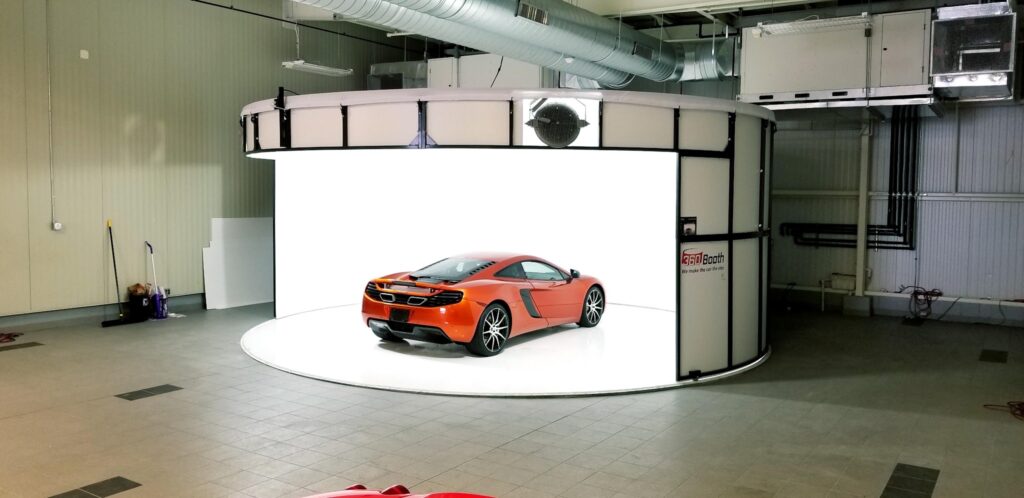
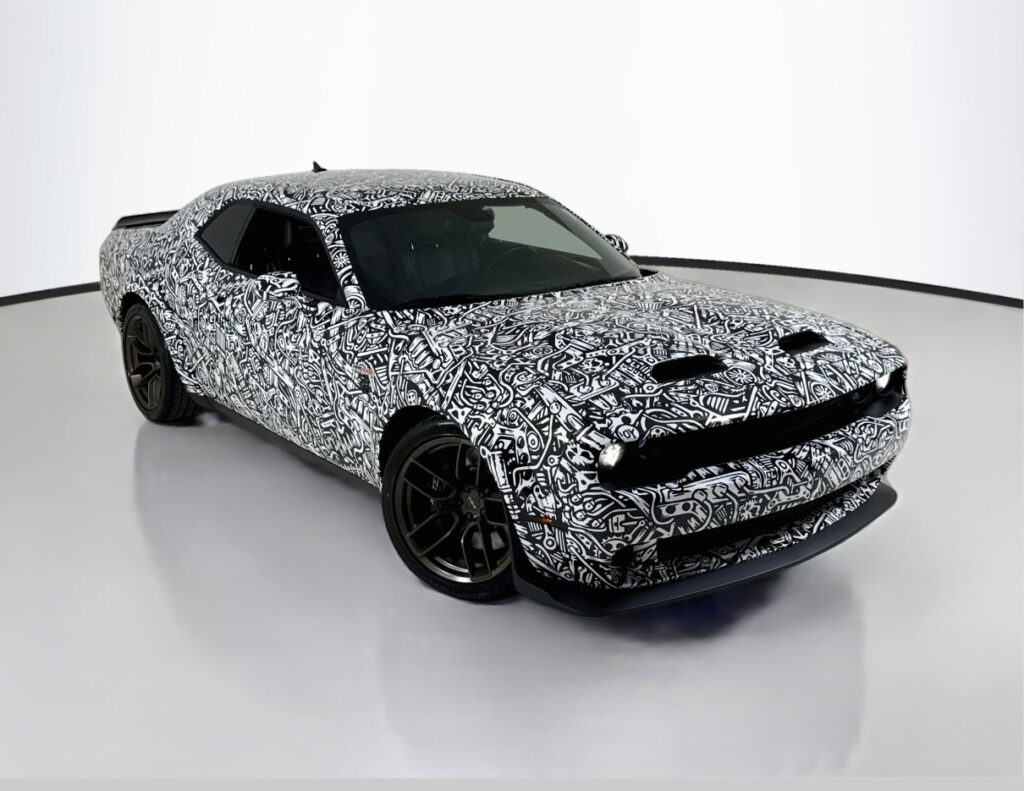
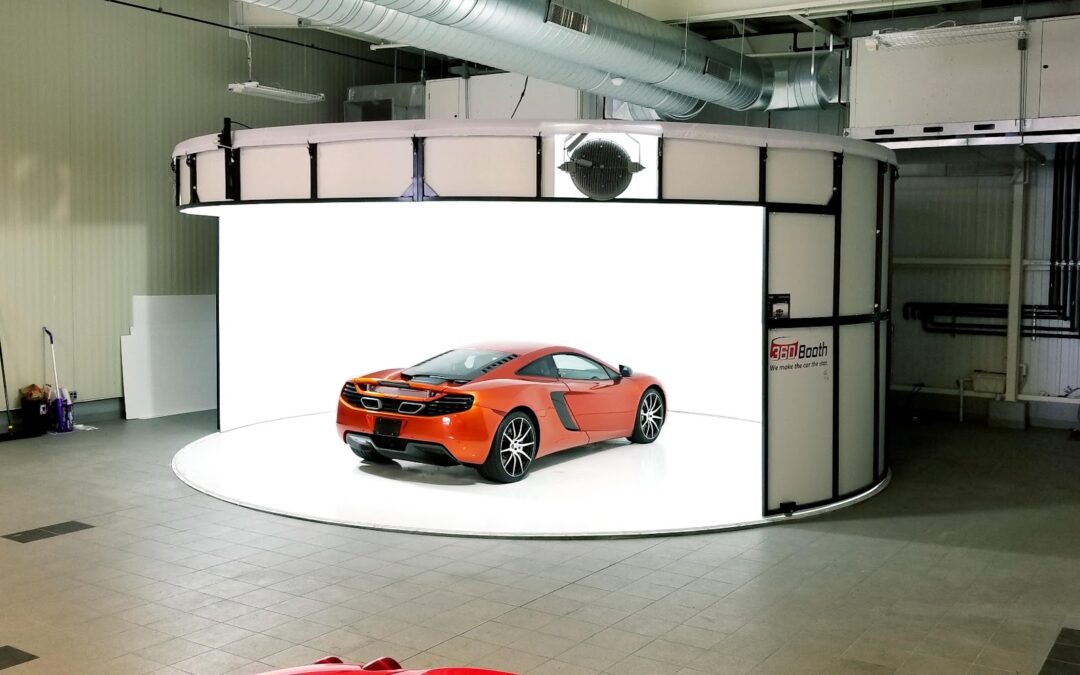
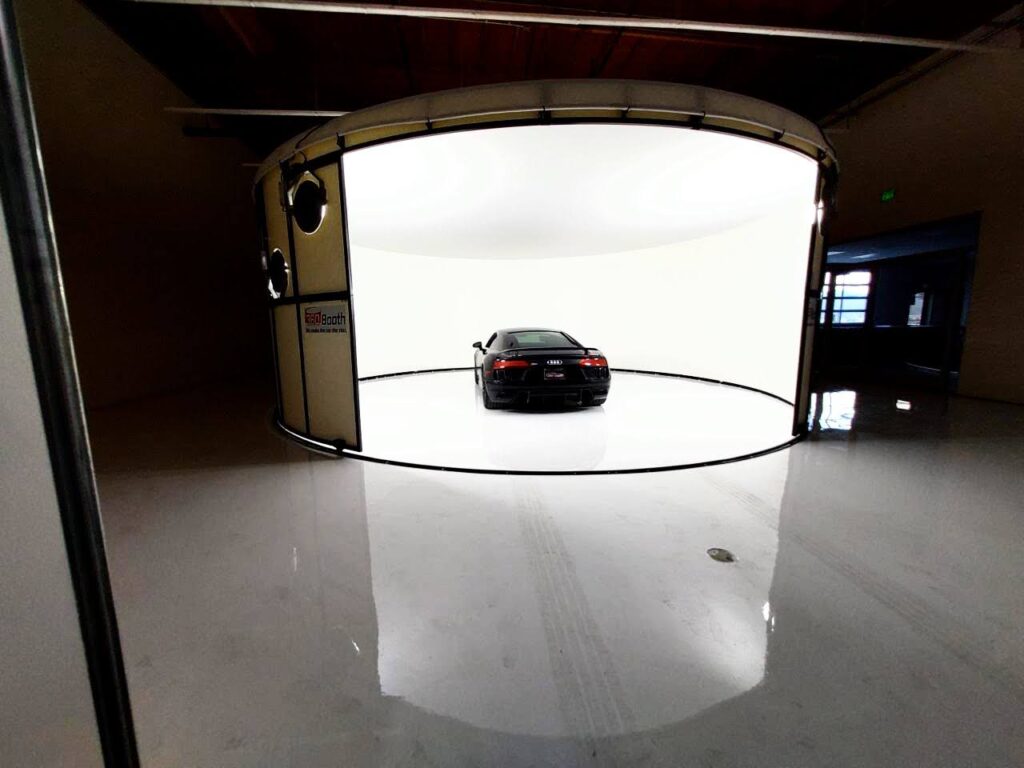
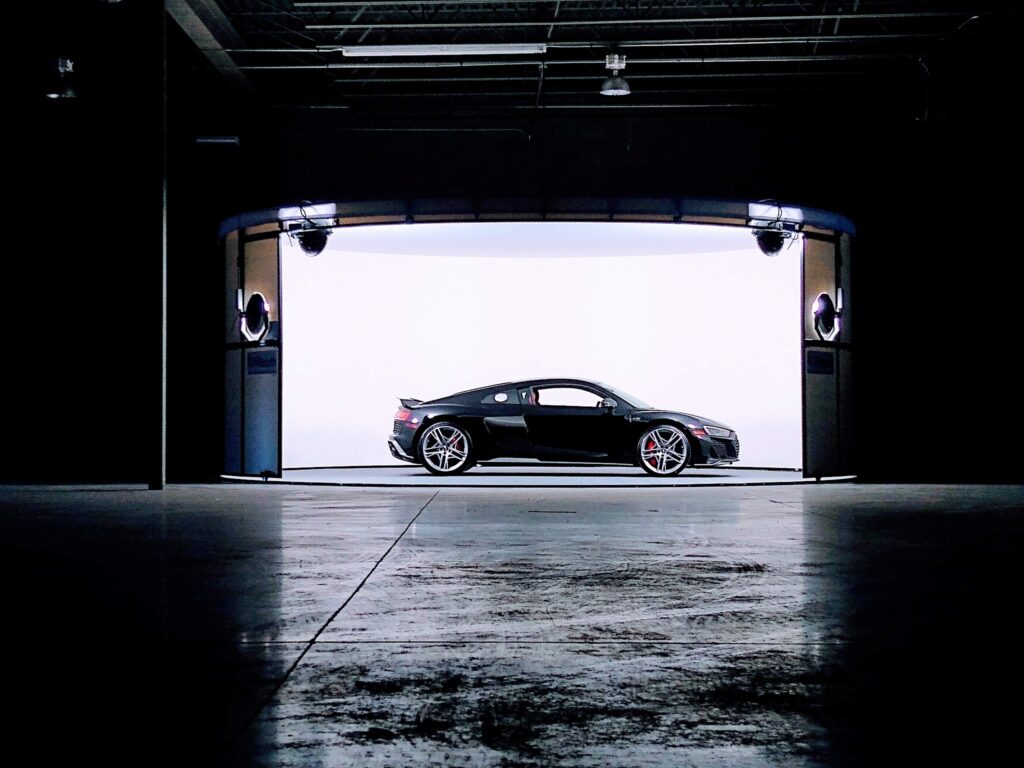
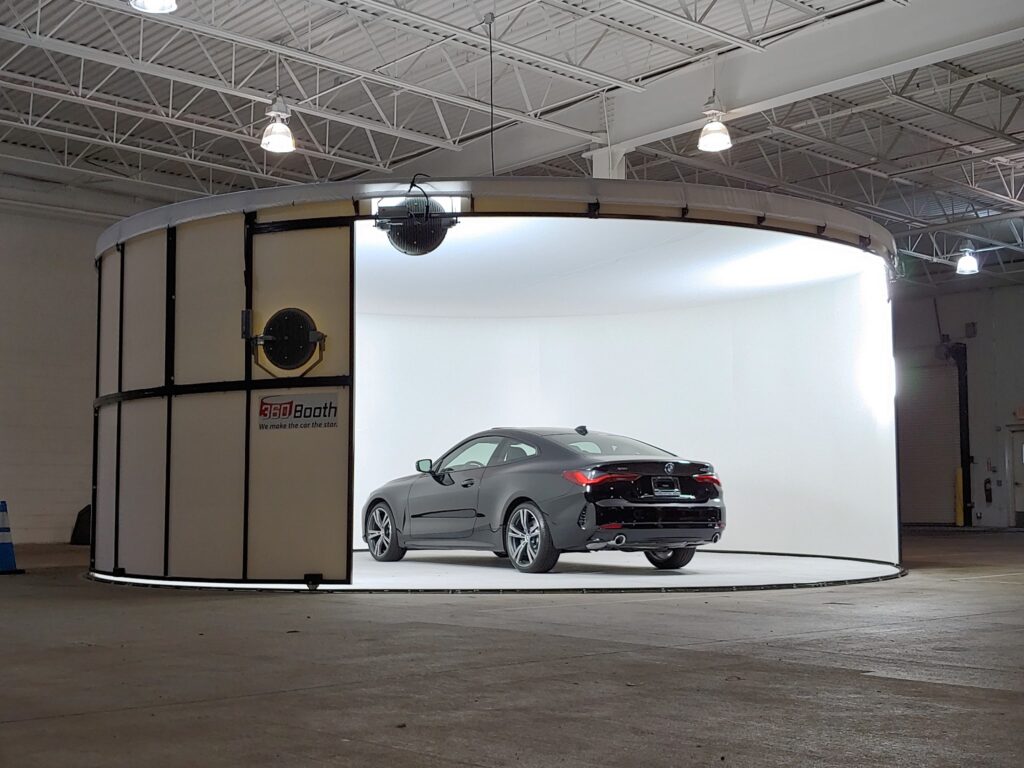
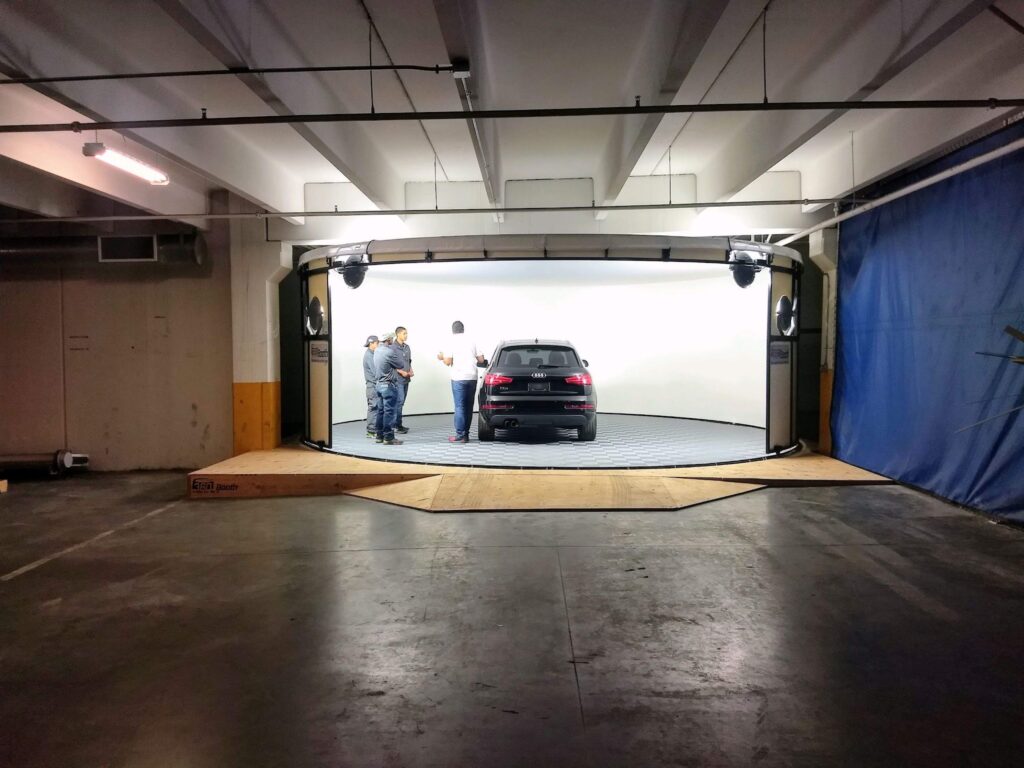
A controlled photo environment takes the forecast out of the workflow. A 360Booth vehicle photo studio gives every car the same light at 7 a.m., at 7 p.m., in July and in a January snowstorm. More than 1,700 360Booth studios operate in all 50 states and six countries for exactly this reason.
The studio also removes the variables that slow outdoor shooting down: repositioning the car for the sun, waiting for a cloud, and wiping water spots off the hood. When the room is the same every time, the shoot becomes a routine instead of a judgment call. Routine is fast.
5. Let the Person Who Finishes the Car Shoot the Car
The fastest handoff is no handoff. With the SHOOTit AI smart camera app on an iPhone, the detailer who just finished the car can photograph it on the spot, with no photography experience. Here’s how a detailer shoots vehicle photos with SHOOTit AI as part of their normal shift.
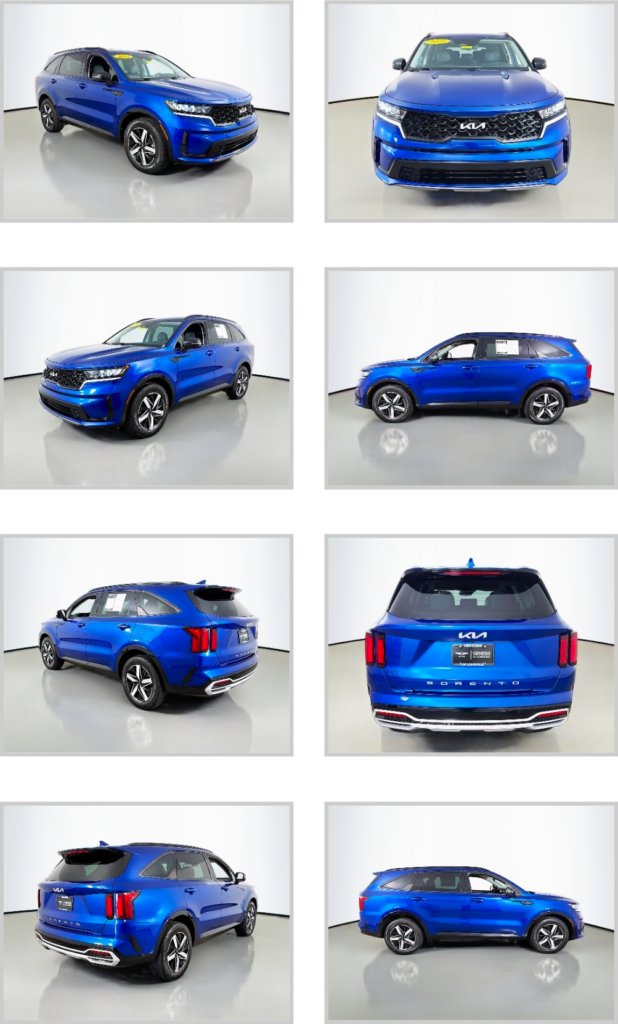
SHOOTit AI starts with the VIN, decodes the factory options and builds the shot list, so the employee knows exactly which features to capture. A full professional set, including spins and HDR, is typically captured in under seven minutes, compared with 15 to 30 minutes traditionally. See where those seven minutes go, stage by stage.
This also removes the vendor calendar from your used car speed to market. If you’re weighing that decision, our breakdown of in-house versus outsourced dealership photography lays out the trade-offs.
6. Catch Bad Photos at the Vehicle, Not the Next Morning
Rework is the most expensive delay in recon to frontline because it repeats steps that were already paid for. SHOOTit AI checks each shot in real time for blur, darkness and poor centering, then prompts an immediate reshoot while the employee is still standing at the car. The problem gets fixed at the shutter instead of in an edit queue.
Missed equipment is rework too. If heated seats or a blind-spot camera never made it into the gallery, the listing undersells the car. Here’s how VIN-driven capture helps you stop missing the options buyers search for.
7. Automate Upload and Syndication
Photos sitting on a phone or a memory card do nothing for used car speed to market. With SHOOTit AI, one tap sends the set to Autoexact. On average Wi-Fi, photos reach Autoexact in about 50 seconds, and from there they go out to vAuto and other vendors every other hour.
Autoexact, the data feed platform that has served dealers since 1997, currently runs more than 300 custom data feeds to vendors across the automotive industry. The right photos land on the right VIN in the right order, without anyone dragging files into a browser at the end of a long day.
Studio, Lot or Phone: Where Speed Really Comes From
Speed is not one tool. It’s what happens when the slow parts of the workflow stop depending on luck. Here’s how the common setups compare on the factors that move used car speed to market.
- 360Booth studio plus SHOOTit AI: The fastest and most consistent setup. Controlled light, no weather delays, guided capture, real-time quality control and automated upload. This is the professional standard for stores that want the best photo in the market.
- SHOOTit AI on the lot: Gets very close without a studio, which matters because most stores still shoot outside. Guided capture and in-app checks keep shoots fast and complete, though sunlight and weather still affect the schedule.
- Unguided phone or outside vendor: The slowest. Results depend on who’s holding the camera, what the weather is doing and when the vendor visits. Missed shots usually surface after the car is gone.
The pattern is clear. Every step that depends on memory, weather or someone else’s calendar adds days. Every step that is guided, repeatable and owned removes them. That’s true whether you run one rooftop or need to standardize vehicle photography across multiple locations.
How to Track Recon to Frontline Every Week
You can’t shorten what you don’t measure. Pick four timestamps for every vehicle and log them in your recon or inventory system. Most stores already capture two of them. The other two are where the hidden days live.
- Owned: The trade appraisal is signed or the auction purchase is final.
- Recon complete: Mechanical, cosmetic and detail work are finished.
- Photos complete: The full real photo set is captured and checked.
- Live online: The VDP is published with photos, price and equipment.
From those four stamps you get three gaps worth watching weekly: owned to recon complete, recon complete to photos complete, and photos complete to live online. The first gap is your recon to frontline problem. The second and third are your photo and syndication problems.
Review the slowest ten cars every week, not the average. Averages hide the cars that sat for nine days because nobody owned a step. The outliers tell you exactly which handoff broke, and fixing one broken handoff usually fixes it for every car behind it.
Set a target in hours for the photo gap. A car that finishes detail before lunch should be live online the same day. Once the team sees that target on the board, they’ll start finding ways to beat it, and your used car speed to market improves without another meeting.
A Quick Used Car Speed to Market Self-Check
Before you change anything, pull ten cars that went live online last week and answer five questions about each one. It takes about ten minutes, and it usually tells you more than a month of averages.
- How many days passed between ownership and the start of recon?
- How long did the car wait for an approval or a sublet vendor?
- How many hours passed between finished detail and finished photos?
- Did anyone have to reshoot, or did a photo go missing?
- How long did the photos take to appear on your website and marketplaces?
If the answers vary wildly from car to car, the problem is process, not people. Consistent cars mean a consistent system. Inconsistent cars mean steps that depend on who is working and what the weather is doing.
Write the slowest step at the top of your recon to frontline board and attack that one first. Most stores find their quickest win in the photo gap, because it is the step nobody was timing. Fix that, rerun the self-check in a month, and compare your used car speed to market before and after.
The Bottom Line on Used Car Speed to Market
The cars on your lot don’t sell from the lot anymore. They sell from a phone screen, often days before the buyer ever drives over. Every day between ownership and a complete, accurate listing is a day you pay to hold a car nobody can properly see.
The fixes aren’t glamorous. Start the clock at acquisition. Remove approval waits. Give photos an owner. Take weather out of the schedule with a studio. Let the person who finishes the car shoot it with guided capture. Catch mistakes at the shutter. Let the feed do the uploading.
Do those seven things and recon to frontline stops being a mystery. It becomes a number your team can see, own and shrink every week. That’s what used car speed to market looks like when it’s run like a process instead of a hope.
Want to see how fast your store could move? Contact the 360Booth team to talk through your current workflow, your space and where the days are hiding.
FAQ
What is used car speed to market?
Used car speed to market is the time from the moment a dealership owns a used vehicle to the moment its vehicle detail page is live online with a full set of real photos, an accurate price and the correct equipment. It goes one step further than time to line, which usually stops when the car is frontline ready.
What is a good recon to frontline time?
It depends on the store, but a faster recon to frontline time is always cheaper. In a Cox Automotive article, vAuto founder Dale Pollak noted that the best-performing dealers finished reconditioning in 24 hours or less, while others reported seven days or more. Track your own number from acquisition and review the slowest cars weekly.
How much does each day of delay cost a dealership?
A 2024 WardsAuto column put holding cost at $50 to $80 per car per day, depending on the brand. Your store’s number will differ, so calculate it from your own floorplan, insurance, depreciation and overhead.
How long does a SHOOTit AI photo shoot take?
A full professional SHOOTit AI photo set, including spins and HDR, is typically captured in under seven minutes, compared with 15 to 30 minutes traditionally. On average Wi-Fi, the photos reach Autoexact in about 50 seconds after saving.
Do I need a photo studio to improve speed to market?
No, but it helps the most. A 360Booth studio removes weather and daylight from the schedule and delivers the most consistent photos. SHOOTit AI also speeds up outdoor shooting with guided capture and real-time quality checks, so stores without a studio can still improve used car speed to market by cutting days from the photo step.
Related Reading:
- The Fastest Car to Sell Is the One That Gets Online First.
- What If Photos Aren’t Even a Step in Your Recon?
- Where Do the 7 Minutes Go? Inside a SHOOTit AI Vehicle Shoot, Stage by Stage
- The Detailer Washes It. The Detailer Shoots It. It’s in Autoexact in About 50 Seconds.
- What a Winter of Outdoor Photos Costs a 250-Car Store: $93,000 to $186,000
- Why Should Dealership Vehicle Photography Quality Control Happen at the Vehicle?