“The time and effort you put into inspecting the booth, evaluating the workspace, and following up with a detailed report was way above and beyond what anyone could have expected.”
— 360Booth customer, October 2025
“It has significantly enhanced the quality of our photo inventory and website, and it has trained our eyes to better recognize angles and focus points for each shot.”
— SHOOTit AI customer, May 2025
“Of all the vendors I deal with you guys are always on the ball to get things corrected, I appreciate it.”
— Auto Exact customer, May 2025
“I can’t tell you how much we appreciate you going out of your way to be here in person to help us.”
— 360Booth customer, December 2024
“The booth looks great and the app works really well.”
— 360Booth and SHOOTit AI customer, March 2025
360Booth Vehicle Photo Studio Reviews
Installation and on-site service
“Thank you for your prompt help getting the booth reinstalled.”
— 360Booth customer, September 2026
“Thank you to all for the assistance in getting the booth fixed.”
— 360Booth customer, July 2026
“Thank you so much for coming out, greatly appreciated.”
— 360Booth customer, January 2026
“We put the booth back on track and is functioning perfect again.”
— 360Booth customer, March 2025
“Helpful with answers when asked questions and a pleasure to have on-site doing the install.”
— 360Booth customer, November 2024
Photo quality and daily use
“You guys are awesome, thank you!”
— 360Booth customer, July 2025
“You guys are the best.”
— 360Booth customer, May 2025
“We love using our 360booth.”
— 360Booth customer, May 2025
“FYI our pics look great, I know our group is super interested.”
— 360Booth customer, December 2024
“Booth is awesome by the way.”
— 360Booth customer, November 2024
Fast answers and follow-up
“Thanks again for your excellent customer service.”
— 360Booth customer, October 2026
“Thanks for all your help answering my questions.”
— 360Booth customer, June 2026
“Thank you so much for the quick response to my email!”
— 360Booth customer, May 2026
“Thank you so much for your quick response.”
— 360Booth customer, July 2025
“Thanks … for the great service.”
— 360Booth customer, July 2025
“Thank you for the quick response and follow up with this project.”
— 360Booth customer, April 2025
SHOOTit AI Smart Camera Reviews
Better photos on the website
“Excellent and very helpful to the SUV shopper.”
— SHOOTit AI customer, December 2025
“Everything looks great! Thanks for your help!”
— SHOOTit AI customer, March 2026
“That sounds perfect, thank you for your help in this matter.”
— SHOOTit AI customer, January 2026
“Looks great. Thanks for all the help. I appreciate it.”
— SHOOTit AI customer, January 2026
Quick fixes and uploads
“Awesome, we got it back up. Thank you so much!”
— SHOOTit AI customer, August 2026
“Really appreciate the quick assist on this matter.”
— SHOOTit AI customer, June 2026
“Refreshed again and all working now.”
— SHOOTit AI customer, February 2026
“All 14 have uploaded successfully. Thank you for the quick response!”
— SHOOTit AI customer, February 2026
“Everything working perfect now.”
— SHOOTit AI customer, October 2025
“Thank you, it’s working great now!”
— SHOOTit AI customer, September 2025
Auto Exact Data Team Reviews
Websites, banners and reprocessing
“Looks perfect on our website. Thanks again!”
— Auto Exact customer, November 2025
“All looks good! Thank you for your help!”
— Auto Exact customer, October 2025
“Fantastic! Thank you so much. You guys are too good.”
— Auto Exact customer, September 2025
“Thank you for reprocessing both vehicles, I appreciate your help.”
— Auto Exact customer, August 2025
“The banners look great, thanks again!”
— Auto Exact customer, March 2025
Responsive, patient support
“Many thanks for your help and checking back in.”
— Auto Exact customer, July 2026
“Thank you so much for the quick turnaround on this.”
— Auto Exact customer, May 2026
“Really appreciate you helping us find a workaround!”
— Auto Exact customer, April 2026
“Thanks for the great follow ups. You guys are amazing.”
— Auto Exact customer, December 2025
“Thank you so much again for your patience, I really appreciate you for helping me all the time.”
— Auto Exact customer, November 2025
“I just wanted to express my gratitude for all your assistance. It has been wonderful working with you.”
— Auto Exact customer, May 2025
“You guys are the best.”
— Auto Exact customer, April 2025
“Thank you for your quick response—as usual!”
— Auto Exact customer, April 2025
“Great, thanks so much for the quick help!”
— Auto Exact customer, February 2025
“I am so grateful for your speedy support! Absolute legend!”
— Auto Exact customer, January 2025
“Thank you for the fast response and I will take a look and get back to you if anything else needs to be done.”
— Auto Exact customer, November 2024
“Thank you for the quick response.”
— Auto Exact customer, October 2024
Customer Support Across the System
“Working as should now, thank you for all of your help sir. It’s greatly appreciated.”
— Customer support, March 2025
“Just tested it and is back working fine again. Thanks a lot, I appreciate your help.”
— Customer support, November 2024
Want to see what dealers are talking about? Visit our Customer Reviews page or reach out below.
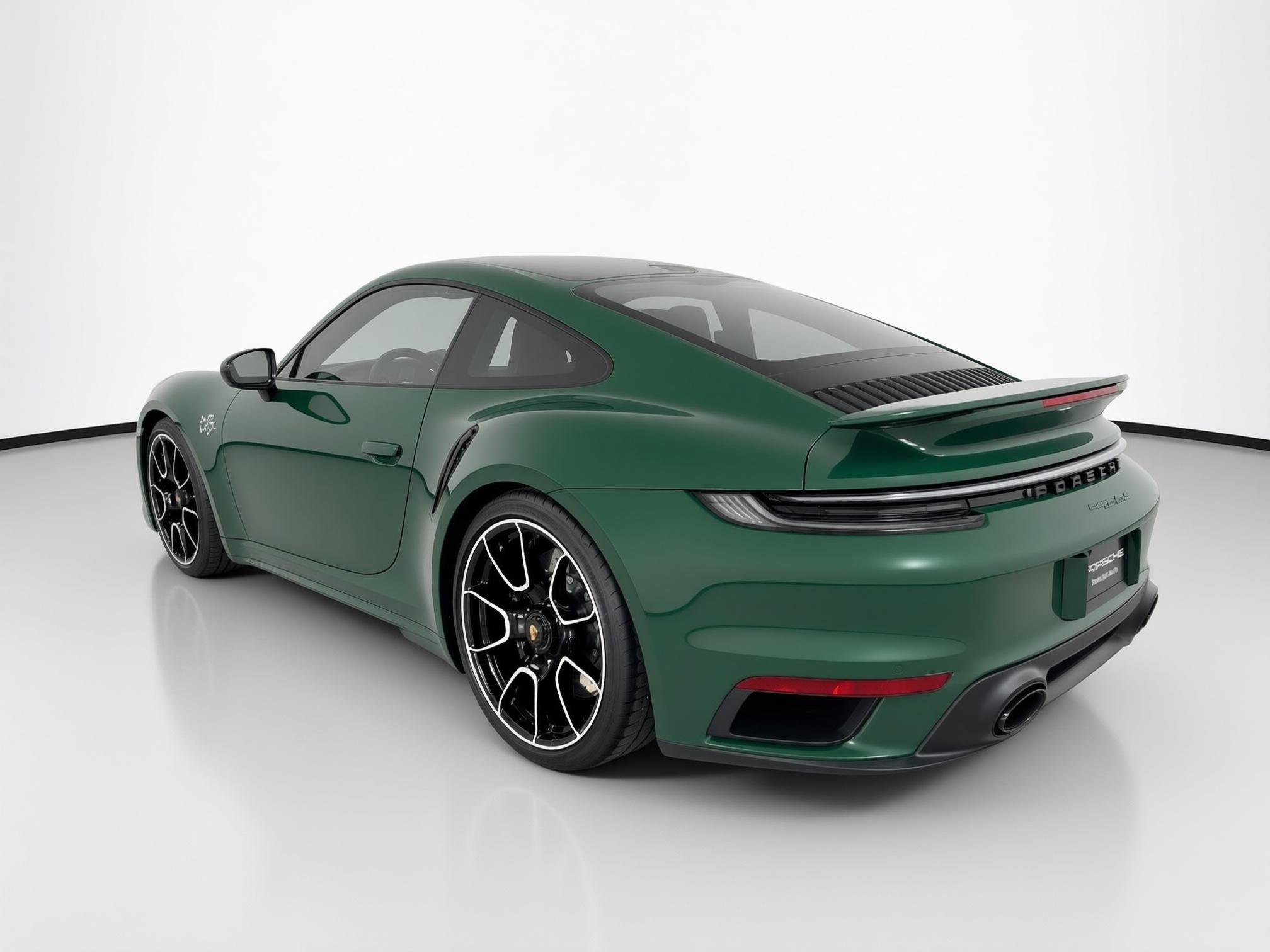
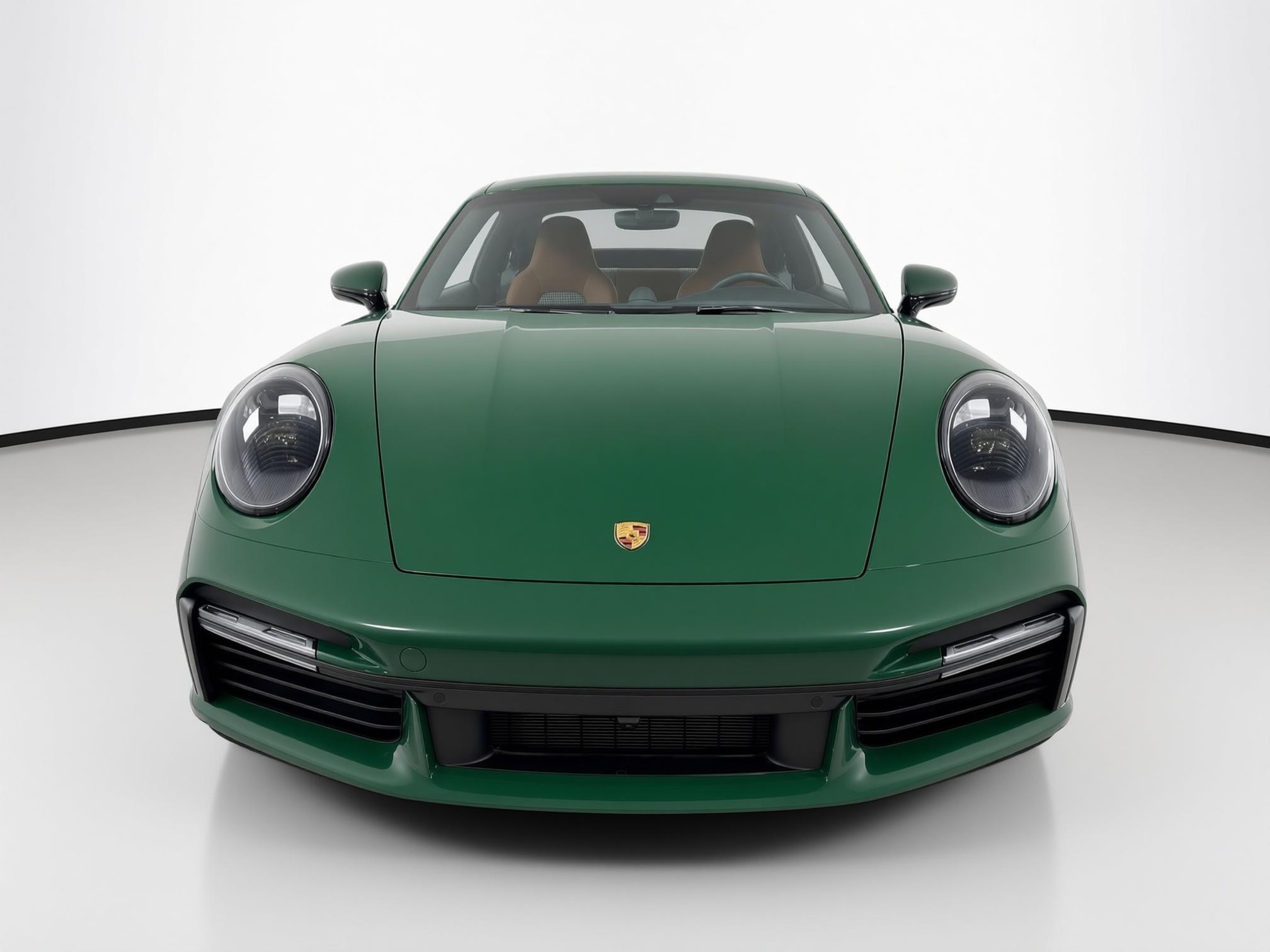
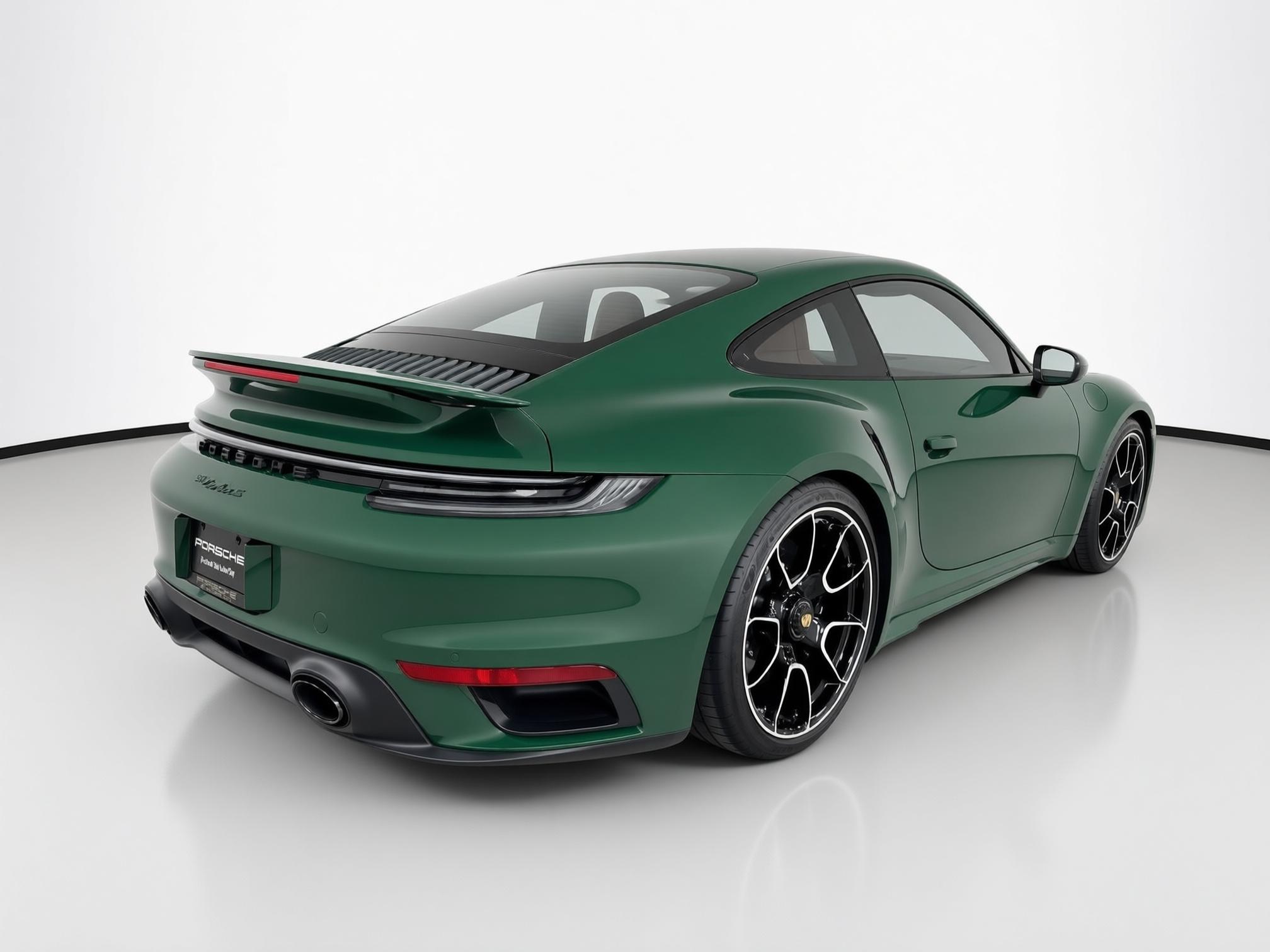
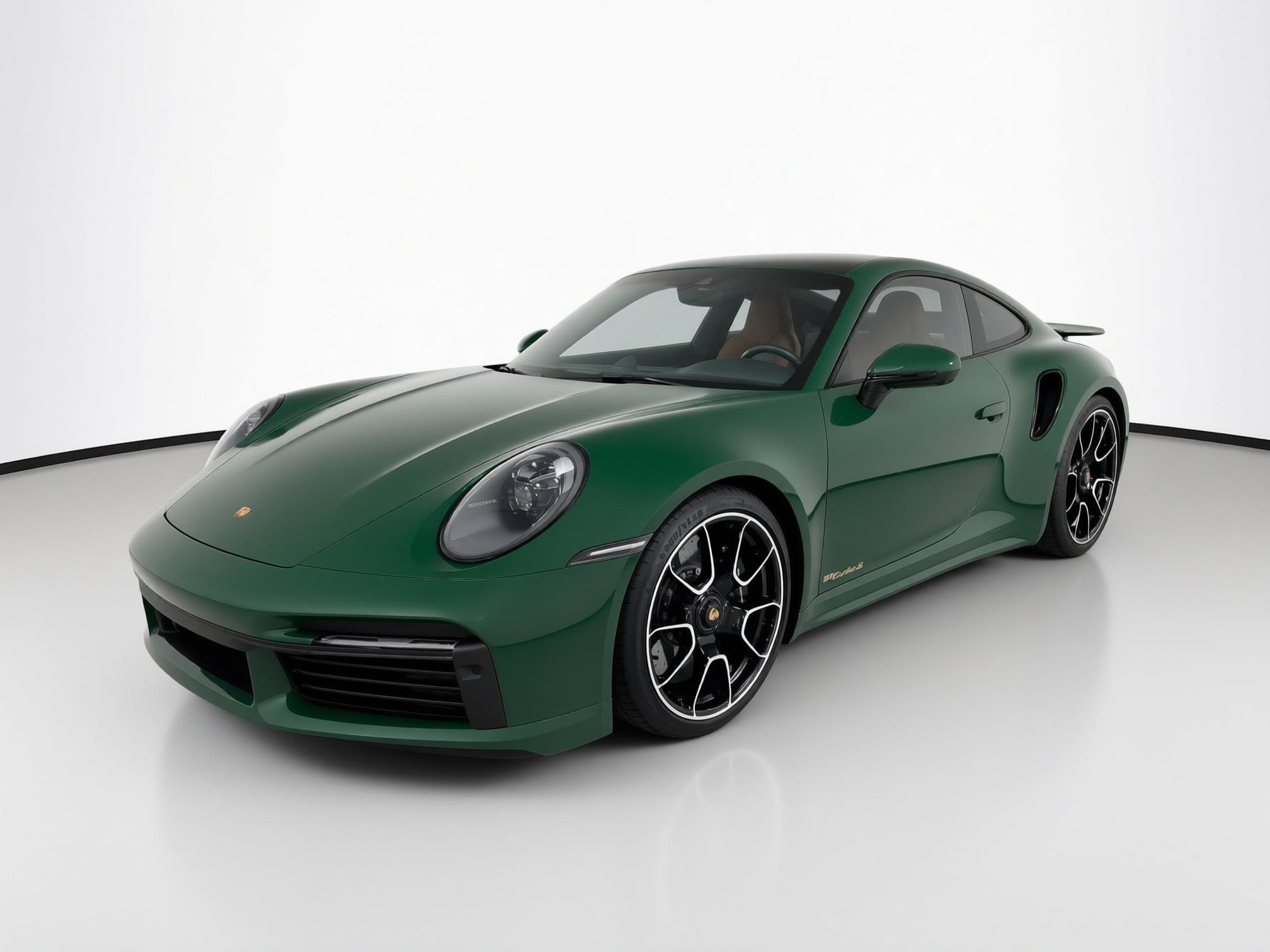
Listen to what Alex Shikhmuradov had to say about his experience with 360Booth®: “At Porsche Redwood City, we believe that every luxury car deserves to be showcased in its best light. That’s why we’ve invested in 360Booth® , a game-changer for photographing our inventory. In just 5-7 minutes, we can take professional-grade photos including stunning…
Direct Answer: A dealership group can standardize vehicle photography across multiple locations without requiring identical buildings or equipment. Establish one required photo sequence, use VIN-based capture guidance, enforce image-quality standards and verify correct media delivery. Install 360Booth where space permits, establish controlled DIY photography areas where appropriate and use SHOOTit AI for guided outdoor capture when necessary. The photography environment can vary. The evidence standard should remain consistent.
The Biggest Multi-Store Photography Problem Isn’t the Camera
Imagine owning ten dealerships.
Three photograph vehicles inside dedicated studios. Four use service or detail bays. Three photograph everything outdoors.
Each location has its own photographer, equipment preferences and approach to vehicle merchandising.
One store publishes 45 photographs. Another publishes 18. Another has beautiful exterior photographs but almost nothing showing the interior.
Management sees ten dealerships selling vehicles under the same ownership group. Customers see ten different standards of professionalism.
The problem isn’t necessarily the equipment. The problem is that nobody established one photography standard for the entire organization, and that problem doesn’t disappear simply because every dealership purchases the same camera. It’s the same reason dealership vehicle photography is still inconsistent at so many single stores, multiplied across every rooftop.
Standardize the Photographs Before Standardizing the Buildings
The first decision for a dealership group should be determining what every completed vehicle photo set needs to communicate. We’ve argued before that dealer group vehicle photography should be governed as one brand standard. This article is about how to put that standard into practice when your buildings don’t match.
Customers want to see the actual vehicle. That includes its exterior appearance, interior, equipment, wheels, cargo areas and visible condition.
A repeatable core image sequence creates consistency. SHOOTit AI guides employees through the dealership’s required 40+ image process. The employee follows an established sequence rather than deciding which pictures to take at every vehicle.
Additional images can be captured when the vehicle has equipment or condition details that deserve closer examination.
That distinction matters. A consistent process does not mean photographing every vehicle as though it has identical equipment. It means giving every vehicle the same level of attention. For more on why a defined sequence beats individual judgment, see What Makes Dealership Vehicle Photography Fast, Simple and Repeatable?
VIN Identification Should Come Before Photography
SHOOTit AI begins by capturing the vehicle VIN. The system uses VIN-decoder information to identify equipment and standard features expected on that particular vehicle. This makes the photography process vehicle-aware.
Consider an employee who reaches a requested equipment photograph but cannot immediately locate the feature. The employee attempts to skip the photograph. If the decoded vehicle information identifies that equipment as a standard feature, SHOOTit AI immediately warns the employee to check again.
That is important when a dealership group employs people with different levels of automotive experience. Employees shouldn’t need to memorize the equipment specifications of every manufacturer. The camera provides guidance based on the vehicle information.
The VIN identifies what should be there. The employee documents what is actually there.
VIN decoding is not infallible. Equipment can vary, and a human must resolve discrepancies between expected features and the physical vehicle. The system should guide the inspection, not invent equipment or declare a vehicle’s configuration perfectly verified.
The Building Determines the Environment, Not the Photography Standard
This is where dealership groups frequently make unnecessary compromises. They assume that if every location cannot accommodate an identical studio, the group cannot establish a consistent photography process.
That’s incorrect. There are three practical approaches.
1. Install 360Booth Where Space Permits
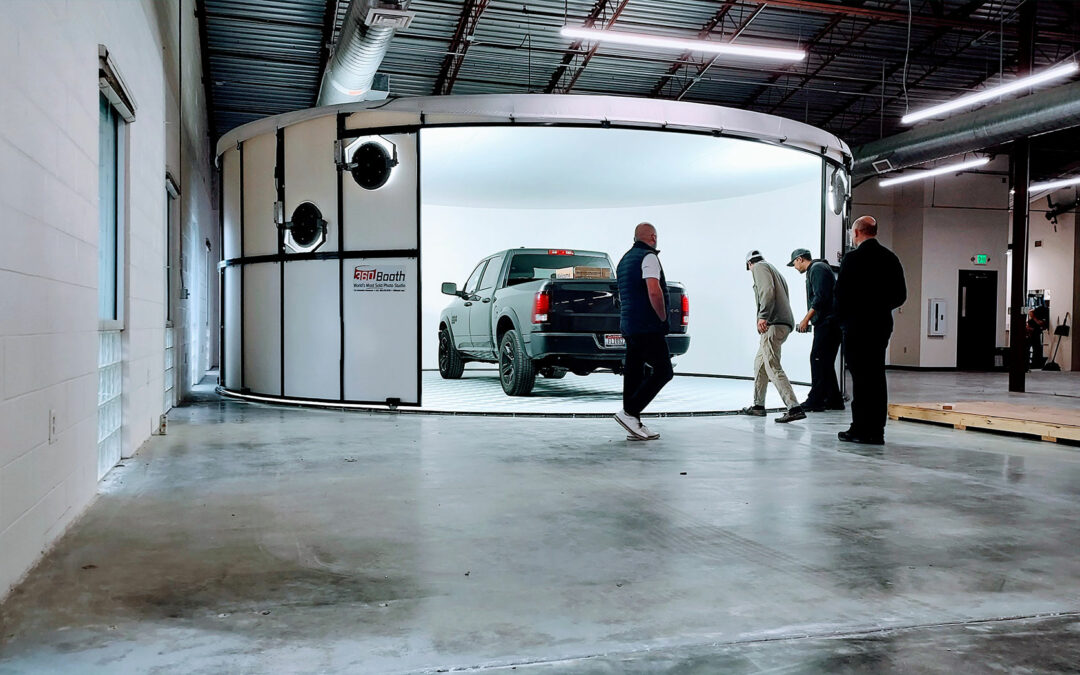
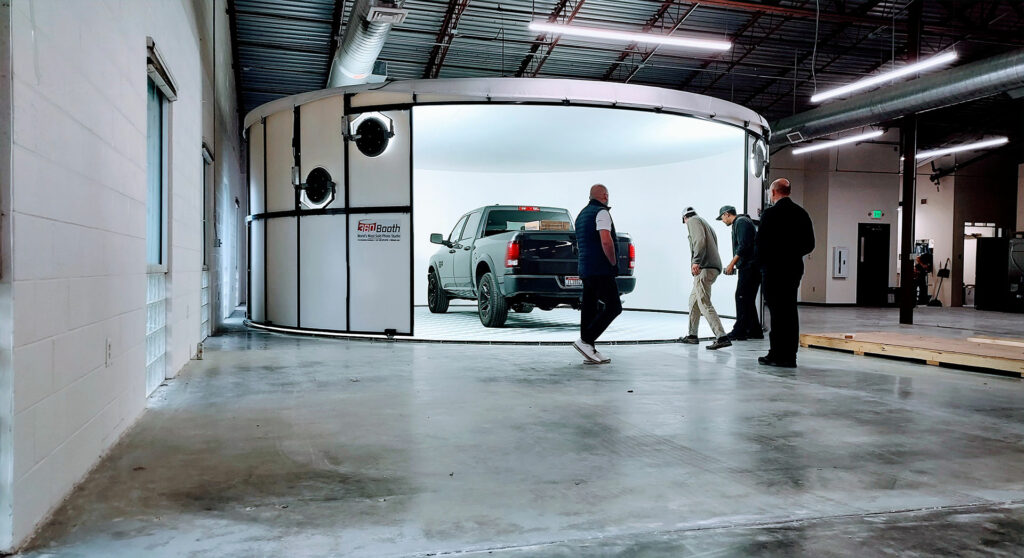
360Booth provides the controlled physical photography environment. The vehicle remains stationary while the studio structure moves manually around it. There is no motorized vehicle turntable.
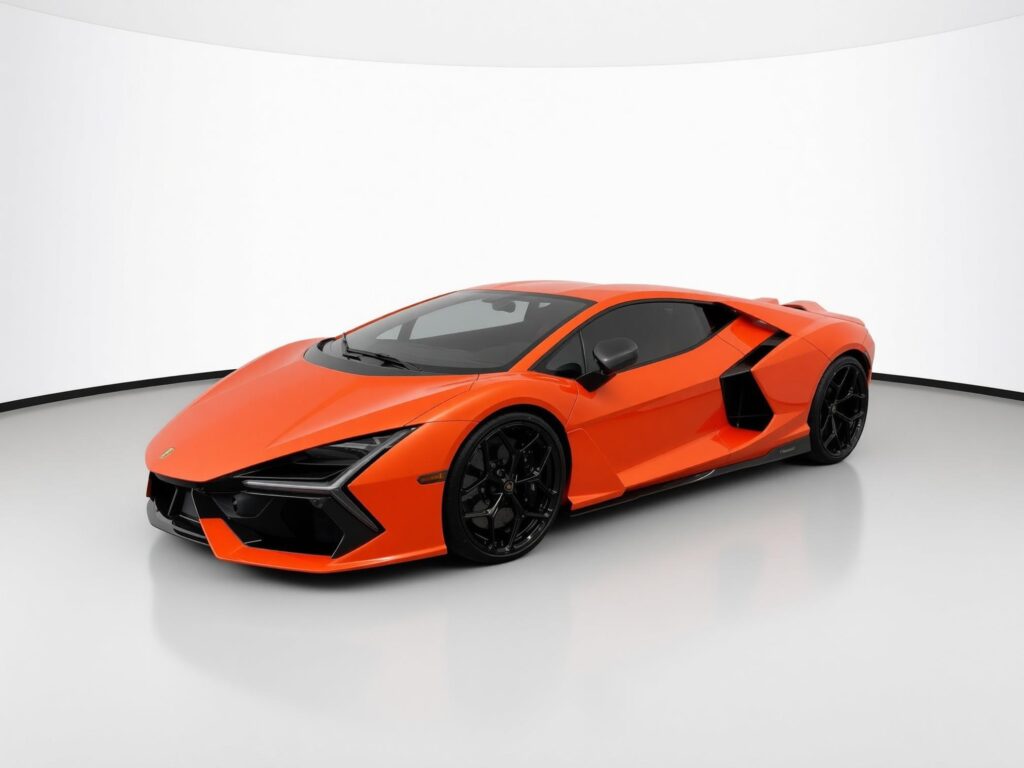
The studio uses its own lighting system and diffused white ceiling to control illumination and reflections around the actual vehicle. The result is a repeatable photography environment that isn’t dependent on outdoor lighting conditions.
For standard 24-, 26- and 28-foot studios, the minimum clear room is 30 feet long in the vehicle-entry direction, 30 feet wide and 11 feet high. A professional site survey determines whether the space, vehicle flow and building conditions are appropriate. See How much room do I need to install 360Booth® at my dealership?
2. Create a Controlled DIY Photography Area
Not every dealership has room for a complete 360Booth installation. An existing indoor area may still be suitable for vehicle photography.
Lighting, color temperature, reflections, background distractions and vehicle positioning must be evaluated.
That’s where access to more than 50 years of combined vehicle-photography expertise becomes valuable. Our experience covers dedicated studios, cameras, iPhones, lighting arrangements, DIY spaces, capture sequencing and dealership workflows.
The objective is to create the best practical physical environment available within that building.
A DIY area should not be represented as automatically matching the consistency of a purpose-built 360Booth. Its limitations need to be understood and managed.
3. Use SHOOTit AI When Indoor Photography Isn’t Practical
Some dealerships simply don’t have the appropriate indoor space. That shouldn’t prevent them from using a structured vehicle photography process.
SHOOTit AI can guide employees through the required image sequence outdoors. The camera’s intelligent guidance remains valuable even when the surrounding environment is less controlled.
However, outdoor capture remains subject to weather, sunlight, reflections and other physical limitations. Software does not make those conditions disappear.
The objective is to maintain a consistent capture process while recognizing the differences between environments.
Image Quality Must Be Enforced at Every Location
A standardized photo sequence means little if one dealership accepts dark photographs and another refuses them.
SHOOTit AI applies image-quality controls during capture. When an image is too dark, blurry or poorly centered, SHOOTit AI stops the workflow and immediately prompts the employee to reshoot before continuing.
That matters across an ownership group. Employees may have different experience levels. Photography environments may differ. But the same unacceptable image conditions should trigger the same immediate correction.
The employee doesn’t need to finish the vehicle, upload the photographs and wait for someone at another location to discover the mistake. The problem gets corrected while the vehicle is still in front of the camera. That’s why quality control should happen at the vehicle.
That is how technology reduces dependence on individual photography skills.
Management Must Separate Capture From Publication
A dealership group should also distinguish between three different events:
The vehicle was photographed.
The photographs were successfully uploaded.
The photographs appeared on the correct online vehicle listing.
Those events are connected, but they are not identical.
SHOOTit AI supports the capture and upload process. Auto Exact Data Team supports VIN-level media management, inventory feeds and delivery troubleshooting across connected systems, as part of one connected vehicle photography system.
This becomes especially important when dealerships use different inventory management platforms or website providers. A groupwide photography standard should include verifying that the correct images ultimately appear on the correct vehicle detail page.
Otherwise, management may believe a vehicle has been successfully merchandised simply because its photographs were captured.
The customer cannot shop photographs that never reach the listing.
What Should Dealership Group Management Measure?
A dealership group should be able to evaluate its photography operation without relying entirely on individual store managers’ opinions. Useful operational measurements include:
Vehicles awaiting photography
Time between photo readiness and completed capture
Required-image completeness
Upload exceptions
Vehicles missing published media
Management should also investigate unusual gaps in camera usage. SHOOTit AI’s five-day inactive-license reporting can help identify accounts that deserve follow-up.
That inactivity does not automatically prove a dealership has stopped photographing vehicles. Employees may be absent, responsibilities may have changed or devices may have been reassigned. But it provides a practical question for management to investigate.
Not every measurement needs to come from one software dashboard. Some require inventory, staffing and website-delivery information from connected systems.
The objective is operational visibility, not another report nobody reads.
Why Authentic Capture™ Matters Across Multiple Dealerships
360Booth Authentic Capture™ starts with evidence of the actual vehicle. That principle should remain consistent whether the vehicle is photographed inside a 360Booth, in a prepared indoor area or outdoors using SHOOTit AI.
The actual equipment matters. Visible wear matters. Vehicle identity matters. Accurate image assignment matters.
A dealership group should never establish consistency by digitally making every vehicle appear newer, cleaner or better equipped than it actually is. AI can organize or interpret vehicle evidence. It should not replace that evidence with imagined condition or equipment.
This is why the relationship between 360Booth and SHOOTit AI is so important. 360Booth is the controlled evidence room. SHOOTit AI is the guided evidence-capture layer. Together, they establish a practical foundation for repeatable vehicle merchandising. Where a studio isn’t feasible, the intelligent capture process remains available.
How Should a Dealer Group Begin?
Start with the photography standard, not the equipment order.
Define the standard. Determine which views every vehicle requires, which additional equipment and condition images matter, and what constitutes an acceptable finished image set.
Evaluate each rooftop. Identify the locations that support a 360Booth, those suitable for a DIY indoor area and those that must initially rely on outdoor capture. Our guide to what dealers should really look for in a vehicle photo studio covers the studio decision.
Train on one sequence. Train employees on the same guided sequence.
Verify delivery. Confirm that the completed photographs are reaching the correct inventory listings.
The goal isn’t to make every dealership building identical. The goal is to make the photography operation understandable, repeatable and accountable regardless of the building.
The Dealer Wake-Up Call
A dealership group doesn’t need ten identical buildings to operate one photography standard.
It needs one expectation. One repeatable process. Employees who understand that process. And management willing to verify the results.
We’ve spent decades developing vehicle photography systems for dealerships, auctions and large automotive operations. The lesson is straightforward.
Standardize what the customer deserves to see. Adapt the equipment to the building. Never lower the evidence standard simply because one dealership has less space than another.
That’s how vehicle photography becomes a managed operation instead of ten separate experiments.
FAQ
Does every dealership in a group need a 360Booth?
No. A 360Booth provides a controlled studio environment where the building supports installation. SHOOTit AI can also operate in appropriate DIY indoor or outdoor photography environments.
Can different dealerships follow the same SHOOTit AI photography process?
Yes. SHOOTit AI guides the dealership’s required image sequence, allowing locations to follow a consistent capture approach even when their physical photography environments differ.
Does SHOOTit AI use VIN information to guide equipment photography?
Yes. The process begins with VIN capture and uses VIN-decoder information to identify expected equipment. If an employee skips a requested standard-feature image, SHOOTit AI immediately warns them to check again.
Can AI guarantee that every vehicle's equipment and condition have been accurately documented?
No. VIN-decoder information and AI guidance support the process, but physical verification remains necessary. AI should not be represented as perfectly identifying equipment, damage, authenticity or condition.
How can management determine whether a dealership is using its camera?
SHOOTit AI’s inactive-license reporting provides visibility into accounts without recent activity. Management should investigate the reason rather than automatically assuming an employee or location has stopped working.
Should vehicle photos be checked after uploading?
Yes. Correct capture and successful upload do not guarantee correct website publication. Dealerships should verify that the proper media appears on the correct vehicle listing.
Pull up your recon board. Find the column labeled Photos.
Inspection is there. Used car manager approval is there. Service, parts, body shop and detail are all there. Photos? They just… happen. Eventually. When the weather cooperates and the camera person is in.
Most recon boards skip the photo step
When Dustin Jones of Rapid Recon studied the reconditioning data of 66 dealerships for WardsAuto, he found that few of them had a Photos step in their workflow at all. He called it a missed opportunity for time-to-line improvement.
Here’s why that matters. A step with no column has no owner. No owner, no clock. No clock, and nobody notices the “ready” car with zero pictures online.
Cox Automotive’s Q3 2026 Manheim Used Vehicle Value Index report expects off-lease supply to climb from about 190,000 units a month in the first half of 2026 to about 220,000 in the second half. Lease check-ins at Manheim are up 21% from the same time last year, and they grew from Q2 to Q3 when that quarter normally brings a seasonal dip.
Cox’s read on Q4 is simple: more volume.
More units through recon means more cars that can stall in the one step nobody tracks. If photos already wait on the weather and one person’s schedule at today’s volume, they won’t keep up when the off-lease wave rolls in.
DEALER WAKE UP CALL
A car isn’t frontline-ready until a shopper can see it.
The fastest car to sell is the one that gets online first. Every day a finished car sits without photos is a day it can’t generate a lead, and with values softening this fall, that day costs more than it used to.
Put photos on the board
Give photos their own column. Between detail and sale-ready, where it belongs.
Give the step an owner. One accountable person per shift, not “whoever’s free.” Your process shouldn’t depend on one person either, so train a backup.
Give it a clock. Track time from detail-complete to photos-live, the same way you track every other step.
Make it boring. The same shots, the same order, the same result on every car.
Boring is the goal. A step only stays on schedule when nothing outside it can stop it.
How 360Booth and SHOOTit AI make the photo step boring
SHOOTit AI walks your team through the same 40+ shots on iPhone and stops dark, blurry or off-center frames for a reshoot before anyone leaves the car. That’s quality control at the vehicle, not after the listing goes live. Done once.
How many cars on your lot are “ready” but not photographed?
Sources: Cox Automotive, Q3 2026 Manheim Used Vehicle Value Index report (Oct. 7, 2026); Dustin Jones, “Getting More Out of Used-Car Reconditioning,” WardsAuto (Oct. 2021).
Every dealership that has adopted background replacement software knows the appeal. Pull a car out front, snap the photos, and let the app swap the lot behind it for a clean showroom backdrop or a polished studio look. Listings look consistent, and the cluttered parking lot, the neighboring building, and the stray shopping cart all disappear.
It works well, until the weather turns.
The Hidden Flaw: Built for Sunny Days
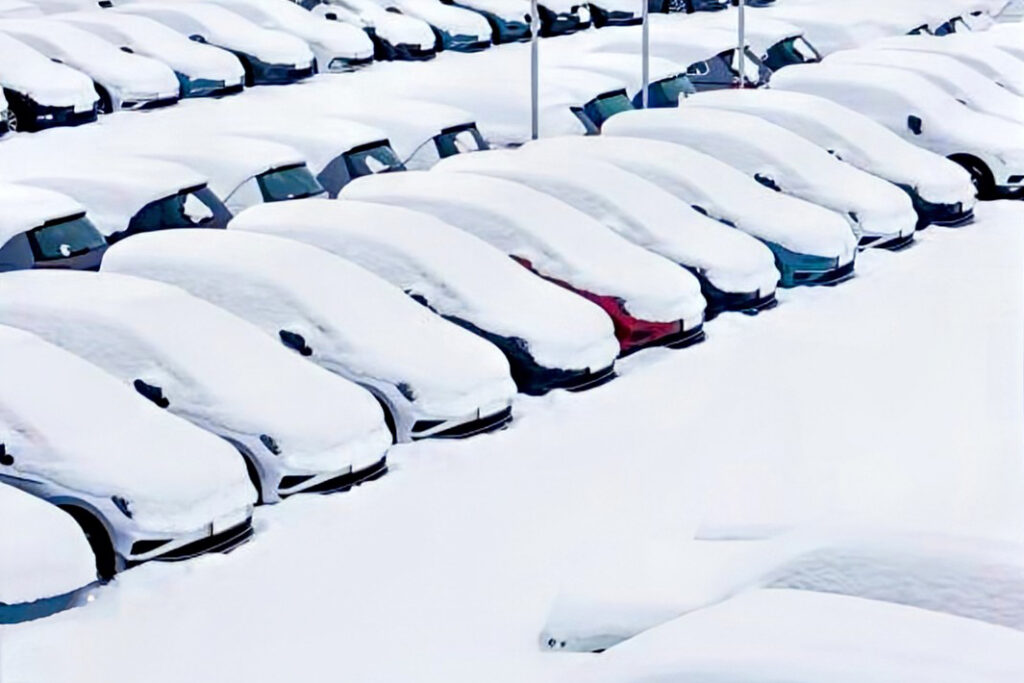
Most of these apps were designed around one assumption: the car will be shot outside. That makes sense on a clear afternoon, when the light is good and the vehicle is easy to separate from its surroundings. Rain and snow break that assumption.
Rain leaves water droplets and wet reflections on the paint and glass. The software struggles to tell where the car ends and the background begins, so edges blur, windows get cut out wrongly, and the car looks like it was pasted onto the scene.
Snow is worse. White snow against a white or silver vehicle confuses the cutout tool, and falling flakes show up as noise in the image. Photographers also don’t want to stand outside in freezing temperatures for 40 vehicles.
Gray, overcast days flatten the lighting, which makes the final images look dull no matter how nice the replacement background is.
The result is that the tool the dealership is paying for sits unused for days or weeks at a time. In many markets, that means a good part of the year.
What a Rainy Week Costs
Inventory doesn’t stop arriving because of the weather. Trade-ins come in, new stock gets delivered, and every unphotographed vehicle is a vehicle that isn’t properly listed online. When the app can’t be used, dealerships usually fall back on one of three bad options:
Wait for the weather to clear. Cars sit with no photos or placeholder images while competitors list theirs.
Shoot in the rain anyway. The photos are inconsistent and look unprofessional next to sunny-day shots of similar vehicles.
Pay for the software and work around it. The subscription keeps charging while the team goes back to old habits.
Since most car shoppers start their search online, slow or low-quality listings directly affect leads, and leads affect sales.
The Real Problem: Dependence on Outdoor Conditions
The issue isn’t background replacement itself. It’s that an outdoor-only workflow makes your photo pipeline depend on the forecast. Any business process that stops working when it rains is a risk, and your listings are too important for that. A dependable photo setup should work the same on a blizzard morning as on a perfect July afternoon.
What to Look For Instead
When evaluating photo software or workflows, ask these questions:
Can it run indoors? A covered bay, a service drive, or a dedicated photo area removes the weather variable entirely.
Does it handle imperfect conditions? Wet paint, low light, and reflective surfaces shouldn’t produce unusable cutouts.
Is the quality consistent? Your listings should look uniform whether they were shot Monday in the sun or Thursday in the snow.
Does it fit into your daily routine? If the team has to check the weather before deciding how to photograph a car, the system is working against you.
Make Your Photo Process Weatherproof
Dealerships invest in photo technology to move cars faster and present them better. A tool that works only part of the year delivers only part of that value. Before the next storm hits, take an honest look at your process. If bad weather shuts down your photography, it’s worth finding a setup that doesn’t. Your inventory, and your customers scrolling through listings, will notice the difference.
FAQ
Why do background replacement apps struggle in rain and snow?
Rain leaves droplets and wet reflections that confuse the cutout, snow blends into white or silver cars and shows up as noise, and gray days flatten the lighting.
What does a rainy week cost a dealership?
Inventory keeps arriving. Dealers either wait with unphotographed cars, shoot inconsistent photos in the rain, or keep paying for software the team works around.
What should a dealership look for in a weatherproof photo process?
A setup that runs indoors, handles imperfect conditions, produces consistent quality in any weather and fits the daily routine without checking the forecast.
AI generated vehicle views can be useful merchandising, but they should not be treated as primary photographic evidence of vehicle condition when the displayed viewpoint was never actually captured. If software creates new angles from a small number of source photographs, unseen scratches, dents, wheel damage, paint defects or other wear were never directly recorded from those viewpoints.
Generated Vehicle Merchandising and Vehicle Evidence Are Different
Automotive AI companies are rapidly reducing the amount of photography required to create a complete-looking presentation.
A photo software company currently advertises a 360 experience created from four standard vehicle photographs with no additional shooting. Its website describes the process as turning those photographs into an interactive 360° experience.
Another photo software company similarly markets 360° vehicle experiences created from existing vehicle images without additional capture.
The technology is impressive. But the terminology matters. If a camera captured four viewpoints and software displays many more viewpoints, the additional views were not original photographs taken from those camera positions. They were created from the available source information. Data Imagination predicting what it looks like.
That is merchandising. It is not the same thing as photographing the actual vehicle from every displayed angle.
Why This Matters More With Used Vehicles
A new vehicle and a used vehicle present very different imaging problems.
Used vehicles have history.
A door may have a small ding.
One wheel may have curb rash.
A quarter panel may carry a scratch.
A seat bolster may show wear.
Paint may have an imperfection visible only from a particular angle or under a particular reflection.
If that area was never photographed directly, software cannot recover photographic evidence that was never captured.
It may estimate what belongs there. It may create a visually convincing continuation. It may produce an excellent merchandising image. But those are different claims from saying the image documents the actual condition of that surface.
That distinction should become more important, not less important, as vehicle-condition imaging advances.
SHOOTit AI guides the dealership through the required 40+ image process rather than attempting to manufacture a complete visual record from only a handful of source photographs.
This is not an argument that generated imagery has no value.
Generated backgrounds can improve merchandising consistency.
Synthetic video can create engaging advertising.
Generated viewpoints can produce smooth, attractive presentations.
Those can all be legitimate tools when their purpose is clear.
The problem is category confusion. A marketing asset should not automatically be treated as a condition record. A simulated viewpoint should not automatically be described as an original photograph. A visually accurate-looking vehicle is not automatically proof that every visible surface corresponds exactly to what the camera recorded.
Provenance Helps, but Provenance Is Not Proof of Condition
The broader technology industry is already developing systems to identify how digital media was created.
C2PA Content Credentials can record information about a file’s origin, editing history and AI involvement. Google’s documentation explicitly notes that C2PA does not classify media as “real” or “fake” and does not guarantee that the depicted information is truthful.
That distinction matters for automotive imaging. Knowing that AI was used is useful provenance. It still does not turn a generated viewpoint into a photograph that was physically captured from that position.
What Dealers Should Ask Their Imaging Provider
A dealer evaluating an AI imaging product should ask one very simple question: Was every displayed exterior viewpoint actually photographed, or were some of those viewpoints generated from other images? That question separates capture from synthesis immediately.
Then ask:
Was the vehicle itself regenerated?
Was only the background replaced?
Were unseen surfaces estimated?
Can the original source photographs be retained?
Can generated media be clearly identified?
Does the system preserve visible condition exactly as captured?
Those questions will become increasingly important as merchandising, computer vision and vehicle condition analysis begin using the same image pipelines.
Authentic Capture™ Is About the Chain of Evidence
The future of automotive imaging will use more AI, not less. That makes source quality more important. Damage models, merchandising systems, appraisal tools, inspection platforms and AI search systems will all depend on the visual information they receive.
A beautiful synthetic image may be useful. A properly captured source image can also become evidence. Those are not interchangeable assets.
360Booth and SHOOTit AI are being built around that distinction.
Photograph the actual car. Preserve the actual condition. Then let AI work from evidence instead of inventing what the camera never saw.
FAQ
Can four photographs produce an interactive 360° presentation?
Yes. Current automotive AI vendors publicly advertise interactive 360° presentations generated from only a small number of source photographs.
Does that mean every displayed viewpoint was photographed?
No. If only a limited set of camera positions was captured, additional displayed viewpoints were created computationally rather than photographed from those physical positions.
Is AI background replacement the same as generating the vehicle?
No. Background removal or replacement can preserve the photographed vehicle pixels. Generating new viewpoints or reconstructing unseen portions of the vehicle is a materially different operation.
Can generated vehicle imagery still be valuable?
Yes. It can be useful for merchandising, advertising and presentation. The key is not confusing generated presentation with original photographic evidence.