Direct answer: Yes, a 360Booth vehicle photo studio can potentially be installed over concrete with radiant in-floor heating, but the heating system must be evaluated before anyone drills or anchors the studio track. Heating tubes, electrical heating elements and other embedded systems need to be located and documented first. Professional concrete scanning, careful installation planning and the right fastening method all reduce the risk of damaging the floor.
The Floor Looks Empty. What’s Underneath It?
A dealership finds the ideal spot for a 360Booth vehicle photo studio.
The room is big enough. The ceiling is high enough. The vehicle entrance works. The lighting can be controlled.
Everything looks ready.
Then someone mentions the building has radiant heating embedded in the concrete floor.
That changes the conversation. The question is no longer whether the studio fits. It’s what might be damaged when the track is secured.
Before you install equipment on a concrete floor, understand what’s inside that floor.
How Is the 360Booth Track Installed?
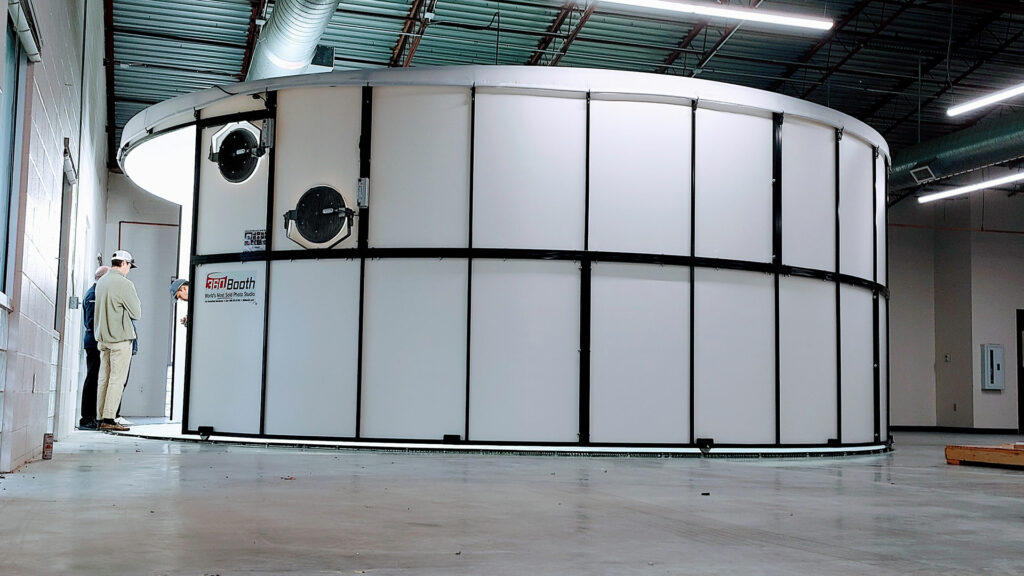
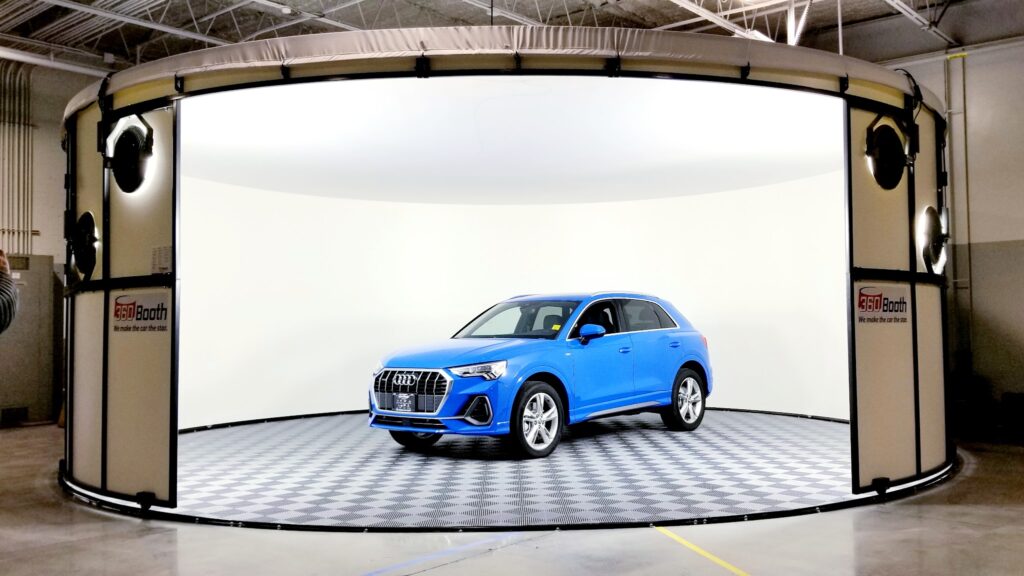
A standard 360Booth does not use a motorized vehicle turntable. The vehicle stays stationary while the studio structure moves around it by hand.
The structure rolls on V-grooved wheels along a circular track made of black powder-coated steel. That track sits on top of the existing concrete, so the dealership doesn’t need to build a recessed turntable pit.
During installation, the track is positioned, leveled with shims and secured to the floor with concrete anchors.
That’s straightforward when the concrete is suitable. Concrete with concealed heating needs more investigation first.
Why Does Radiant Floor Heating Matter?
Radiant floor heating uses either water-filled tubing or electrical heating elements installed in or beneath the concrete. Once the floor is poured, you can’t see them. A contractor looking at the finished surface can’t reliably tell where they run.
- Drilling into a heating tube can cause a leak.
- Damaging an electrical heating element can create an electrical hazard and knock out the heating system.
- Repairing either one may mean opening up the finished floor.
That’s why in-floor heating has to be identified before installation starts. The same goes for other concealed components, such as electrical conduit, reinforcing steel and post-tensioning tendons. A floor that looks suitable isn’t proof that it is.
What Should Be Done Before Installation?
1. Identify the existing heating system
Confirm whether the proposed studio area has radiant heating. Building drawings, renovation records and the facility manager are good places to start. The installation team needs a general picture of the system before planning where anchors go.
If the building has been renovated, the original drawings may no longer match what’s in the floor. Documentation is a starting point, not proof that every concealed component has been found.
2. Arrange professional concrete scanning
A qualified concrete-scanning provider should evaluate the area where the track will be anchored. Ground-penetrating radar (GPR) is a common method for locating radiant heating tubes, conduit and other objects inside concrete. Scanning providers typically mark what they find directly on the floor so the installer can plan around it.
3. Document where the embedded components are
The scan results should show the area evaluated and mark every detected component. Keep that documentation and share it with the 360Booth installation team before anchor locations are finalized.
Marking the floor doesn’t help if the results never reach the people doing the work. The goal is for the person planning the installation and the person drilling to have the same information.
4. Agree on an approved installation plan
The installation team evaluates the actual floor conditions and decides whether a suitable anchoring arrangement is possible. Fastener type, placement and penetration depth are project-specific. They depend on the slab construction and where the embedded systems are.
Where structural conditions call for it, the building’s engineer or another qualified construction professional should review the plan.
If the heating system can’t be adequately located, installation doesn’t proceed on the assumption that drilling will be safe.
Does Concrete Scanning Guarantee Nothing Will Be Damaged?
No. Scanning is an important way to reduce risk, but it can’t promise that every concealed object will be found.
Results depend on the concrete mix, reinforcement, how deep the targets are, the tubing material, the scanning equipment and the operator’s experience. Closely spaced or deeply embedded objects can be hard to pick up.
A qualified scanning professional should note any areas of uncertainty. When a critical component can’t be located with confidence, drilling stops until the question is resolved.
A scan is evidence for planning. It isn’t permission to guess.
Does a Heated Floor Change the Photography Process?
No. Once the studio is installed, daily photography works the same as in any other building.
360Booth provides the controlled environment: the vehicle stays put while the studio moves, lit by four 5600K LED lighting heads under a diffusing white ceiling. SHOOTit AI guides the capture, starting from the VIN, walking the employee through the dealership’s 40+ image sequence and stopping for a reshoot when an image is too dark, blurry or off-center.
The heating in the slab is an installation consideration. It doesn’t add a single step to daily photography.
Why Site Planning Matters
Dealerships usually judge a potential studio location by space. That’s necessary, but it’s not the whole picture.
A standard 24-, 26- or 28-foot 360Booth needs a minimum clear room of 30 feet long (in the vehicle-entry direction) by 30 feet wide by 11 feet high. The studio itself stands 10 feet tall, with standard entrance openings of 14, 16 and 18 feet respectively.
Those numbers tell you whether the structure fits. They don’t tell you whether the floor is right. A complete site evaluation also looks at concrete pitch, surface condition, embedded systems, overhead obstructions, electrical preparation and vehicle movement. For the full list, see what a dealership should evaluate before buying a vehicle photo studio.
The same floor questions come up when an existing studio is moved and reinstalled at another dealership.
The Dealer Wake-Up Call
A vehicle photo studio should be simple to operate. That doesn’t mean its installation should be handled casually.
The last thing a dealership needs is a damaged heating system because nobody asked what was under the concrete.
We’ve spent more than a decade installing vehicle photo studios in all kinds of dealership buildings. Every building is different. Our job is to find those differences before they become installation problems. Here’s how that process starts.
The smartest installation begins with understanding the building, not discovering what’s under the floor with a drill. That’s how you protect the facility and give 360Booth Authentic Capture™ a long-term home.
FAQ
Can 360Booth be installed over radiant floor heating?
Potentially, yes. The heating system must be located and evaluated before an approved installation and anchoring plan is set.
Does the 360Booth track sit inside the concrete?
No. The standard track sits on top of the existing concrete. It doesn’t need a recessed turntable pit.
Does 360Booth use concrete anchors?
Yes. The standard installation anchors the track to the floor. The final fastening arrangement has to suit the specific floor.
Can ground-penetrating radar locate radiant heating pipes?
It can help locate embedded tubing and other concealed components. How well it works depends on the slab construction and scanning conditions.
Does scanning guarantee the heating system won't be damaged?
No. Scanning reduces uncertainty but can’t guarantee every component is found. Unresolved areas need more evaluation before anyone drills.
Should the dealership arrange scanning before installers arrive?
Yes. When in-floor heating or other embedded systems are known or suspected, scanning should be coordinated during installation planning.
Does radiant floor heating interfere with SHOOTit AI?
No. Floor heating is a building infrastructure issue. SHOOTit AI’s guided camera workflow is completely separate from how the track is anchored.
Related Reading:
- Is the track in the ground?
- When you lay the track down how level does my concrete need to be?
- Can a 360Booth Vehicle Photo Studio Be Moved and Reinstalled at Another Dealership?
- What Should a Dealership Evaluate Before Buying a Vehicle Photo Studio?
- How much room do I need to install 360Booth® at my dealership?
- Does the studio space need heat and or AC?
- Do you have anything you can show my architect?