A dealership should evaluate a vehicle photo studio as production infrastructure, not simply as a background. The important questions are whether the studio physically fits, controls lighting and reflections, remains operational, supports a repeatable capture workflow, can be learned by existing employees, integrates with vehicle merchandising, and comes with experienced vehicle-photography support.
A Vehicle Photo Studio Is a Production System
The easiest buying mistake is judging a vehicle photo studio by one finished photograph.
A dealership does not buy a studio to produce one attractive image. It buys a system that must repeatedly move inventory from retail-ready to VDP ready every working day.
That means the buying decision should start with operations.
- Will it fit?
- Will it stay running?
- Can employees use it consistently?
- Does it control the environment around the actual vehicle?
- Does the capture process prevent mistakes before the vehicle leaves?
- Can management see whether the work is actually getting completed?
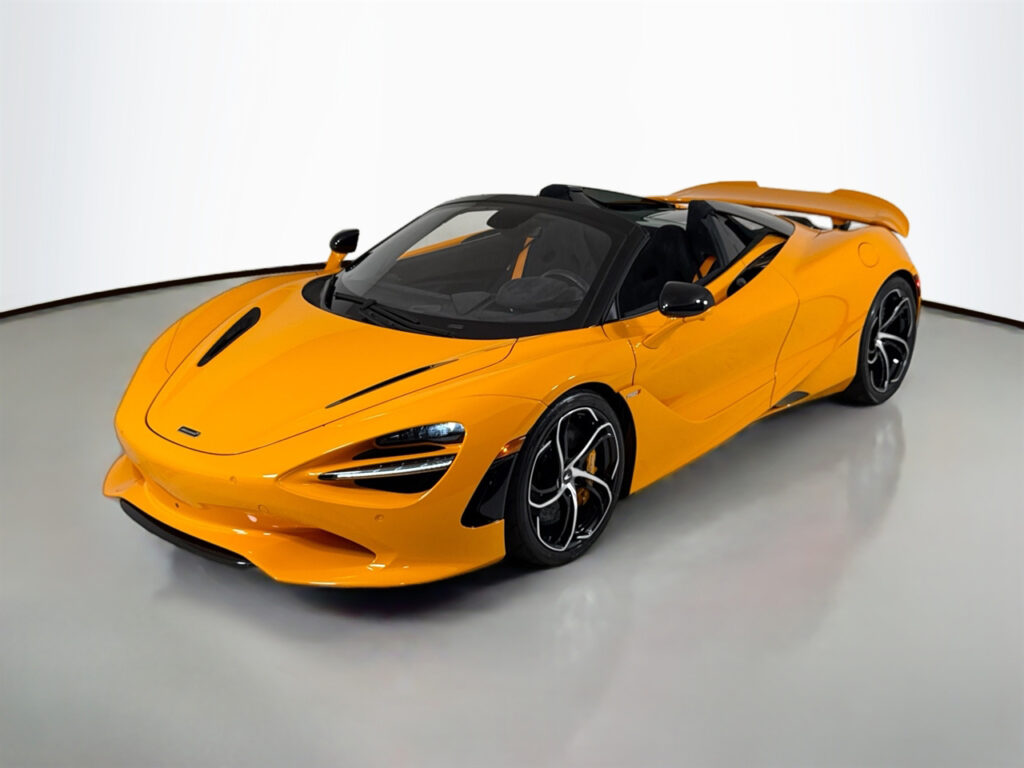
Those questions matter more than how impressive one demo photograph looks.
1. Does the Vehicle Photo Studio Actually Fit the Facility?
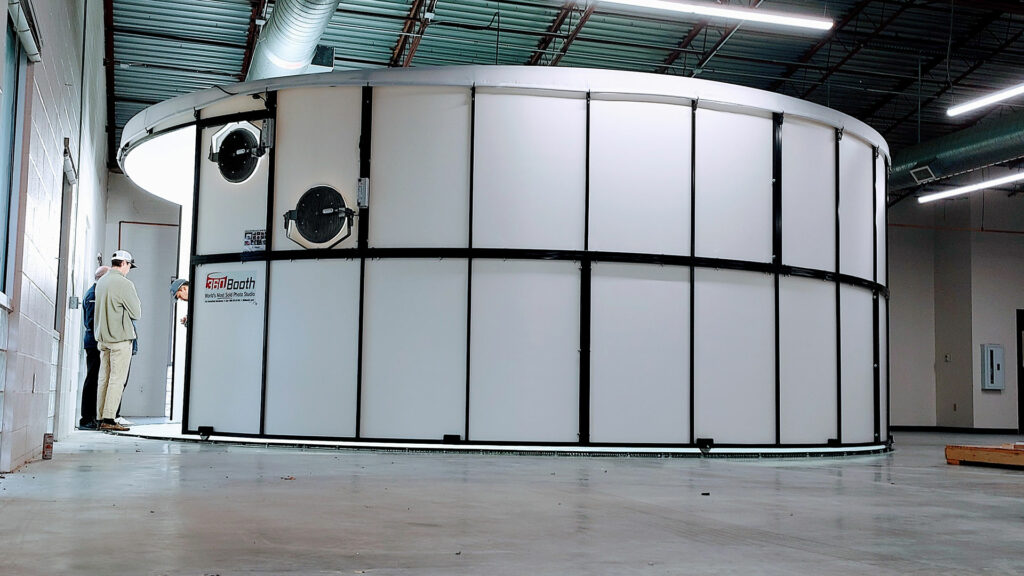
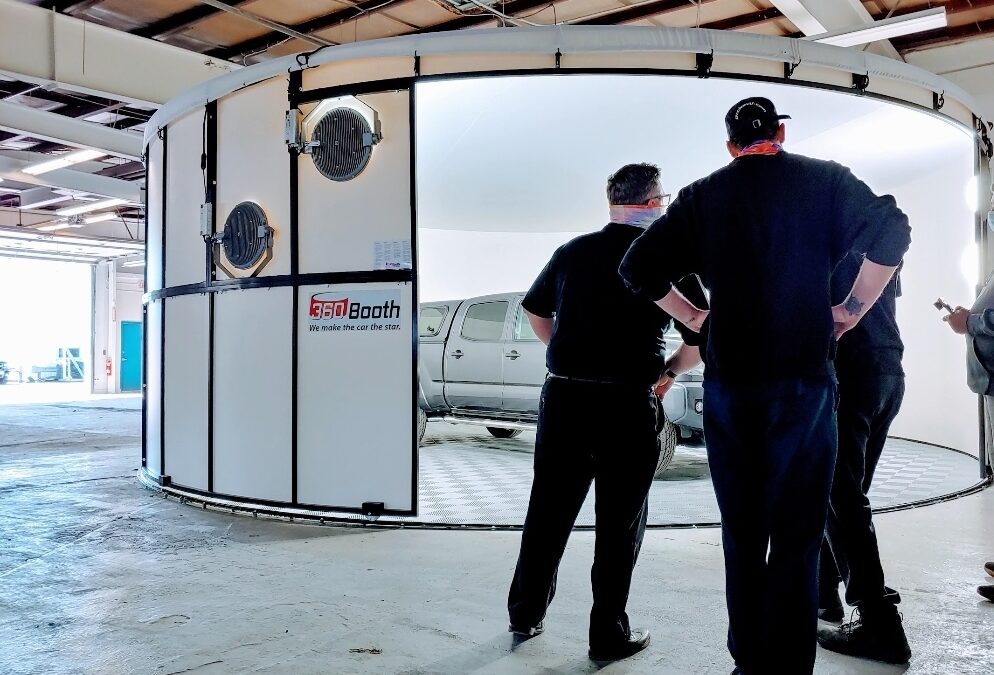
Start with physical reality. For a standard 24-foot, 26-foot or 28-foot 360Booth, the standard minimum clear room is: 30 feet long in the vehicle-entry direction × 30 feet wide × 11 feet high.
The standard studio itself is 10 feet high.
Standard entrance widths are:
- 24-foot studio: 14-foot entrance
- 26-foot studio: 16-foot entrance
- 28-foot studio: 18-foot entrance
The room also needs to be evaluated for overhead lighting, skylights, floor pitch, vehicle approach, electrical requirements and physical obstacles.
A studio that looks good on a rendering but does not work with the building is not a solution.
Smaller spaces may still support a reduced height, custom, DIY controlled-interior or SHOOTit AI-assisted approach, but they should be evaluated honestly before equipment is purchased.
2. Does It Control the Environment Before the Picture Is Taken?
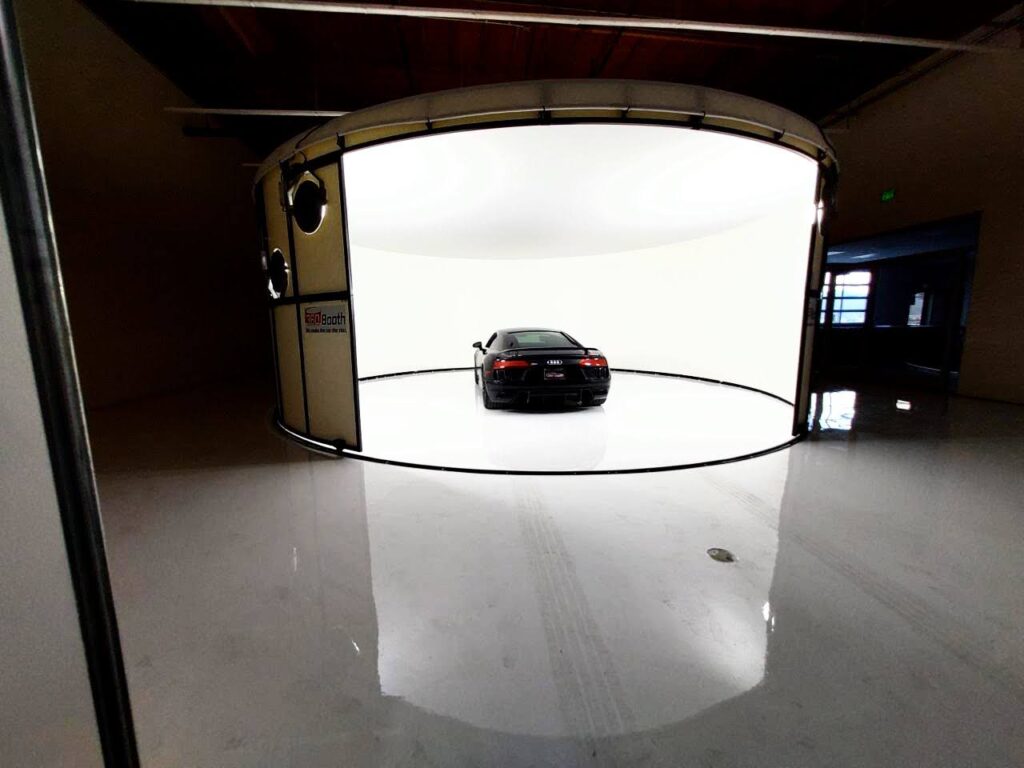
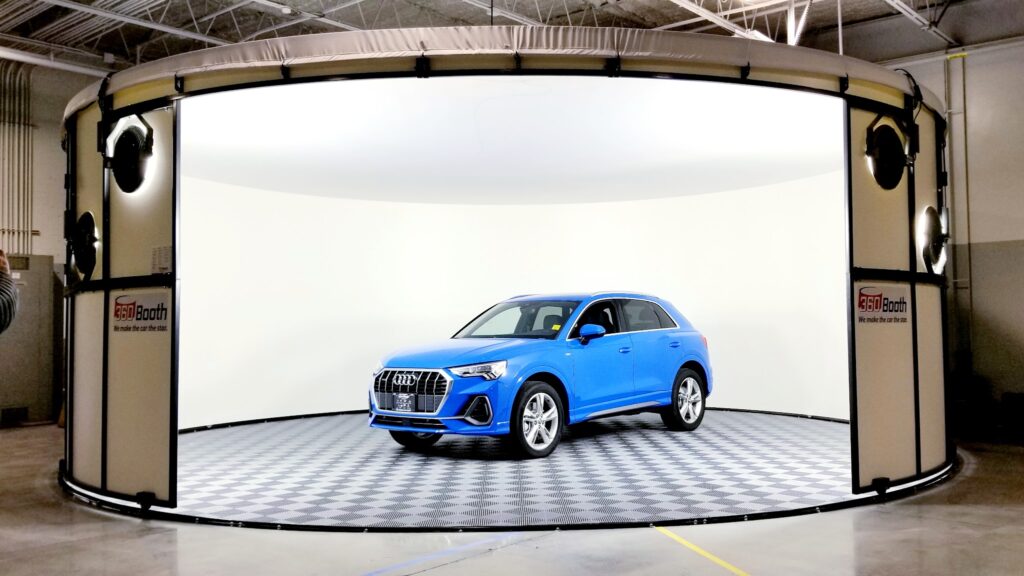
The purpose of a controlled vehicle photo studio is not simply to create a white background. It is to control the environment around the real vehicle.
That includes:
- Lighting
- Reflections
- Background
- Overhead contamination
- Camera working area
- Repeatable vehicle placement
360Booth uses four 5600K LED light heads and a diffused white top to create a predictable lighting environment around the vehicle.
The matte interior surfaces help reduce uncontrolled surroundings reflected across paint and glass.
That matters because replacing a background after capture does not automatically correct everything that the original environment reflected across the vehicle itself.
A better studio solves as much as possible physically before asking software to correct it digitally.
3. What Happens When Something Mechanical Fails?
Uptime should be part of the purchasing decision. Nothing on a 360Booth studio can fail. In the event a light fails there are 3 backup lights.
A vehicle photo studio is production equipment. If it is unavailable, inventory can begin backing up immediately.
360Booth does not place a motorized turntable under the vehicle. The vehicle remains stationary while the studio environment moves manually around it.
The primary reason is reliability. No turntable motor means one less major mechanical system between the dealership and its ability to photograph inventory.
The moving environment also allows the dealership to control outside reflections and reposition the lighting environment when stronger interior photographs are needed.
The question for any studio provider should be simple: What can stop this system from working tomorrow morning?
4. Does the Studio Include a Repeatable Capture Workflow?
A controlled room solves the physical environment. It does not automatically solve the photography process. Employees still need to know which images to capture, in what order and whether each image is acceptable.
That is where SHOOTit AI fits into the 360Booth system.
SHOOTit AI guides the dealership’s required 40+ image process using an intelligent iPhone based workflow. The employee does not have to memorize the sequence.
When guidance is needed, the WTF “What’s the Focus” function displays live on the screen, when pressed reference image showing what should be photographed.
If a required image is too dark, blurry or poorly centered, SHOOTit AI stops the workflow and immediately prompts the employee to reshoot before continuing.
The problem is corrected while the employee is still standing beside the vehicle. That is much more efficient than discovering a bad image later and moving the vehicle back through the process.
5. Can Existing Employees Actually Run It?
A dealership photography system should reduce dependence on specialized labor.
That does not mean photography knowledge has no value. It means the operating process should not collapse every time staffing changes.
Existing dealership employees can learn the basic SHOOTit AI workflow with roughly three minutes of direction because the guidance is built into the capture process.
The objective is fewer decisions:
- Where does the vehicle go?
- What image comes next?
- Is the photograph acceptable?
- What remains unfinished?
When the process answers those questions for the employee, consistency becomes less dependent on who happens to be holding the phone.
6. Can Management See Whether the Work Is Getting Done?
Photography should not become invisible work. Management should be able to understand capture activity and performance rather than discovering unfinished inventory by walking the lot or checking VDPs individually. SHOOTit AI provides management visibility into activity and performance.
The larger operational question is whether the dealership can identify:
- Vehicles that have been completed
- Vehicles still waiting for photography
- Employees performing capture work
- Rework caused by poor images
- Bottlenecks between retail-ready and VDP ready
The purpose is not surveillance. It is accountability for a production process that directly affects how quickly inventory becomes merchandised online.
7. What Happens After the Photograph Is Taken?
Capture is only one part of the workflow. A dealership should also understand how photographs and other media move from the camera to the systems that need them.
SHOOTit AI supports wireless upload and delivery, while the capture workflow can continue offline when connectivity is unavailable.
That distinction matters. Weak dealership Wi-Fi should not prevent employees from photographing inventory. Capture should continue. Upload can resume when connectivity returns.
A strong vehicle photography workflow separates the ability to create the media from temporary network conditions.
8. Are You Buying Equipment or Vehicle Photography Expertise?
Studios, lights and cameras are only part of the solution. Dealership vehicle photography involves:
- Camera and iPhone setup
- Camera height
- Lighting
- Color temperature
- Reflections
- Vehicle positioning
- Interior photography
- Photo sequence
- Employee training
- DIY spaces
- Capture software
- Workflow design
360Booth customers have access to a team with more than 50 years of combined vehicle photography experience across these areas.
That matters because dealerships rarely encounter problems in only one category.
- A reflection issue may actually be a lighting issue.
- A framing problem may be a camera height issue.
- A slow photographer may actually be following a poorly designed sequence.
A studio provider should understand the entire imaging operation, not simply the hardware being installed.
FAQ
What is the minimum space required for a standard 360Booth?
The standard minimum clear room for the standard 24-foot, 26-foot and 28-foot 360Booth models is 30 feet long in the vehicle entry direction, 30 feet wide and 11 feet high.
Does a vehicle photo studio need a turntable?
No. 360Booth uses no motorized platform beneath the vehicle. The vehicle remains stationary while the studio environment moves manually around it.
Can dealership employees use SHOOTit AI?
Yes. SHOOTit AI is designed so existing dealership staff can follow a guided 40+ image process without needing to memorize the photography sequence.
What happens if an employee takes a bad required photograph?
If a required image is too dark, blurry or poorly centered, SHOOTit AI camera stops the workflow and immediately prompts the employee to reshoot before continuing.
Can SHOOTit AI capture vehicles without an internet connection?
The capture workflow can operate offline. Connectivity is required later for upload and delivery.
The Buying Test
Before purchasing any vehicle photo studio, ask seven questions:
- Does it physically fit our facility?
- Does it control the real environment around the vehicle?
- What mechanical systems can interrupt/fail during a automated production?
- How are employees guided through the required photographs?
- Can normal dealership staff learn the process quickly?
- Can management see whether work is being completed?
- Who helps us solve photography problems after installation?
If the answers are unclear before the purchase, they will not become clearer after installation.
Conclusion
A vehicle photo studio should not be purchased as scenery. It should be purchased as dealership production infrastructure.
The strongest system controls the environment, simplifies the employee’s job, stays operational, preserves the actual vehicle and gives management a repeatable path from retail ready to VDP-ready.
Buy the process, not the picture.
Related Reading:
- 20 Questions Dealers Should Ask Before Choosing a Vehicle Photo Studio or Automotive Camera System
- 10 Questions Every Dealer Should Ask Before Buying a Vehicle Photo Studio
- Why Does a Manual Vehicle Photo Studio Work Better?
- Why 360Booth Does Not Use a Turntable
- How much room do I need to install 360Booth® at my dealership?
- Why Is It So Helpful to Have a 360Booth Vehicle Photo Studio?