Direct answer: Dealership vehicle photography quality control should happen while the employee is still standing beside the vehicle. SHOOTit AI guides the required 40+ image process and, when an image is too dark, blurry or poorly centered, stops the workflow and immediately requires a reshoot. Correcting the problem at capture prevents avoidable backtracking and protects the integrity of the original vehicle evidence.
The Best Time to Fix a Bad Vehicle Photo Is Before You Walk Away
Most photo problems are inexpensive to correct at one specific moment: when the vehicle, employee and camera are still together.
Once the car has been moved, parked, locked or handed to another department, the same correction becomes another task.
- Someone has to locate the vehicle.
- The vehicle may need to be repositioned.
- A door, hatch or hood may need to be reopened.
- The photographer has to recreate the angle.
That is not a camera problem. It is a workflow problem.
SHOOTit AI is designed to deal with the issue before that workflow breaks. If a required image is too dark, blurry or poorly centered, SHOOTit AI stops the process and immediately prompts the employee to reshoot before continuing.
The employee does not discover the problem hours later. The correction happens where the evidence is being created.
Capture Quality Is Different From Editing Quality
There is an important distinction between improving an image and correctly capturing the vehicle.
Software can adjust an image after capture. It cannot go backward in time and photograph an angle that was missed, refocus a blurred original, or document a vehicle detail the camera never properly recorded.
That distinction becomes increasingly important as automotive imaging uses more AI. AI can interpret evidence. It can organize it. It can enhance workflows around it. But the quality of that process still depends on what was actually captured.
That is why Authentic Capture™ starts with the real vehicle.
360Booth Controls the Physical Environment
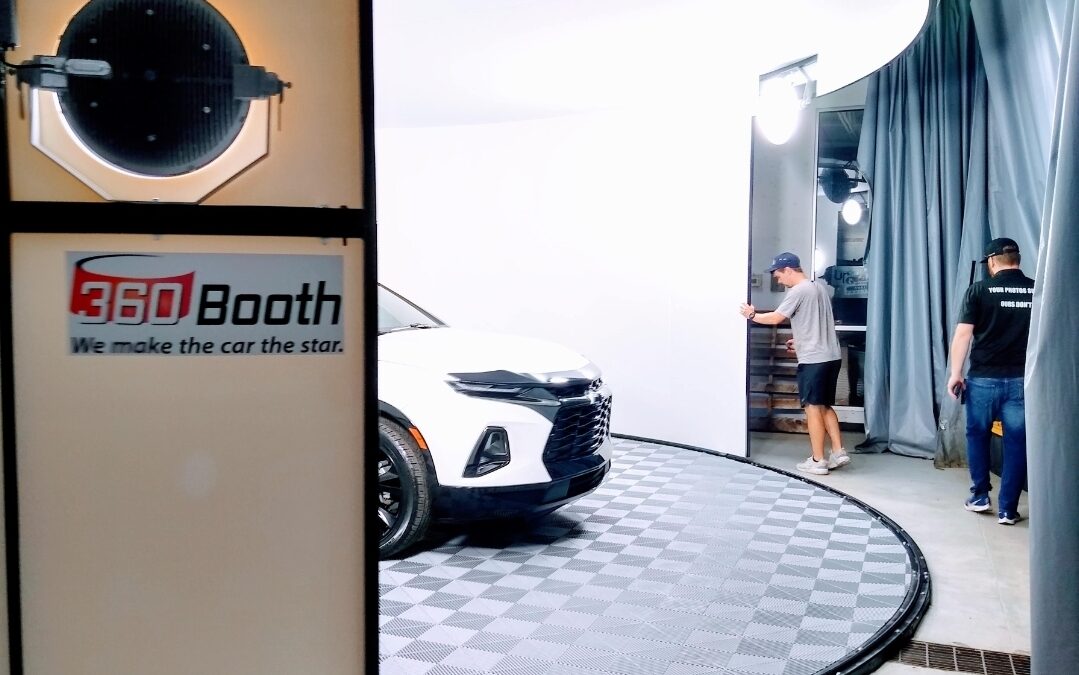
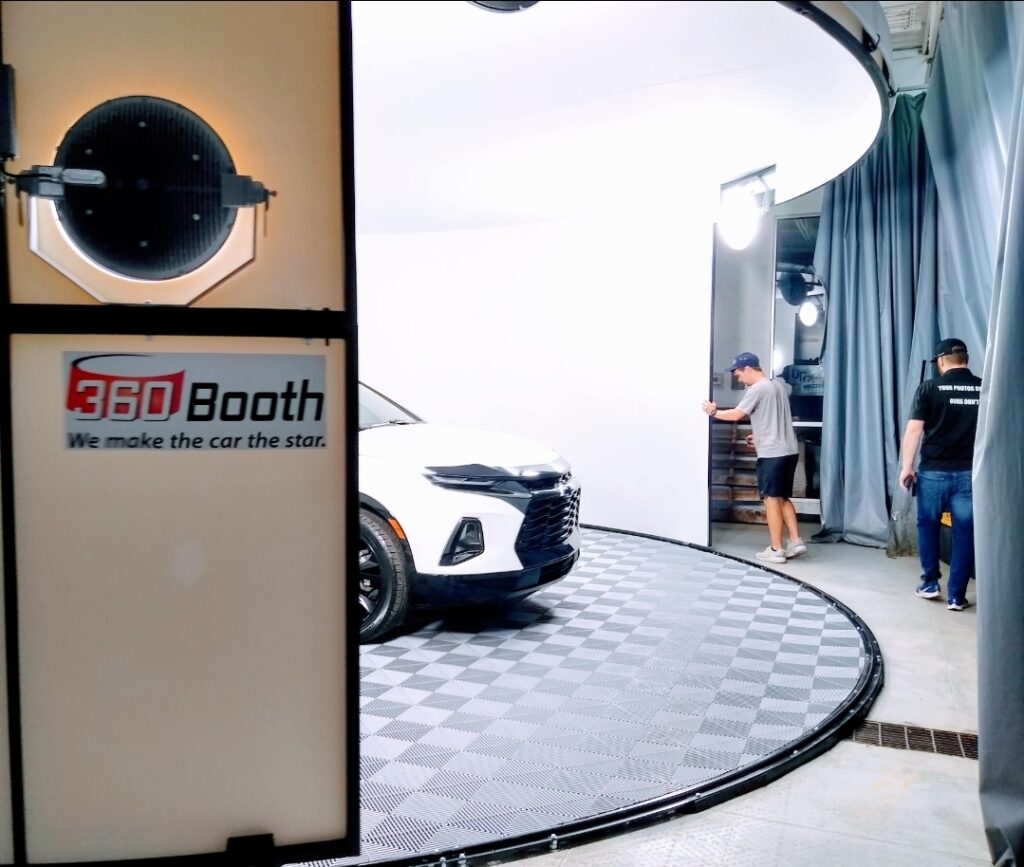
360Booth is the controlled evidence room around the vehicle.
The vehicle stays stationary while the studio room moves manually around it. There is no motorized turntable. (More on that in Why Does a Manual Vehicle Photo Studio Work Better?)
That physical control gives the photographer the ability to manage lighting, reflections and camera position around the actual vehicle instead of trying to correct an uncontrolled environment afterward.
The result is a repeatable place to create the source evidence. SHOOTit AI then provides the guided evidence-capture layer.
One controls the environment. The other controls the sequence.
Why the 40+ Image Process Matters
Forty-plus required images are not about creating an oversized photo gallery. They are about removing improvisation from the capture process.
The dealership decides what must be documented. SHOOTit AI guides the employee through that sequence. Instead of relying on memory, experience or personal preference, the process becomes repeatable from vehicle to vehicle and employee to employee.
That is especially important when the purpose of photography is not simply to make the vehicle attractive. It is also to show the actual vehicle being offered for sale:
- Its equipment.
- Its surfaces.
- Its interior.
- Its visible wear.
- Its real condition as the camera records it.
A complete evidence set gives both the dealership and the shopper more information than a handful of hero images ever could. (See How Many Photos Should a Dealership Put on Each Vehicle Listing?)
Why Immediate Reshooting Is Operationally Important
Consider two workflows.
In the first, an employee completes the vehicle, moves on, uploads the media and later discovers that several photographs are unusable. Now the process has to move backward.
In the second, the camera recognizes that a required image is too dark, blurry or poorly centered and stops the employee before the next shot. The employee takes the photograph again. Then continues.
That is a small design difference with a large operational consequence. One workflow creates rework. The other corrects the mistake while correction is still part of the original job.
This Is What a Smart Camera Should Do
A smart camera should not simply take a picture. It should understand enough about the dealership’s required process to prevent obvious capture failures from moving downstream.
That is the philosophy behind SHOOTit AI. The objective is not to replace the person holding the camera. It is to make the process easier to execute correctly.
Existing dealership employees can learn the capture process quickly with brief direction because they are following a defined sequence rather than being trained to become professional automotive photographers.
That is how dealership vehicle photography becomes scalable. (See What Makes Dealership Vehicle Photography Fast, Simple and Repeatable?)
Authentic Capture™ Starts Before AI Interpretation
The future of automotive imaging will include increasingly sophisticated AI. Vehicle condition imaging will improve. Computer vision will improve. Three-dimensional interpretation will improve.
But none of that eliminates the importance of the original capture. It increases it. (See Can AI-Generated Vehicle Views Be Used as Evidence of a Used Car’s Actual Condition?)
If AI is going to interpret the vehicle, dealerships should give it the strongest possible real-world evidence. That means:
- Controlling the physical environment.
- Capturing the actual vehicle.
- Preserving visible condition.
- Following a repeatable sequence.
- Correcting bad photographs before leaving the car.
Then allowing software to interpret what was actually recorded.
That is the difference between generating an image and building evidence.
The Dealer Wake-Up Call
Finding bad photos after the vehicle is gone is not quality control. It is rework.
The smartest place to correct a vehicle photograph is exactly where the mistake happened. At the car. Before the employee walks away. Before another vehicle enters the process. Before the mistake becomes somebody else’s problem.
Do not build a faster upload process for bad evidence. Build a capture process that refuses to move forward with it.
FAQ
What happens when SHOOTit AI detects a bad required image?
If the image is too dark, blurry or poorly centered, SHOOTit AI stops the workflow and immediately prompts the employee to reshoot before continuing.
Does SHOOTit AI replace the photographer?
No. It guides the employee through the dealership’s required capture process and applies capture-quality controls during that process.
Why use 360Booth with SHOOTit AI?
360Booth controls the physical photography environment around the real vehicle. SHOOTit AI controls the guided capture sequence. Together they create a repeatable system for producing real vehicle media.
Does Authentic Capture™ mean AI can perfectly determine vehicle condition?
No. Authentic Capture™ is about starting with evidence of the actual physical vehicle. AI can interpret that evidence, but it should not be represented as perfectly determining condition, damage, equipment or authenticity.
Related Reading:
- What Makes Dealership Vehicle Photography Fast, Simple and Repeatable?
- Why Does a Manual Vehicle Photo Studio Work Better?
- Can AI-Generated Vehicle Views Be Used as Evidence of a Used Car’s Actual Condition?
- What If the Background Looked Perfect and the Car Didn’t?
- Why Is Dealership Vehicle Photography Still Inconsistent?
- How Many Photos Should a Dealership Put on Each Vehicle Listing?