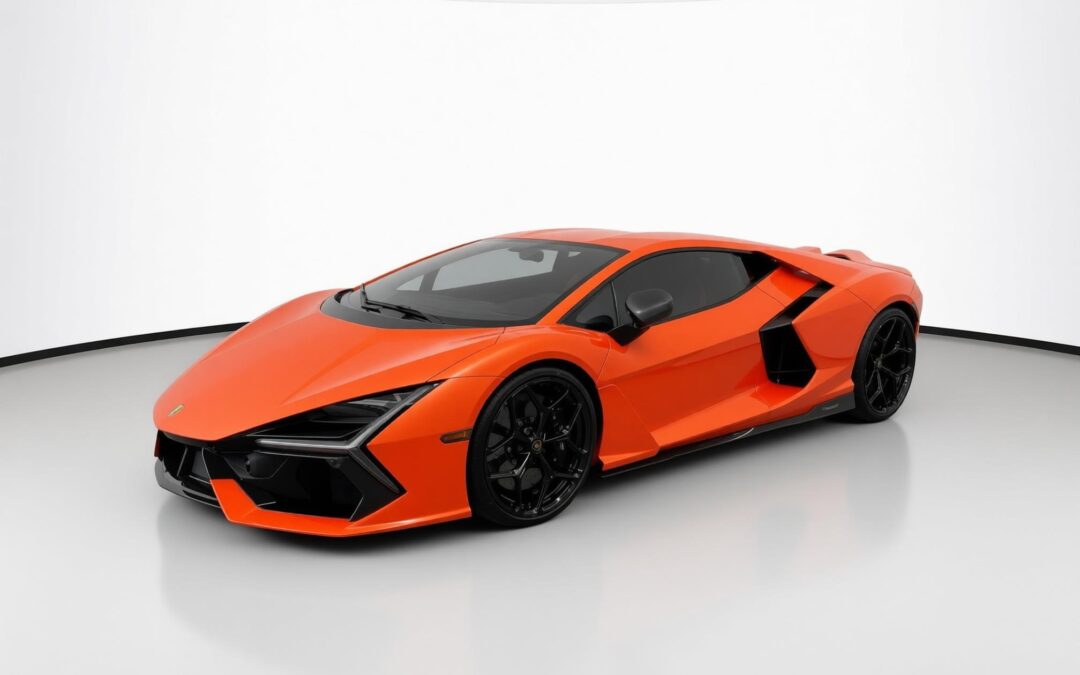
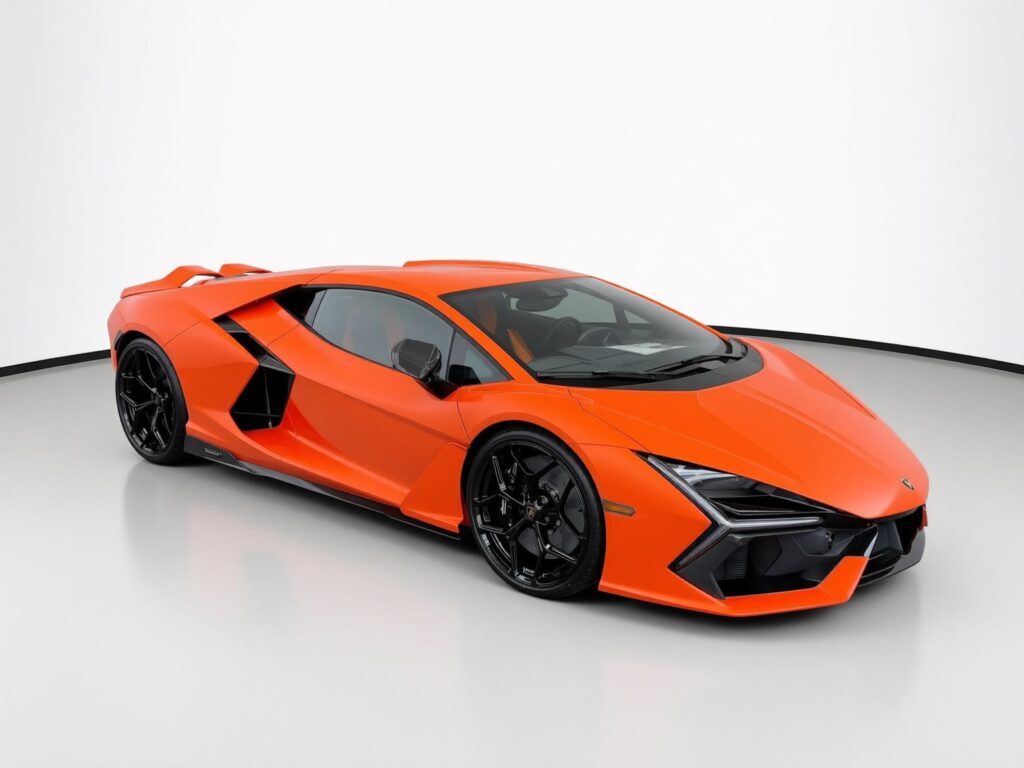
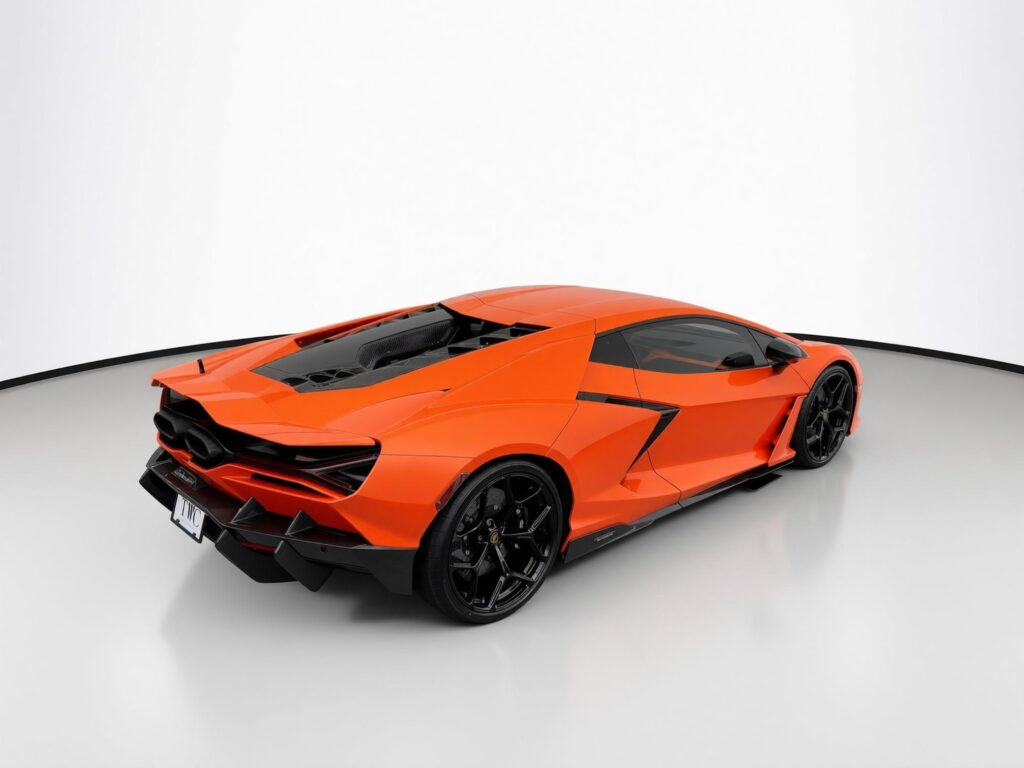
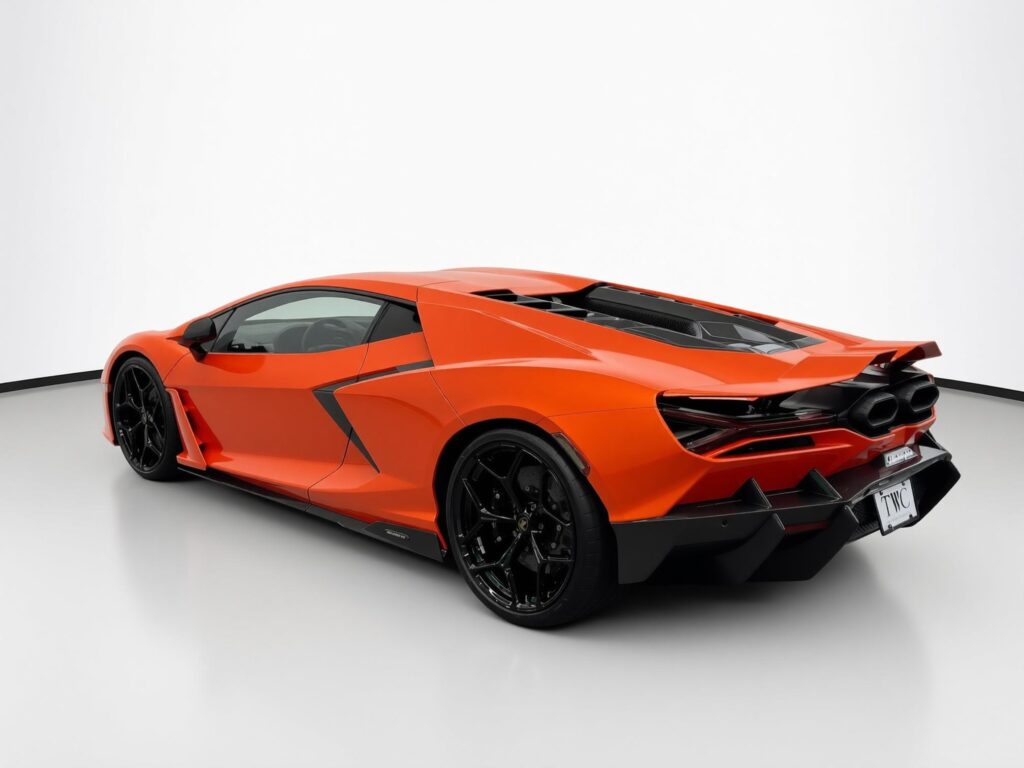
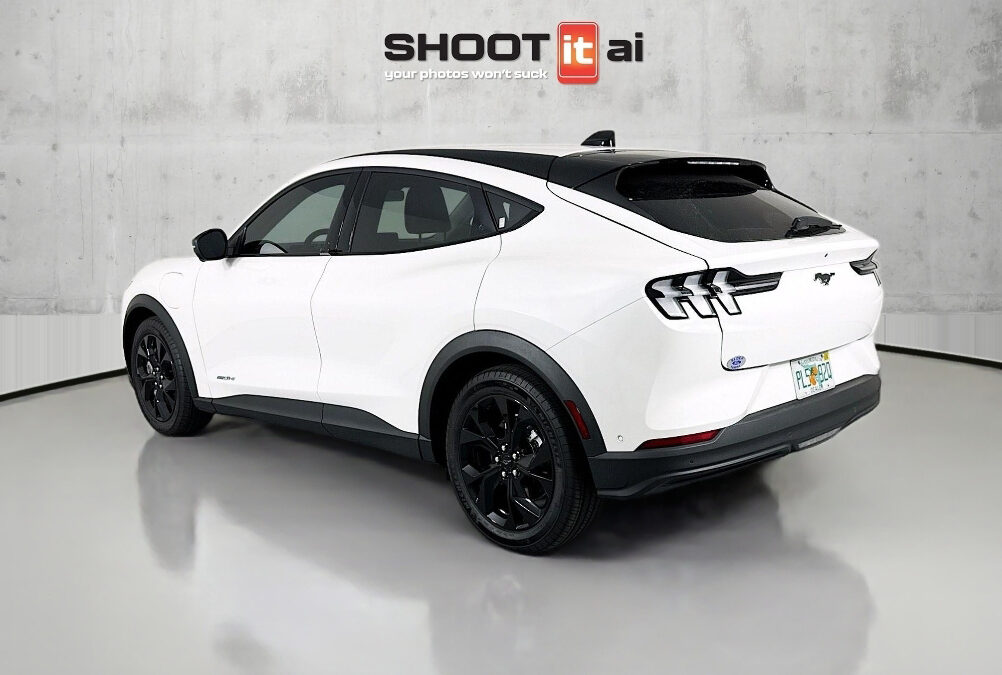
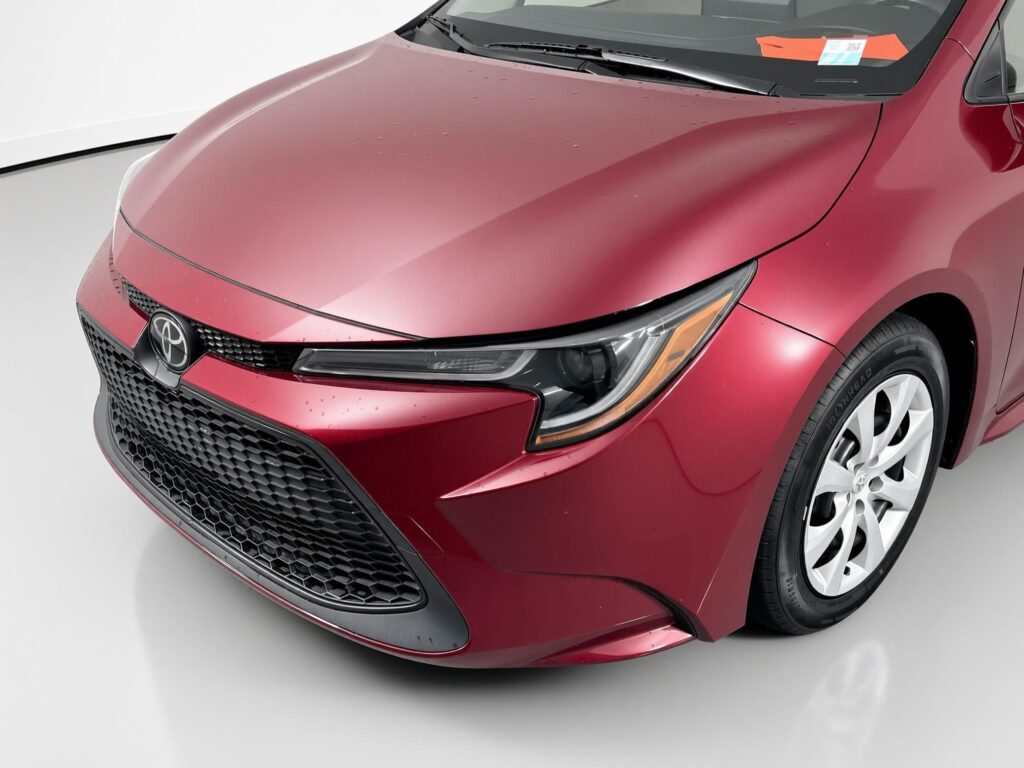
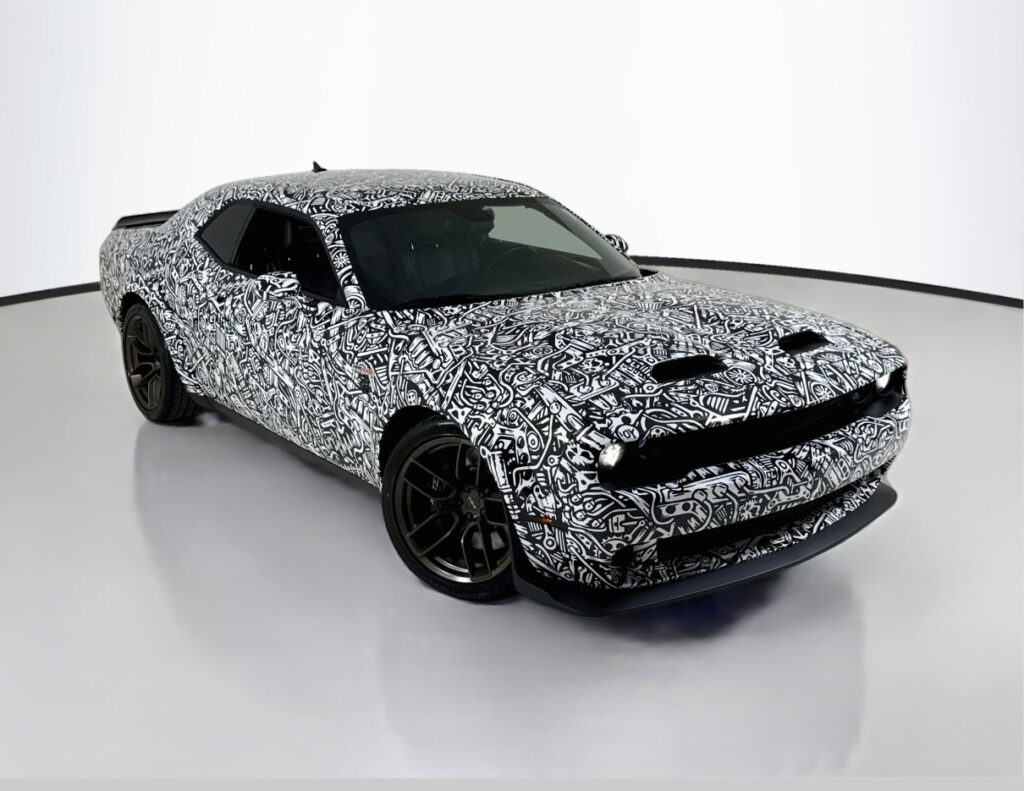
Virtual background software companies sell dealerships a slick promise: snap a picture on your smartphone, and the AI drops your car into a digital showroom.
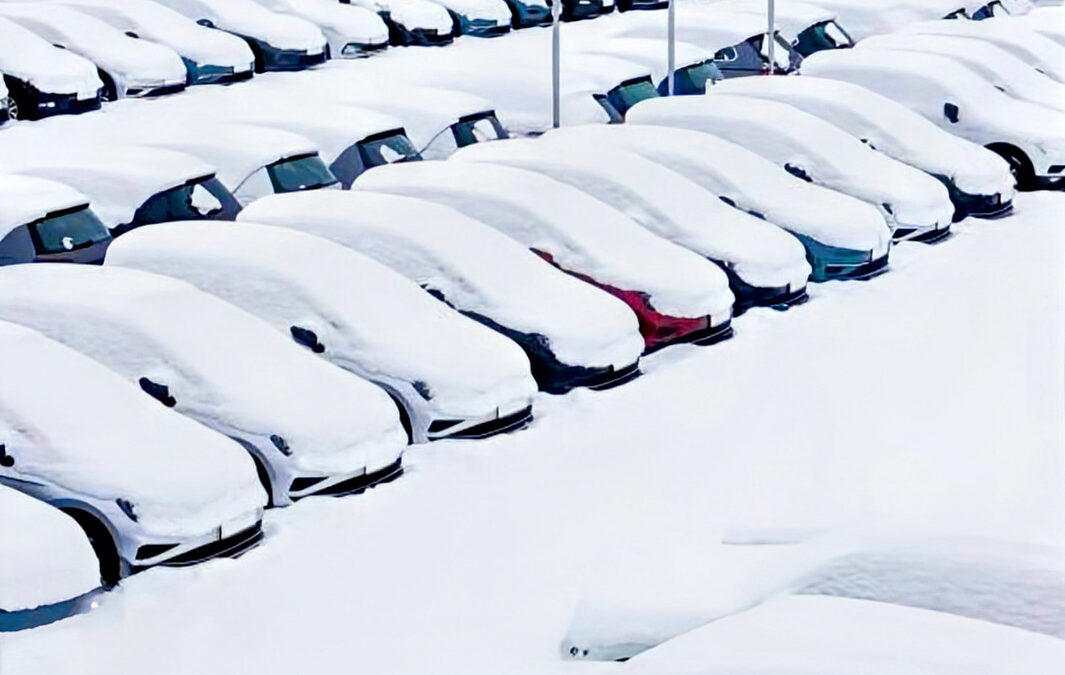
What they leave off the marketing deck is simple. The software doesn’t take the photo. Someone still has to wash the car, roll it outside and shoot it in whatever the sky is doing that day. Across most of the country, for weeks or months every winter, the sky says no.
Meanwhile the monthly subscription bills whether you shoot 200 cars or zero.
Using regional weather data, we sorted the country into three winter tiers based on how many outdoor shooting days dealers can expect to lose.
Tier 1: The 60+ Day Blackout Zone
NY, WA, OR, OH, MI, PA
Still sending porters into 20-degree slush to photograph $60,000 inventory?
In Buffalo, NOAA’s 1991–2020 normals show rain or snow on 61.9% of January days (about 19), 57% of December days and 56% of February days. Add November and March, and that’s roughly 80 wet days a winter.
January in Buffalo is overcast or mostly cloudy 71% of the time.
Cleveland sees precipitation on about 220 days a year and snow on about 84.
Seattle averages around 13 rainy days a month through the winter.
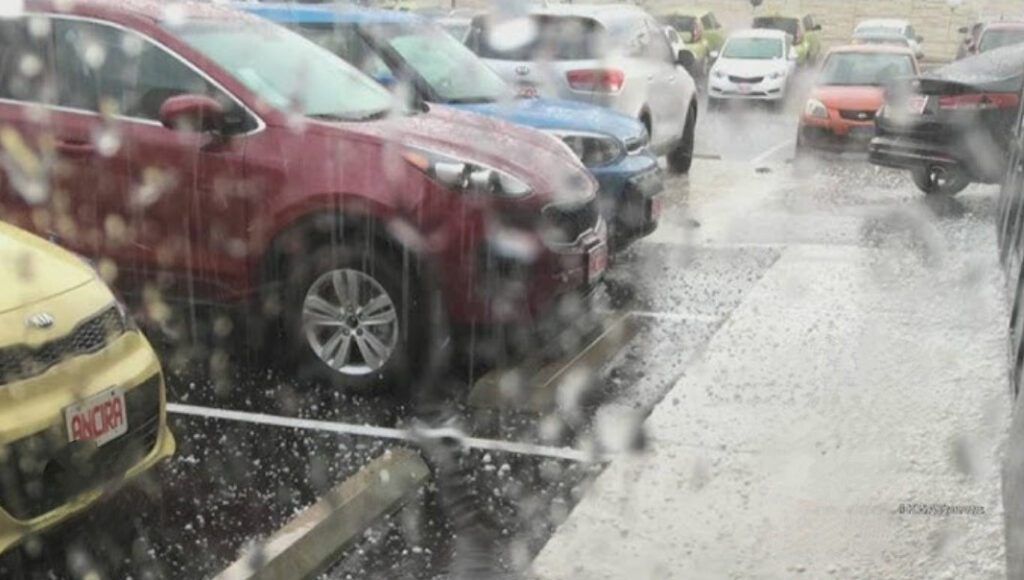
Washing a car outside in Buffalo or Cleveland just freezes rinse water to the door latches. In Seattle and Portland, raindrops on the lens ruin clarity just as fast. In these states, an indoor 360 photo booth isn’t a luxury gadget. It’s infrastructure.
Tier 2: The 30–60 Day Storm and Freeze Corridor
VT, NH, ME, MA, CT, RI, NJ, WV, IN, IL, WI, MN, KY, TN, MO, IA
Winter storms don’t care about your turn-to-market metrics.
Minneapolis averages a January high under 24°F and a low of 7.5°F, with about 33 snowy days from November through March.
The Twin Cities average about 95 days a year with an inch or more of snow on the ground. Chicago averages about 55.
That’s one to two lost days a week, or a full shutdown after every nor’easter. Washing cars in Wisconsin or Minnesota at 5°F is impossible. In Tennessee and Indiana, freezing rain and road spray coat clean rockers before you can finish the shot list. The result is VDPs that lag a week or more while lot inventory depreciates.
Tier 3: The 15–30 Day Washout Belt
VA, MD, DE, NC, SC, GA, AL, MS, AR, LA, OK, KS, CO, UT and Northern California
Think southern dealerships dodge winter photo delays? Look at the rainfall.
New Orleans averages roughly 4 to 5 inches of rain in each winter month.
Atlanta sees about 11 rainy days in December, and the rain is usually heavy.
When downpours hit, outdoor shoots stop. Moving cars across a soaked lot kicks dirt and water spots onto detailed paint, so porters re-wash the same vehicle two or three times. That three-to-five-day merchandising delay kills lead momentum.
Every Lost Day Has a Price
Floorplan interest is a meter running on every VIN. With the prime rate at 6.75% in late July 2026 and the average new-vehicle listing price at $49,307, interest alone at a typical floorplan rate runs roughly $11 to $12 per car per day. Add insurance, lot cost, plates and depreciation, and the true holding cost runs several times the interest.
Those days pile up exactly where buyers shop. Google research found 86% of shoppers research a vehicle online before they visit a dealership, and Cox Automotive’s Car Buyer Journey research found buyers spend 60% of their shopping time online. A VDP that says “Photos Coming Soon” is a padlocked showroom.
The software doesn’t take the photo. The weather decides when you can.
The Floating Cartoon Car
Even when a porter braves the cold for an outdoor shot, the AI output looks cheap. Flat gray winter light on the hood clashes with a fake high-gloss CGI floor, leaving fuzzy halos around mirrors and antennas. Buyers spot fake backgrounds instantly, and they wonder what the dealership is hiding.
Shoot Every Day of the Year
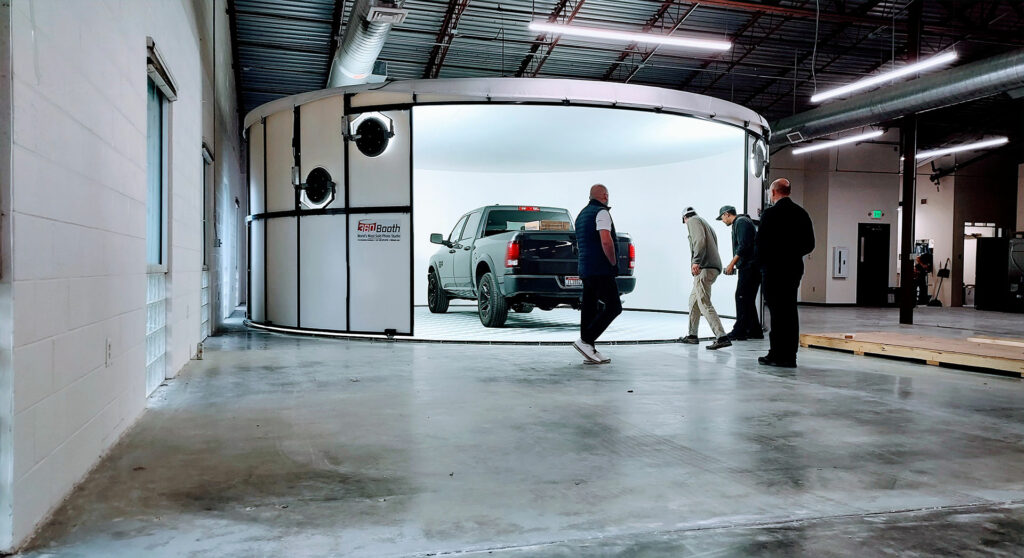
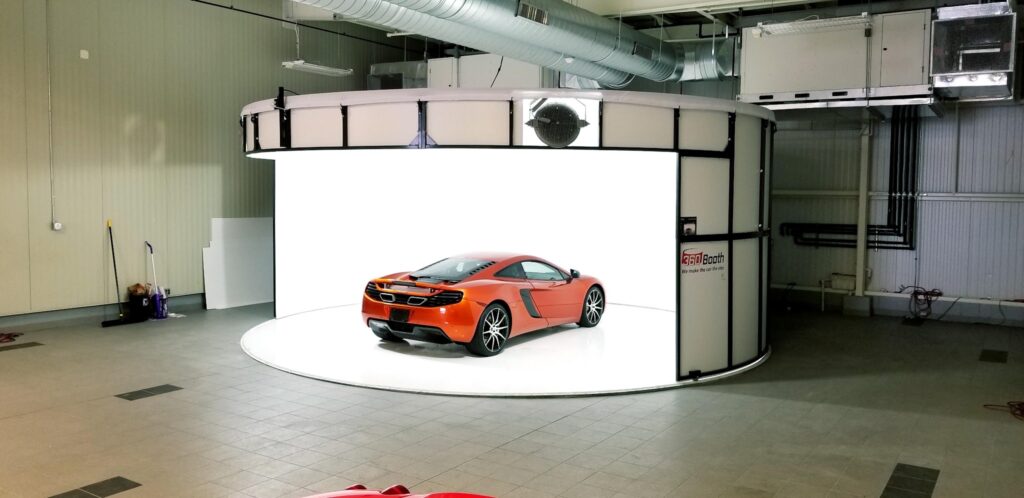
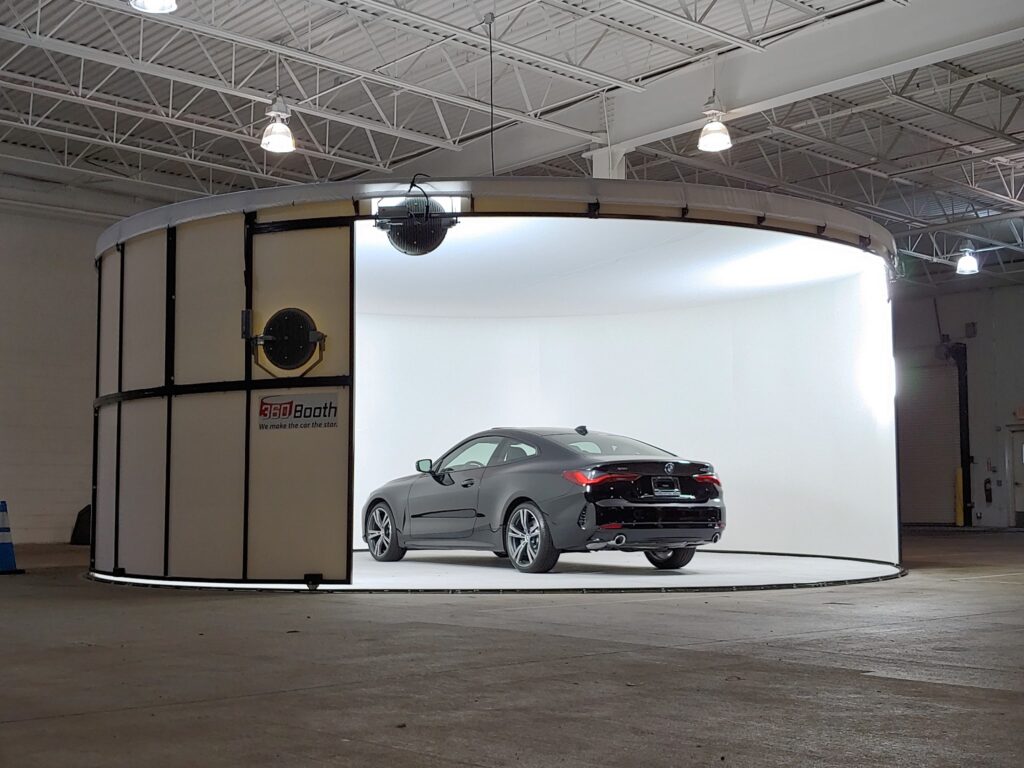
Top operators in all three tiers aren’t waiting on sunshine. An indoor 360Booth vehicle photo studio gives you studio lighting, dry panels and immediate 360 spins 365 days a year, no matter what’s falling outside. See the Car Photo Booth or contact us to talk through your market.
How many photo days do dealerships lose to winter weather?
It depends on the region. We estimate dealers in NY, WA, OR, OH, MI and PA lose 60 or more days, the Northeast and Upper Midwest 30 to 60 days, and the Southeast, Southern Plains and Mountain West 15 to 30 days. In Buffalo, NOAA normals show rain or snow on about 62% of January days.
Do AI background apps work in rain and snow?
The app can replace a background, but it cannot take the photo. Someone still has to wash the car and shoot it outside, and rinse water freezes, snow sits on the panels and rain spots the lens.
What does a day without photos cost?
At today’s rates, floorplan interest alone on an average new vehicle runs roughly $11 to $12 a day, and the full holding cost with insurance, lot cost and depreciation runs several times that.
Pull up your recon board. Find the column labeled Photos.
Inspection is there. Used car manager approval is there. Service, parts, body shop and detail are all there. Photos? They just… happen. Eventually. When the weather cooperates and the camera person is in.
Most recon boards skip the photo step
When Dustin Jones of Rapid Recon studied the reconditioning data of 66 dealerships for WardsAuto, he found that few of them had a Photos step in their workflow at all. He called it a missed opportunity for time-to-line improvement.
Here’s why that matters. A step with no column has no owner. No owner, no clock. No clock, and nobody notices the “ready” car with zero pictures online.
Cox Automotive’s Q3 2026 Manheim Used Vehicle Value Index report expects off-lease supply to climb from about 190,000 units a month in the first half of 2026 to about 220,000 in the second half. Lease check-ins at Manheim are up 21% from the same time last year, and they grew from Q2 to Q3 when that quarter normally brings a seasonal dip.
Cox’s read on Q4 is simple: more volume.
More units through recon means more cars that can stall in the one step nobody tracks. If photos already wait on the weather and one person’s schedule at today’s volume, they won’t keep up when the off-lease wave rolls in.
DEALER WAKE UP CALL
A car isn’t frontline-ready until a shopper can see it.
The fastest car to sell is the one that gets online first. Every day a finished car sits without photos is a day it can’t generate a lead, and with values softening this fall, that day costs more than it used to.
Put photos on the board
Give photos their own column. Between detail and sale-ready, where it belongs.
Give the step an owner. One accountable person per shift, not “whoever’s free.” Your process shouldn’t depend on one person either, so train a backup.
Give it a clock. Track time from detail-complete to photos-live, the same way you track every other step.
Make it boring. The same shots, the same order, the same result on every car.
Boring is the goal. A step only stays on schedule when nothing outside it can stop it.
How 360Booth and SHOOTit AI make the photo step boring
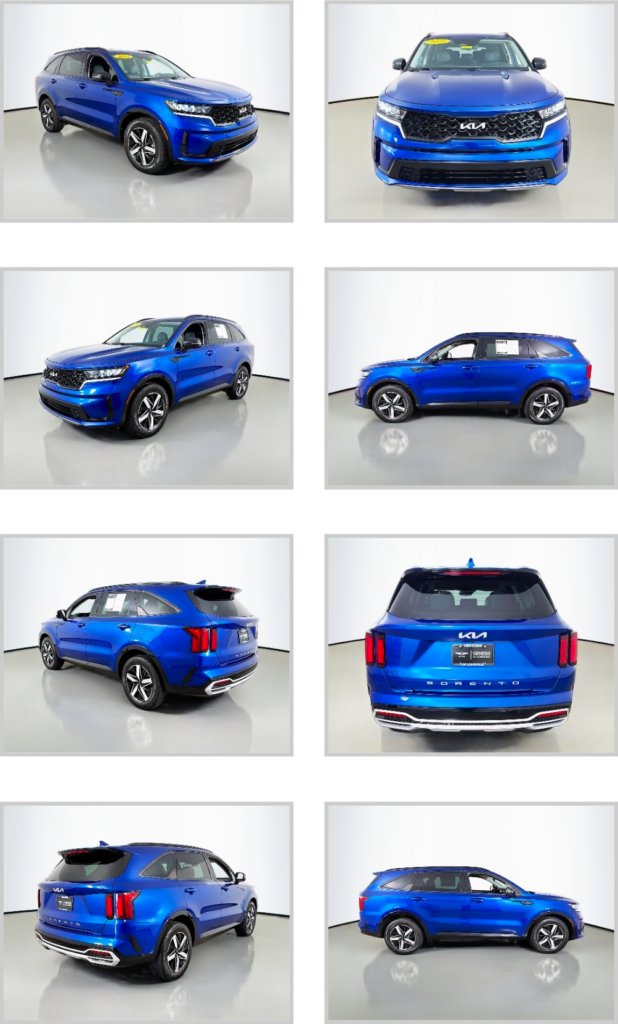
SHOOTit AI walks your team through the same 40+ shots on iPhone and stops dark, blurry or off-center frames for a reshoot before anyone leaves the car. That’s quality control at the vehicle, not after the listing goes live. Done once.
How many cars on your lot are “ready” but not photographed?
Sources: Cox Automotive, Q3 2026 Manheim Used Vehicle Value Index report (Oct. 7, 2026); Dustin Jones, “Getting More Out of Used-Car Reconditioning,” WardsAuto (Oct. 2021).
Pull up your aged-inventory list. Pick any unit that has had two price drops. Now open its gallery.
It probably still has the photos it launched with. Dark cabin. Glare across the hood. No tires. No back seat. Then someone knocked $500 off, and the listing went back out with the same bad photos and a smaller number.
Why this hurts more this fall
Cox Automotive’s Q3 2026 Manheim Used Vehicle Value Index report shows wholesale values fell harder than normal in September and dropped below year-ago levels for the first time this year. Cox also cut its year-end forecast from about a 2% gain to about 0.2%.
When values soften, every day a car sits costs more. That makes the urge to cut price stronger, and it makes a wasted price cut more expensive.
Overpriced or under-shown?
A price drop answers one question: is this car worth the number? It doesn’t answer the questions shoppers are actually stuck on. What does the interior look like? How are the tires? Is that a scratch or a reflection?
A markdown can’t brighten an interior or add a missing angle. A fake-perfect background doesn’t fix the car either. It just moves the disappointment to the walkaround, as What If the Background Looked Perfect and the Car Didn’t? explains.
The reshoot-first checklist
Before the next price change on an aged unit, check the gallery:
Is the interior bright enough to see the seats, dash and materials?
If any answer is no, reshoot the car before you reprice it.
A price cut is the most expensive photo edit you’ll ever make
Fix the evidence first. 360Booth controls the light around the real car, so the cabin, paint and wheels show up as they actually are. SHOOTit AI walks your team through the same 40+ shots on iPhone and stops dark, blurry or off-center frames for a reshoot before anyone leaves the car. That’s quality control at the vehicle, not after the listing goes live. Why Should Dealership Vehicle Photography Quality Control Happen at the Vehicle? covers this in more detail.
Then decide whether price is really the problem.
Tonight’s homework
How many cars on your aged list got a price drop before they got a reshoot?
Source: Cox Automotive, Q3 2026 Manheim Used Vehicle Value Index report (Oct. 7, 2026).
OPPO introduced the Find X10 Pro Max at its September 22, 2026 launch in China, marketed as the first phone with three 200-megapixel rear cameras: main, periscope telephoto and ultrawide. Six hundred megapixels in your pocket.
Here’s the question every automotive dealer should ask: do more megapixels mean better vehicle photos?
What happens to all those pixels?
Most of them never reach your VDP.
Phones with 200-megapixel sensors usually don’t save 200-megapixel photos. They combine groups of pixels into one to get a cleaner image. Samsung’s Galaxy S26 Ultra, for example, has a 200MP main camera that saves 12MP photos by default.
And even if every pixel made it through, your listing site would resize the image before a shopper ever sees it.
Resolution was never the problem on your lot.
What actually ruins dealership vehicle photos?
Look at the photos shoppers complain about. The problem is almost never too few pixels. It’s:
The rear three-quarter angle nobody took.
The interior shot that’s dark or blurry.
Glare across the hood.
The tires, the cargo area or the back seat, skipped.
A different sequence on every car, depending on who was shooting.
A 200-megapixel camera captures every one of those mistakes in stunning detail.
A camera that understands the vehicle, rejects bad shots and completes the correct photo sequence is worth more than another hundred megapixels.
The smartest camera on your lot isn’t the one with the biggest number on the box. It’s the one that won’t let your employee walk away from the car with a missing or bad photo.
Before you upgrade your phones, pull up five of your VDPs. Count the missing angles. Count the blurry shots. Then ask whether more megapixels would have fixed any of them.
Do more megapixels make better dealership vehicle photos?
Not on their own. Most 200MP phone cameras save 12MP images by default, and listing sites resize photos anyway. Missed angles, blur, glare and inconsistent sequences hurt vehicle photos far more than resolution does.
What makes a camera better for dealership inventory photos?
A camera that guides the employee through the correct shot sequence, rejects dark, blurry or off-center frames before they leave the vehicle, and produces the same angles on every car.
How does SHOOTit AI improve vehicle photos?
SHOOTit AI runs on iPhone and walks staff through the same 40+ shot sequence on every vehicle, stopping bad frames for a reshoot at the vehicle. Inside a 360Booth, the lighting around the real car is controlled as well.
What if your hardest-working salesperson never clocks in?
You already have one. It works nights, weekends and holidays. It talks to every shopper who finds your inventory. And most stores never train it.
It’s your listing photos.
Do the math on face time
Cox Automotive’s 2025 Car Buyer Journey Study found that used-car buyers spent 7 hours 45 minutes researching and shopping online. They spent 2 hours 57 minutes with the dealer they actually bought from.
That means your dealership listing photos get more than 2.5x the face time your people do.
And they aren’t just confirming a decision that’s already made. Cox found that 74% of used buyers didn’t know the exact car they wanted when they started shopping. Used buyers visited 4.8 websites on average. Your photos are pitching against every other car on every one of those sites, and shoppers judge your whole store by one thumbnail.
You’d fire that person by lunch. Yet that’s the job many stores hand their photos. Then the real salesperson ends up apologizing for the pictures before the walkaround starts.
Dealer wake-up call
Your photos are on the sales floor 24/7. Train them like it.
Training a salesperson means a process: what to show, in what order, every time. Your photos need the same thing. Not a better phone. A better process.
How much time do used-car buyers spend shopping online?
Cox Automotive’s 2025 Car Buyer Journey Study found used-car buyers spent 7 hours 45 minutes researching and shopping online, compared with 2 hours 57 minutes with the dealer they bought from.
Why are listing photos called a dealership's hardest-working salesperson?
Shoppers spend more than 2.5x as long with a dealer’s listings online as they do with the dealership’s staff. Most used buyers also start without knowing the exact car they want, so photos do much of the persuading across the 4.8 sites the average used buyer visits.
How do 360Booth and SHOOTit AI make listing photos consistent?
360Booth controls the light around the real vehicle. SHOOTit AI guides staff through the same 40+ shot sequence on iPhone and stops dark, blurry or off-center frames for a reshoot before anyone leaves the car.
What if shoppers judge your whole store by one thumbnail?
They do. Every day.
On a search results page, your car is one little rectangle in a row of rectangles. The shopper scrolls with their thumb and decides in about the time it takes to read this sentence.
What does your thumbnail row say?
Now look at your row.
One shot in the sun with glare across the hood. One crooked. One half in shadow. One with a service truck photobombing. When weather and daylight control the shoot, every car comes out different.
Those say: nobody’s paying attention here.
Then there’s the one with a fake backdrop so perfect it looks like a stock photo. That one says something worse: what you see isn’t what you’ll get.
Dealer wake-up call
Shoppers don’t just judge the car. They judge whether your store has its act together. Your thumbnail row is your storefront window.
Why do SRP thumbnails matter so much for car dealers?
On a search results page, each vehicle is one small thumbnail in a row. Shoppers decide in seconds whether to click, and they judge whether the store has its act together by how that whole row looks.
What makes vehicle photos look inconsistent?
Shooting outdoors in changing sun and shadow, crooked angles, distracting backgrounds, and fake backdrops that look like stock images. Each car ends up looking different depending on the weather and who held the camera.
How do 360Booth and SHOOTit AI make vehicle photos consistent?
360Booth controls the light and real background around the actual vehicle. SHOOTit AI guides staff through the same 40+ shot sequence every time and flags dark, blurry or off-center shots for a reshoot before the car leaves the booth.