They need a car to get to work. Not want. Need. They’ve been scrolling listings for weeks. They’re about to hand over a cashier’s check that took them years to save, for a car that’s older than their kid.
And the listing they’re staring at has six blurry photos taken next to the dumpster.
That buyer isn’t hypothetical. Cox Automotive just described them.
What the research found
In June 2026, Cox Automotive released “Know Your Buyer, Grow Your Lot,” developed in consultation with NIADA and based on 384 people who bought from an independent dealership between September 2024 and August 2025. The findings:
79% of buyers need a vehicle rather than want one.
Among buyers of 11- to 20-year-old vehicles, 77% report household incomes under $75,000.
Buyers spend an average of 16.5 hours researching online, visit more than five websites, and 77% use third-party listing sites before ever contacting a dealer.
Only 21% say they’d return to the same dealership.
Speaking to Car Dealership Guy, Cox Automotive’s Elizabeth Stegall added more: the average independent shopper spends about 97 days shopping, 56% pay cash, and dealers should post 20 photos of every vehicle with full descriptions that include service history.
A cheap car doesn’t get cheap photos
Here’s the wake-up call. Too many lots treat their least expensive cars as the least important to photograph. A quick walkaround, a few shots, done.
The research says that’s backward. The buyer of a 14-year-old SUV is often paying cash, often stretching to do it, and has studied your listing for weeks. The less a buyer can afford a mistake, the more evidence they need.
Every photo you skip is a question they can’t answer. How are the tires? Is the driver’s seat torn? Is that a dent or a shadow? If your listing doesn’t answer, the buyer moves on to one that does. They’ve got five other websites open.
Cox found trust, not just price, is a leading barrier to conversion and repeat business. And this buyer forms that trust online, long before the first phone call.
Blurry, dark or incomplete photos say “we’re hiding something,” even when you’re not. Clear, consistent, complete photos say “look all you want.” That’s how a dealer earns a visit, and maybe one of the 21% who come back. See What If Your Salesperson Has to Apologize for the Photos?
That’s the Evidence Booth
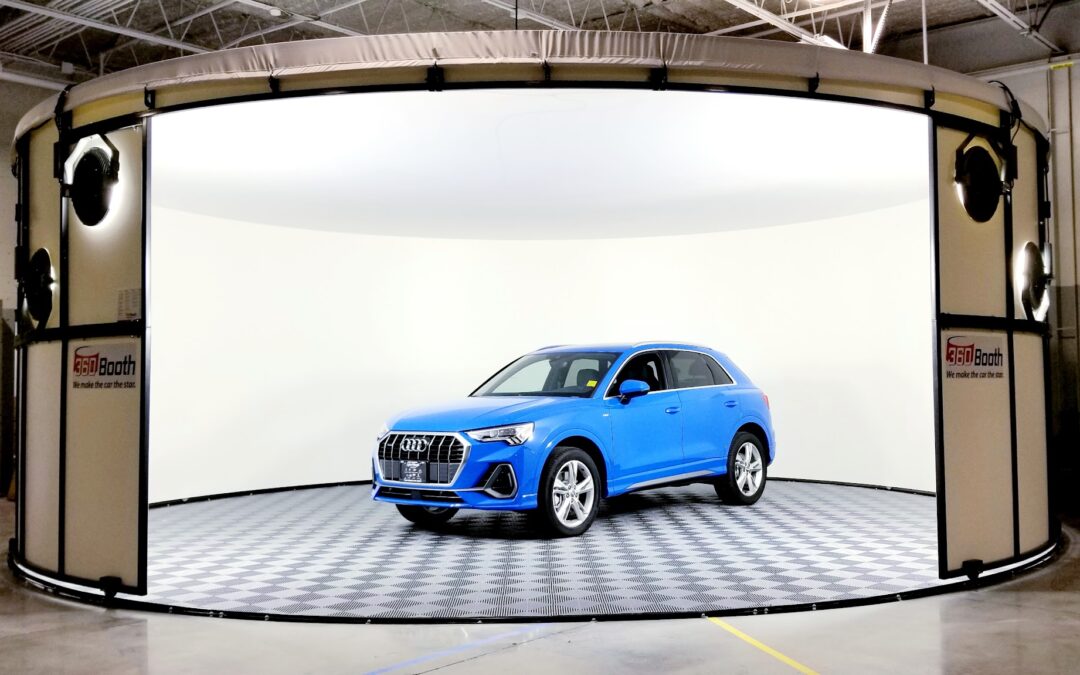
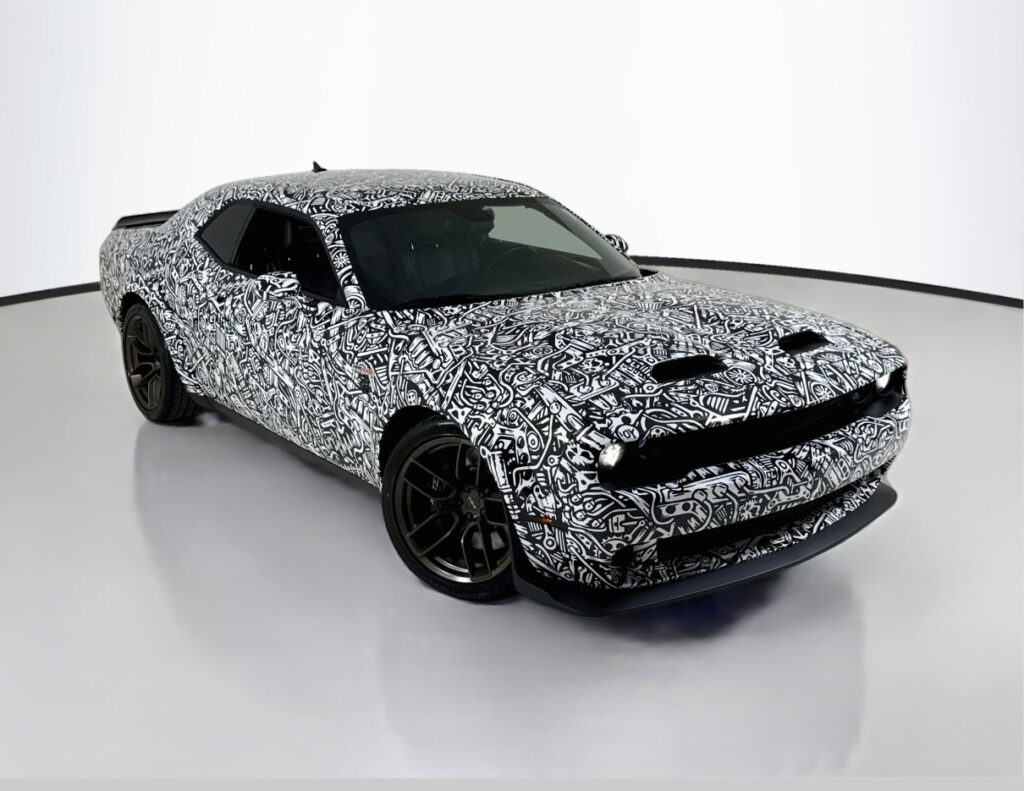
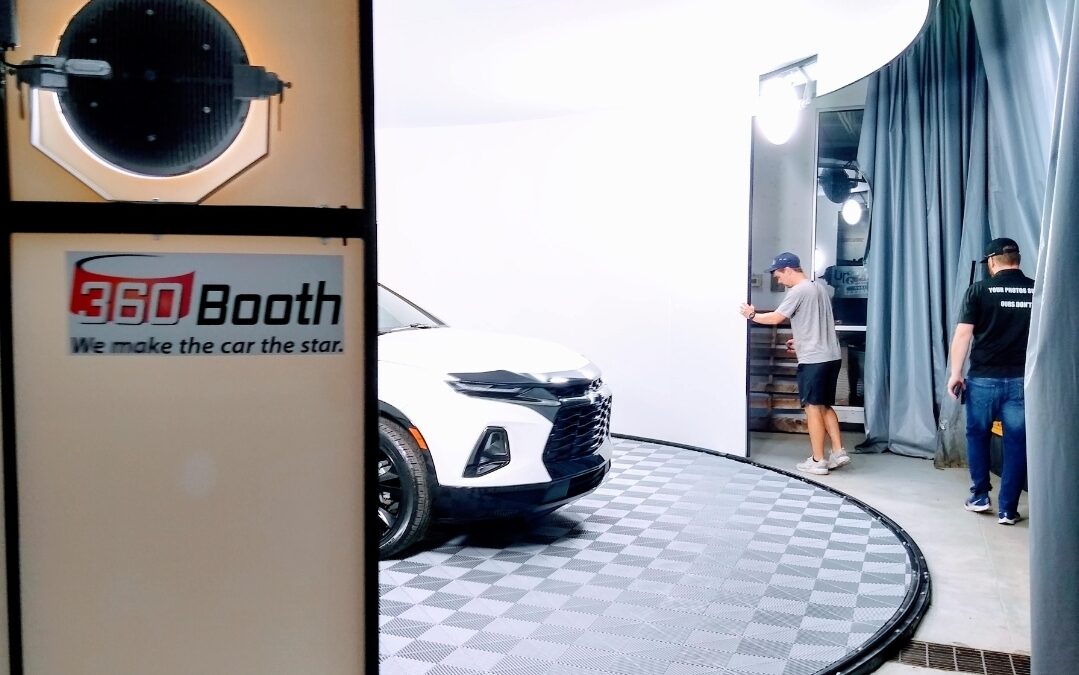
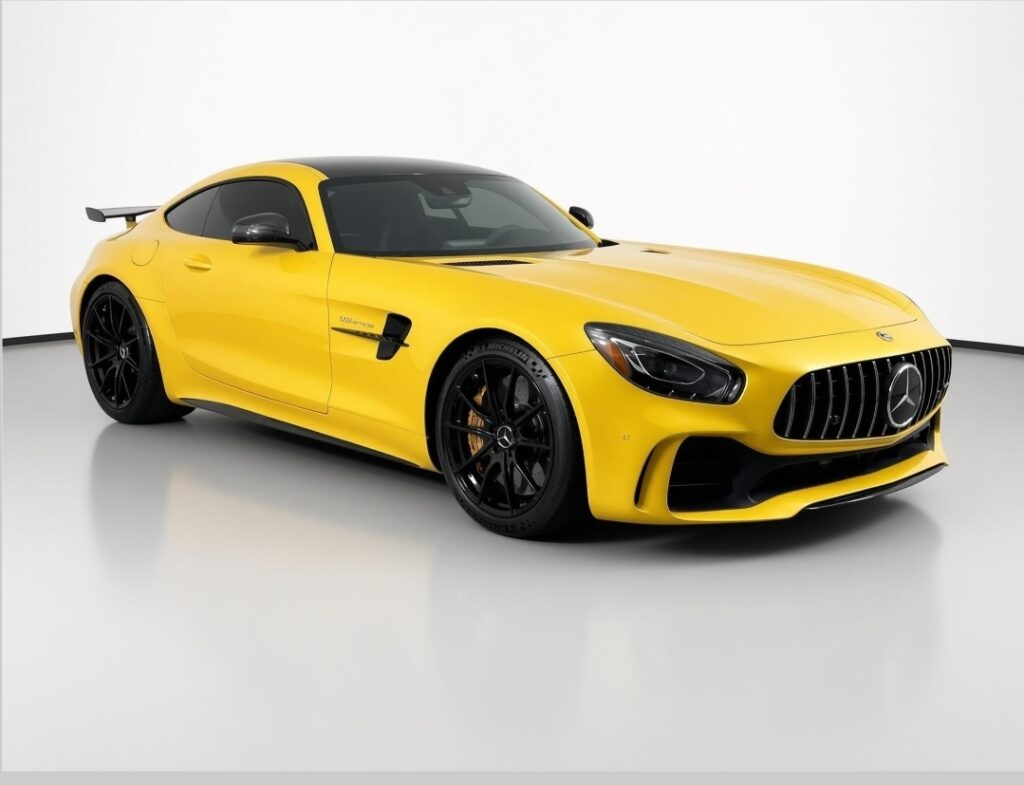
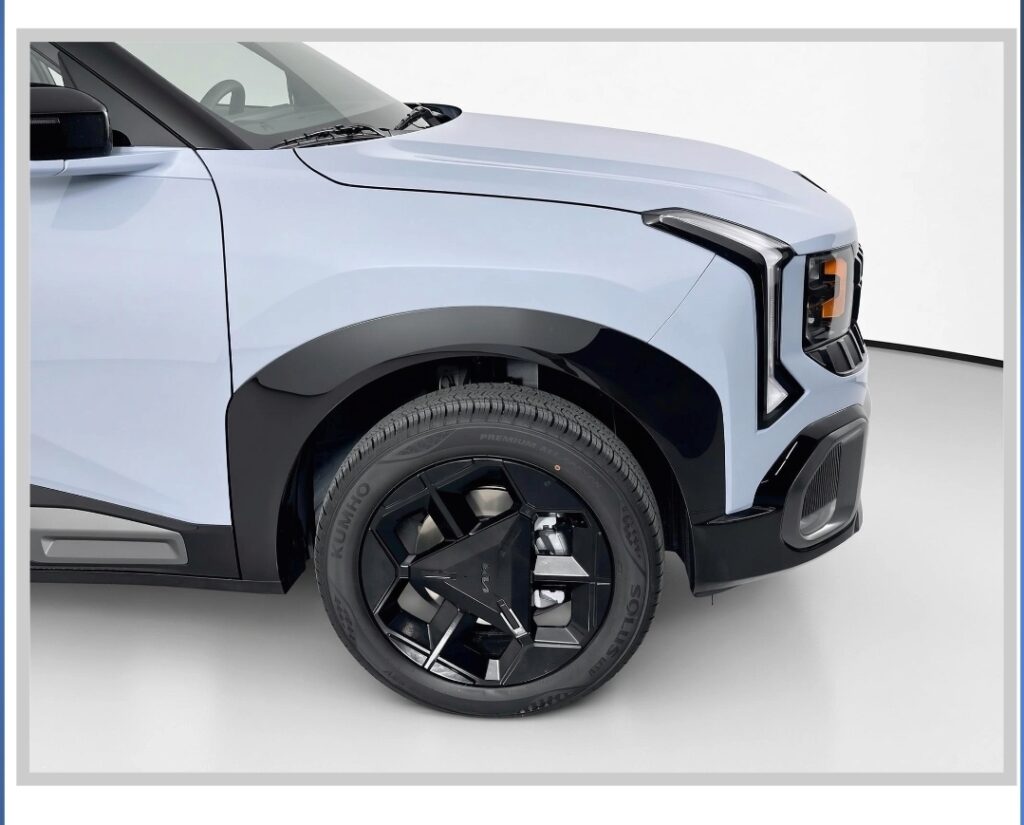
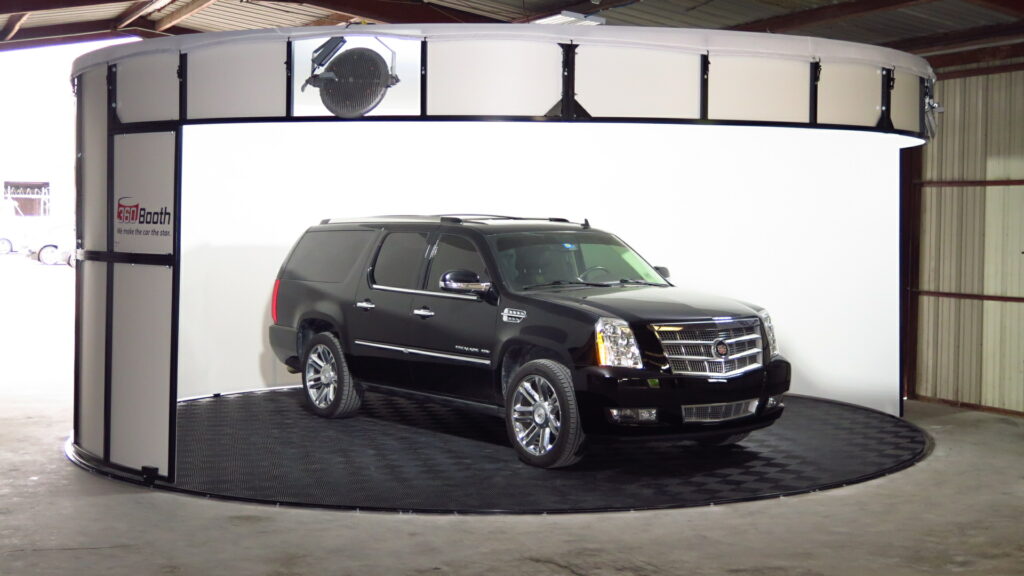
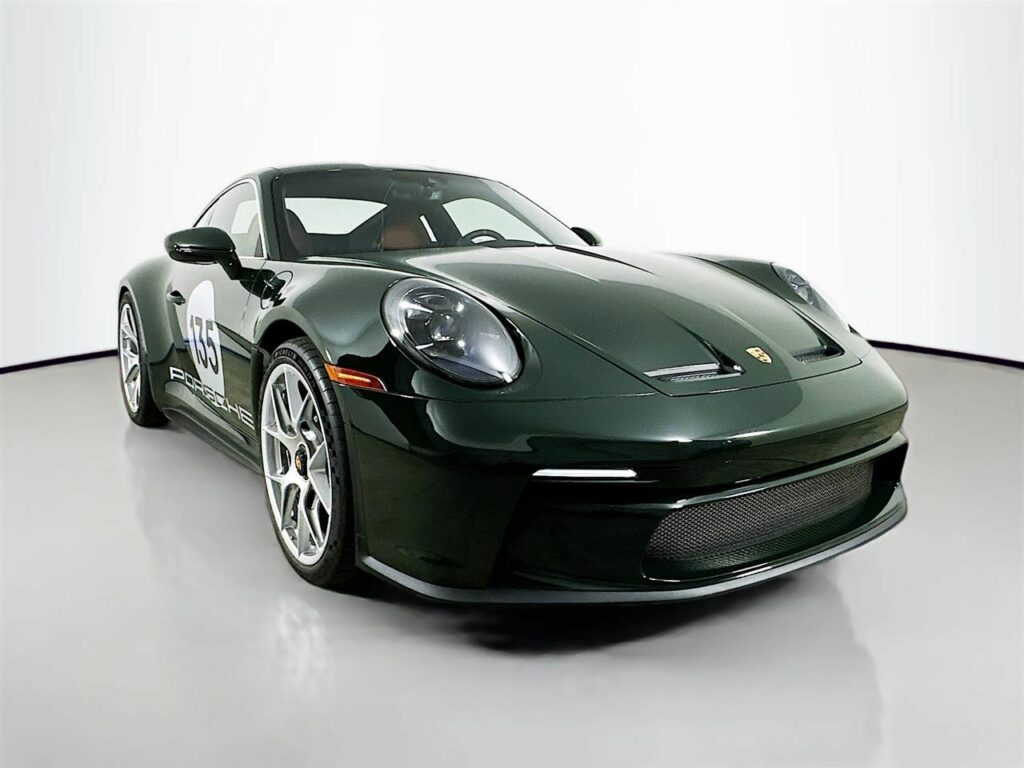
360Booth was built for exactly this buyer. The studio moves around the real, stationary car in controlled light, so every vehicle, from the $60,000 truck to the $9,000 commuter, gets the same honest, consistent presentation.
SHOOTit AI makes sure nothing gets skipped:
Starts with the VIN
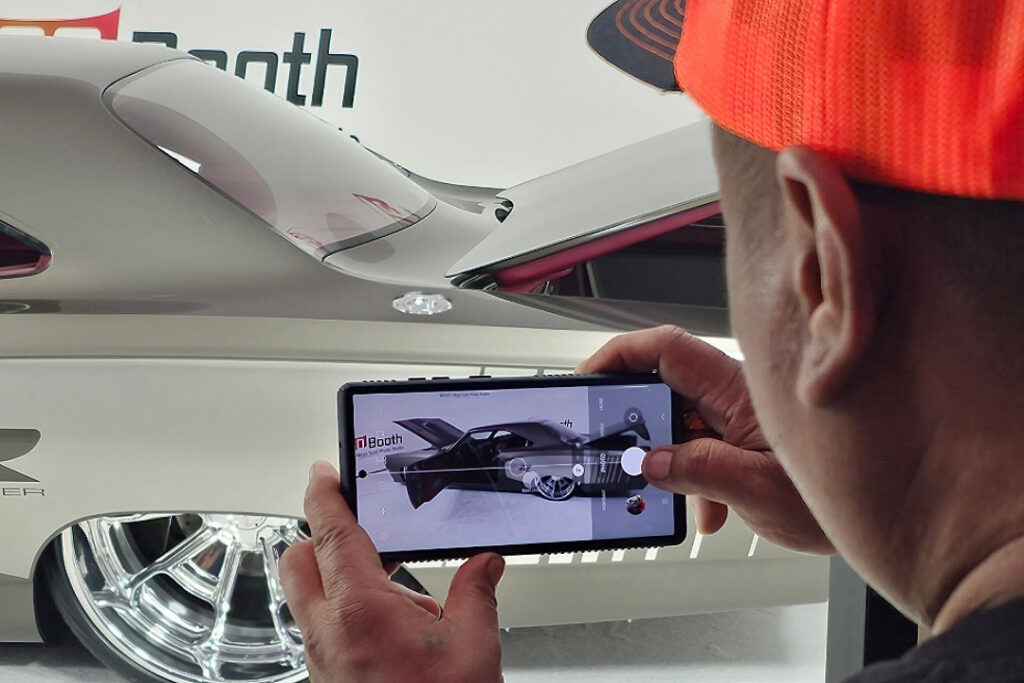
Guides a 40+ shot sequence on iPhone
Stops dark, blurry or off-center frames for a reshoot on the spot
What did Cox Automotive's "Know Your Buyer, Grow Your Lot" study find?
Based on 384 independent-dealer buyers, 79% said they need a vehicle rather than want one, buyers research an average of 16.5 hours online, and only 21% say they would return to the same dealership.
How many photos should a used car listing have?
Cox Automotive’s Elizabeth Stegall recommends at least 20 photos per vehicle with full descriptions and service history. SHOOTit AI guides a 40+ shot sequence so nothing is skipped.
Why do inexpensive used cars need good photos?
Buyers of older, lower-priced vehicles often pay cash and research for weeks. The less a buyer can afford a mistake, the more photographic evidence they need before they visit.
What is the Evidence Booth?
It’s how 360Booth and SHOOTit AI work together: the studio moves around the real, stationary car in controlled light, and SHOOTit AI guides every shot and stops bad frames for a reshoot.
A competing studio company published a comparison of its product against 360Booth. We read it. It’s wrong about us.
When a competitor needs to get your specs wrong to win the comparison, that tells you something about the comparison. So here are the facts, straight from the people who build the studio.
What they said vs. what’s true
They said: 360Booth has a limited warranty. The fact: 360Booth carries a 5-year unconditional warranty. Not limited. Unconditional.
They said: 360Booth has extra integration costs. The fact:There is no integration fee. None.
They said: 360Booth has two wall lights. The fact: Our 26 ft and 28 ft studios run four LEDs at 200,000 lumens.
Three claims. Three misses. If a vendor can’t get the competition right, ask how carefully they’re describing their own product.
“Real, not AI”? Read the product list.
Some studio companies market themselves as the real alternative to AI. Then you look at what they actually sell: AI background replacement, and a feature that reuses one car’s photos on other matching vehicles in your inventory.
Think about that second one. A shopper looks at a listing and sees photos of a different car. Same trim, same color, not the car on your lot. That’s not real. That’s a stock photo with your VIN on it.
Before you sign with any studio, put its website pages side by side. If the same system is listed with 12 cameras on one page and 16 on another, a capture time of 2 seconds here and 45 seconds there, and a lumen rating that changes by the page, ask one question:
“Which of these numbers goes in my contract?”
If they can’t answer it, you have your answer.
Rent forever, or own it?
Some studios are rented by the month, for as long as you shoot. Some still charge per VIN, with volume minimums. Every car you photograph is another line on the invoice.
A 360Booth is different:
You own the studio outright
No monthly invoice for the studio
No per-VIN fees
No contracts
Zero cost for on-site visits
5-year unconditional warranty
Add SHOOTit AI for one flat monthly invoice with no contract and no credit card required: unlimited vehicles, unlimited photos per vehicle, unlimited interior and exterior 360 videos and unlimited training.
Do you want a studio, or a construction project?
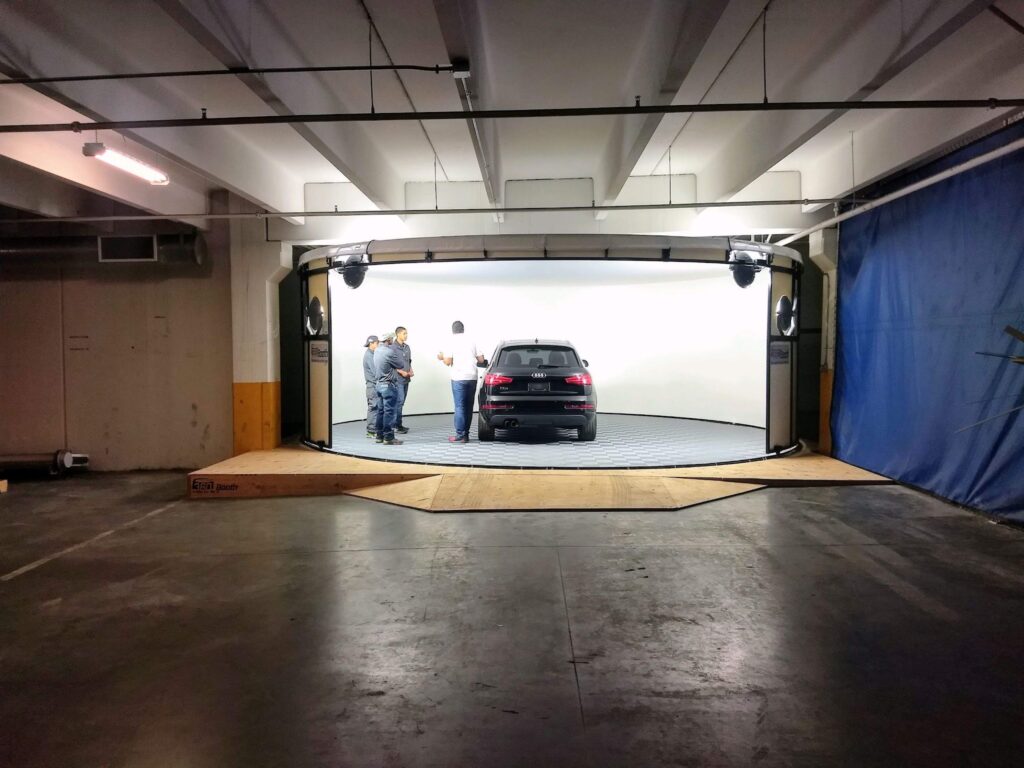
Ask any studio vendor exactly what installation takes. Some drive-thru systems need dedicated electrical circuits, a forklift on site for days, and a metal building that eats a row of parking spaces. Then ask who handles the permits.
Get it in writing before your service manager finds out the hard way.
Ask the right questions
Any studio, ours included, should be able to answer these without hesitation:
What exactly does your warranty cover, and for how long?
Is there an integration fee?
Do you charge per VIN, and is there a minimum?
Do you sell AI background replacement or reuse photos across vehicles?
Which camera count, capture time and lighting spec will be in my contract?
What does installation require, and who pulls the permits?
If you’re comparing studios, compare facts. Ours are simple: own it outright, 5-year unconditional warranty, no integration fee, four LEDs at 200,000 lumens, and real photos of the real car.
FAQ
What warranty does 360Booth have?
360Booth carries a 5-year unconditional warranty. It is not a limited warranty.
Does 360Booth charge an integration fee?
No. There is no integration fee with 360Booth.
How much lighting does a 360Booth studio have?
The 26 ft and 28 ft 360Booth studios use four LEDs at 200,000 lumens.
Does 360Booth charge per VIN or require a monthly rental?
No. You own the 360Booth studio outright, with no per-VIN fees, no monthly studio invoice and no contracts.
A “virtual booth” is a phone photo taken in your parking lot with a fake studio pasted behind the car. That’s it. The vendor tells you to forget studios and fancy rigs. Of course they do. They don’t have one. They have a picture of one.
The light on your car is still parking-lot light. The reflections are still your lot, your sky, your service drive. The software swapped the wall. It didn’t fix the car.
And the photo is the least of the problems.
They stopped caring about photos
Look at what some of these vendors announce now. AI chatbots. AI sales agents. AI service agents. Photography barely makes the press release, and their imaging pages sit untouched for months.
You’re paying for a product the vendor has already moved past. Nobody is coming to fix it.
At 360Booth, vehicle photography isn’t a side line. It’s the only line. SHOOTit AI’s intelligence was built from real cars photographed in real 360Booth studios.
Their own users are telling you
Skip the demo. Open the App Store and Google Play and read the reviews from the people who use these apps every day. Low star ratings. Apps that won’t connect. Shoots that fail on the lot.
That’s your photo team’s morning. Every morning. While your fresh trades sit offline.
“No hardware” comes in a box
The pitch is no studio, no rig, no hardware. Then the quote shows up with a hardware kit, billed separately, on top of the software package.
Now read the warranty on that kit. Some vendors give it nothing but the original manufacturer’s warranty. You bought their hardware. They won’t stand behind it.
360Booth stands behind ours for five years. Five-year unconditional warranty. You own the studio outright. No monthly invoice. Zero cost for on-site visits.
The contract is built so you can’t leave
This is where the “easy” software gets expensive. Read the terms and look for:
Auto-renewal at their new price. Not the price you signed. Whatever they say it is next year.
Written cancellation months in advance. Miss the window by a day and you’ve bought another term.
A ransom on your own data. Want to take your photos to another provider? That can cost several times your monthly fee.
Your inventory. Your photos. Their fee to let them go.
A lot of franchise dealers are in an OEM-approved merchandising program and pay for it with co-op dollars. Fine. Keep the program. Keep the money.
Then put a real studio under it. A 360Booth is equipment you own, not another subscription. It feeds your program real photos, shot under real light, on rain days and snow days when the lot is shut down. See When It Rains, Your Photo App Shouldn’t Stop Working.
Stop paying for a picture of a booth
A fake background can’t fix bad light. A buggy app can’t shoot your inventory. A contract you can’t leave isn’t a partnership.
A virtual photo booth is software that replaces the background of a vehicle photo shot on the lot with a studio-style background. The car is still lit by the lot, not by a studio.
Is a virtual booth the same as a real vehicle photo studio?
No. A virtual booth changes only the background. A real studio like 360Booth controls the light, reflections and floor around the car before the photo is taken.
What should dealers check in a photo vendor's contract?
Check for auto-renewal at new prices, how far ahead you must cancel in writing, and any fees to move your data to another provider. 360Booth and SHOOTit AI have no contracts.
Can a dealer in an OEM merchandising program still use 360Booth?
Yes. 360Booth is studio equipment you own, so it works alongside your merchandising program and improves the photos that feed it.
Every dealership has a photo problem. Most are trying to solve it with software. That’s like fixing a leaky roof by buying a better mop.
Background replacement apps promise studio-quality listings from a lot photo. Shoot it anywhere, swap the sky for a seamless gray sweep, publish. Done.
Except it isn’t done. The glare is still on the hood. The neighbor’s red truck is still reflected in the door. The interior is still dark because it was shot at 4:30 in November. The software painted a new wall behind the car. It didn’t change the light on the car.
The light is the photo
Here’s the part nobody selling filters wants to say out loud: a vehicle is a rolling mirror. Every panel reflects whatever surrounds it. Shoot outside and you photograph the sky, the building, the lot and the guy in the orange vest. Then you pay a monthly fee to hide the evidence.
It tells the truth. The car online is the car on the lot. No softened scuffs, no floating tires, no awkward apology from your salesperson.
The best compliment a dealer can get
Years ago, Steven Toyota turned an empty service building into a photo studio. According to Auto Dealer Today, shoppers started calling to ask for the “real” photos. The team had to explain they were already looking at them.
That’s the goal. Photos so clean people assume they’re fake, and so honest they hold up when the customer walks around the car.
Fake backgrounds get the first half. A room gets both.
Stop renting the look. Own the light.
Background software is a subscription to a symptom. A 360Booth vehicle photo studio fixes the cause: uncontrolled light around a reflective object. Pair it with the SHOOTit AI smart camera and the employee gets guided through every angle while the car is still in front of them, not a day later when the edits come back wrong.
Your car is the star. Give it a stage, not a sticker.
Can AI background replacement fix glare and reflections on a vehicle?
Not reliably. Background tools replace what’s behind the car. Reflections live on the car’s paint and glass, so they come from whatever surrounded the vehicle when it was shot. Controlling the surroundings is the dependable fix.
Why do studio vehicle photos look more consistent?
Every car is shot under the same lighting, walls and camera positions, so the whole inventory matches no matter who takes the photos or what the weather is doing.
Direct answer: Fake background software repairs vehicle photos after the shoot. SHOOTit AI stops bad photos at the shutter. One approach pastes a clean backdrop behind whatever the camera caught, then hands problems back to the dealership hours or days later. The other catches crooked wheels, trash, glare, blur and dirty inventory while the employee, the camera and the car are still in the same place.
That difference sounds small. It isn’t. It decides whether the car reaches the market today or after a second trip through the lot.
A Fake Background Is a Band-Aid on a Sloppy Shoot
Background replacement software does one main thing: it cuts the vehicle out of the photo and drops it onto a digital showroom. What it does not do is change the car.
If the wheels were dusty, they are still dusty. If there was a water bottle in the cupholder, a paper floor mat on the driver’s side or a smear across the windshield, it is still there, now sitting in a spotless CGI room that makes it more obvious, not less.
Even the tools that sell automation admit this. A setup guide for one AI car-listing platform tells users to flag images that need re-photography instead of an AI fix, warning that no amount of post-processing can rescue a badly taken photo.
When the photos are the inspection, a backdrop that never existed is a strange way to earn trust. Regulators have also noticed the gap between pictures and reality. Federal Trade Commission staff have warned dealers that showing a used car as it looked new instead of as it looks on the lot is the kind of ad that gets a dealer in trouble. A fake background isn’t the same thing, but the principle runs in the same direction: show the car the customer will actually get. (See What If the Background Looked Perfect and the Car Didn’t?)
Post-Shoot Software Is an Operational Problem, Not Just a Visual One
The bigger cost of fixing photos after the fact is time.
Run the conservative number. A store that photographs 100 used cars a month and loses two days per car to post-shoot processing and reshoots is carrying 200 extra vehicle-days. At $40 a day, that is $8,000 a month before counting the labor of chasing keys and re-shooting. At $85 a day, it is $17,000. (More on why photos need an owner and a clock in What If Photos Aren’t Even a Step in Your Recon?)
And the wait pays for something that doesn’t show the car the shopper will buy.
SHOOTit AI Fixes It at the Shutter
SHOOTit AI moves quality control to the one moment when fixing a photo costs almost nothing: before the employee walks away from the car.
It guides the dealership’s required 40+ image sequence on an iPhone and flags mistakes as they happen:
Crooked wheels and bad angles. The shot is retaken with the wheels straight and the camera where the sequence calls for it.
Trash, water bottles and paper floor mats. The clutter gets removed from the car, not painted out of the picture.
Blurry frames and harsh glare. The employee reshoots on the spot instead of learning about it tomorrow.
Dirty inventory. The car goes back for a wipe-down now, while it’s already in hand, not after it has been parked across the lot.
A fake background doesn’t clean the car. A 24-hour queue doesn’t sell it. And a rejected photo two days later doesn’t fix anything. It just starts the process over.
Stop pasting fake backgrounds on sloppy shoots. Catch it, fix it at the car, and get real, authentic inventory to market today.
FAQ
Does a fake AI background fix a dirty or cluttered car?
No. Background replacement swaps what is behind the vehicle. Dust, water spots, trash on the seats and paper floor mats are part of the vehicle, so they stay in the photo unless someone edits the car itself, which changes the record of what you are selling.
How long does post-shoot photo processing take?
It varies by vendor. Some AI tools process images in seconds, while outsourced editing commonly runs on 24 to 48 hour delivery windows, and some dealer programs promise processed images within 24 hours. Any photo that can’t be fixed in software still needs a reshoot after that wait.
What does SHOOTit AI check at the moment of capture?
SHOOTit AI guides the employee through the dealership’s required 40+ image sequence and flags problems such as blurry or dark frames, poor centering, crooked wheels and bad angles, harsh glare, trash and paper floor mats, and dirty inventory, so the photo is retaken before the employee walks away.
Do I need a 360Booth studio to use SHOOTit AI?
No. SHOOTit AI runs on an iPhone and can guide capture anywhere. Paired with a 360Booth vehicle photo studio, the lighting and background are controlled as well, so every car is shot the same way regardless of weather.