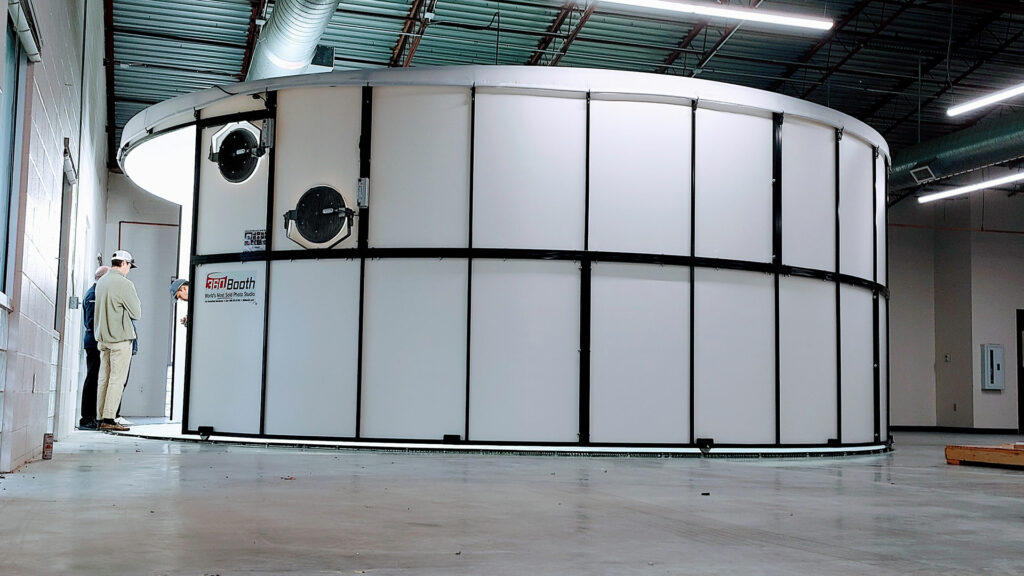
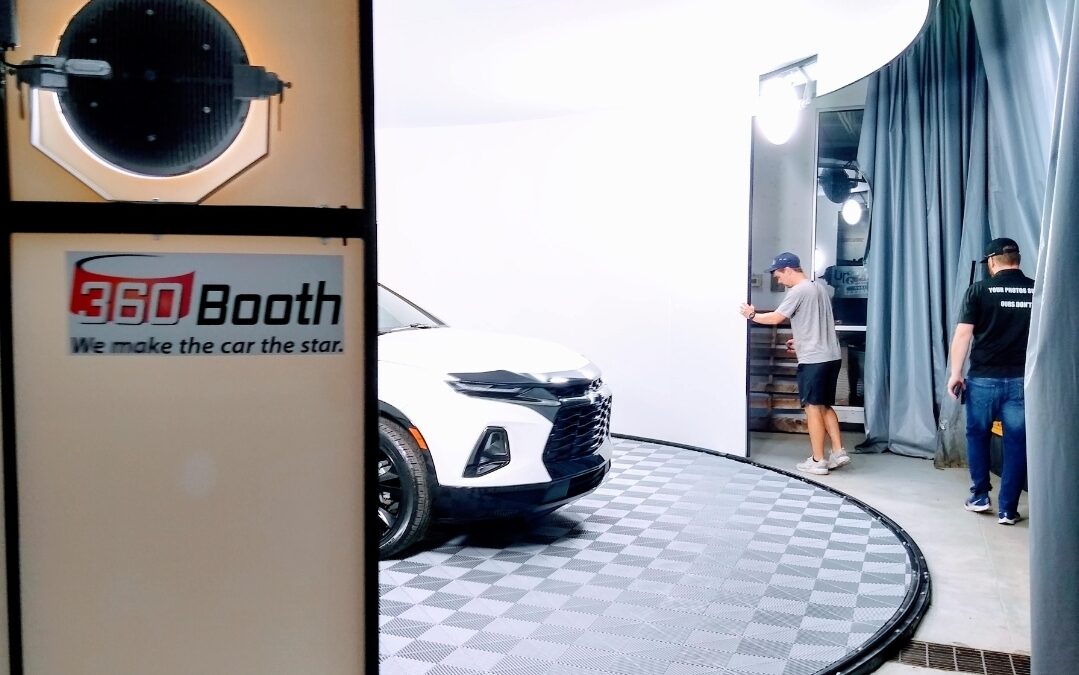
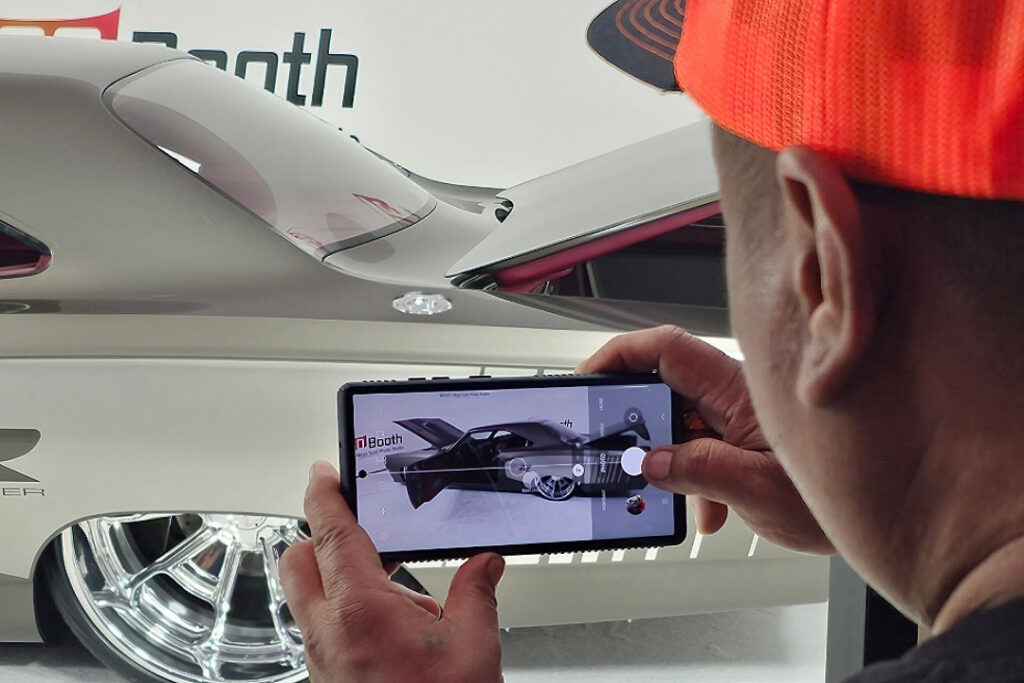
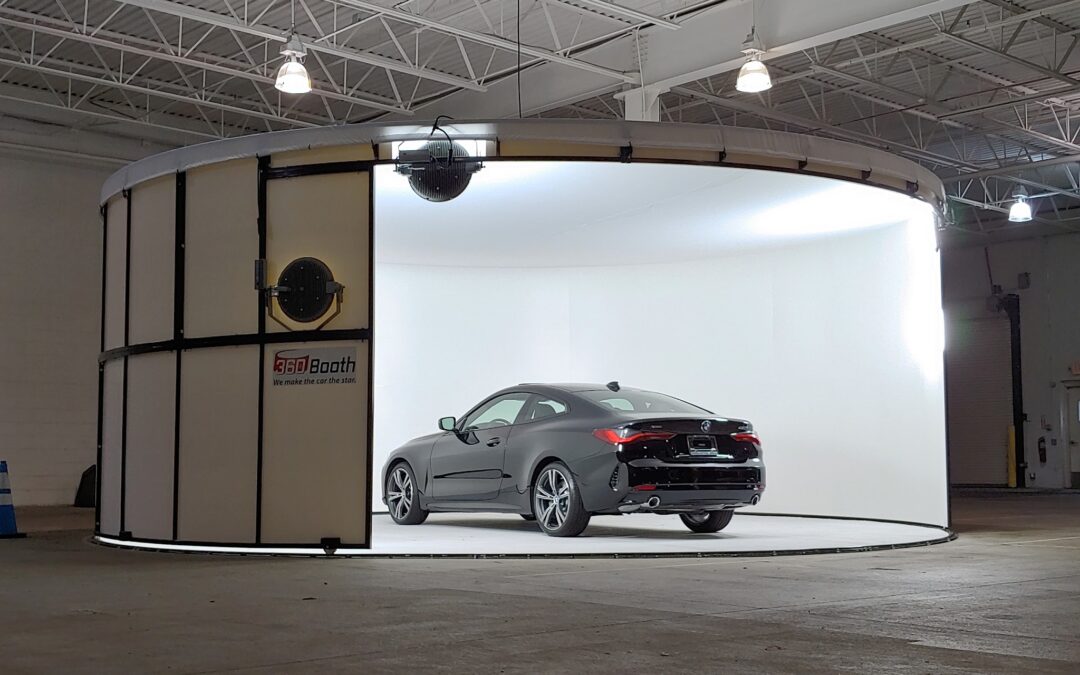
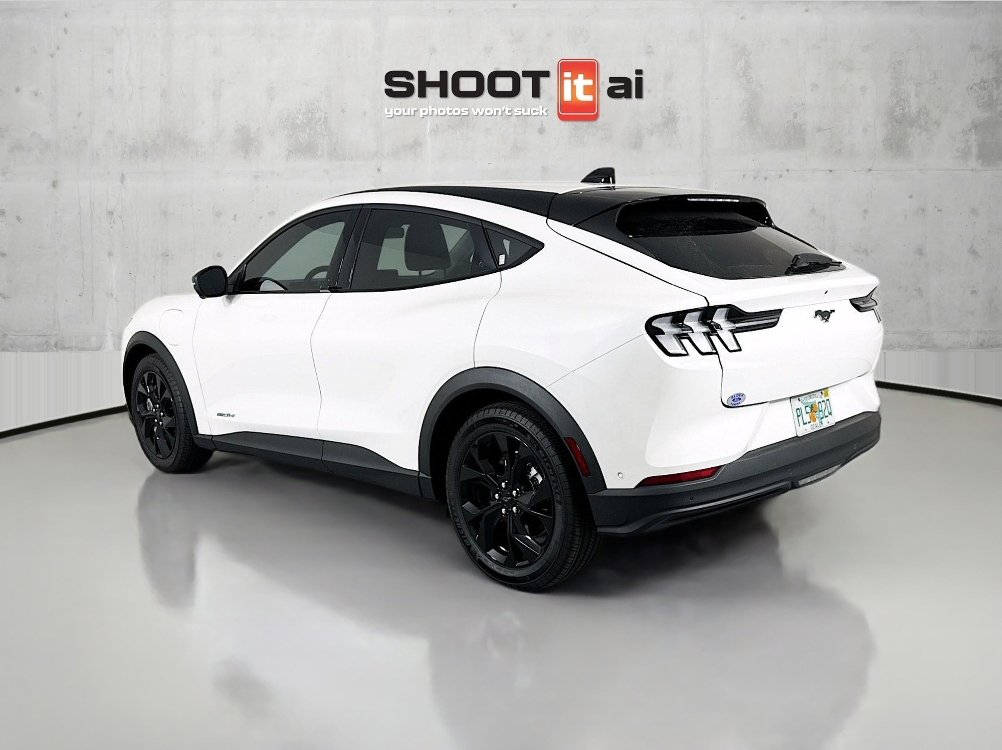
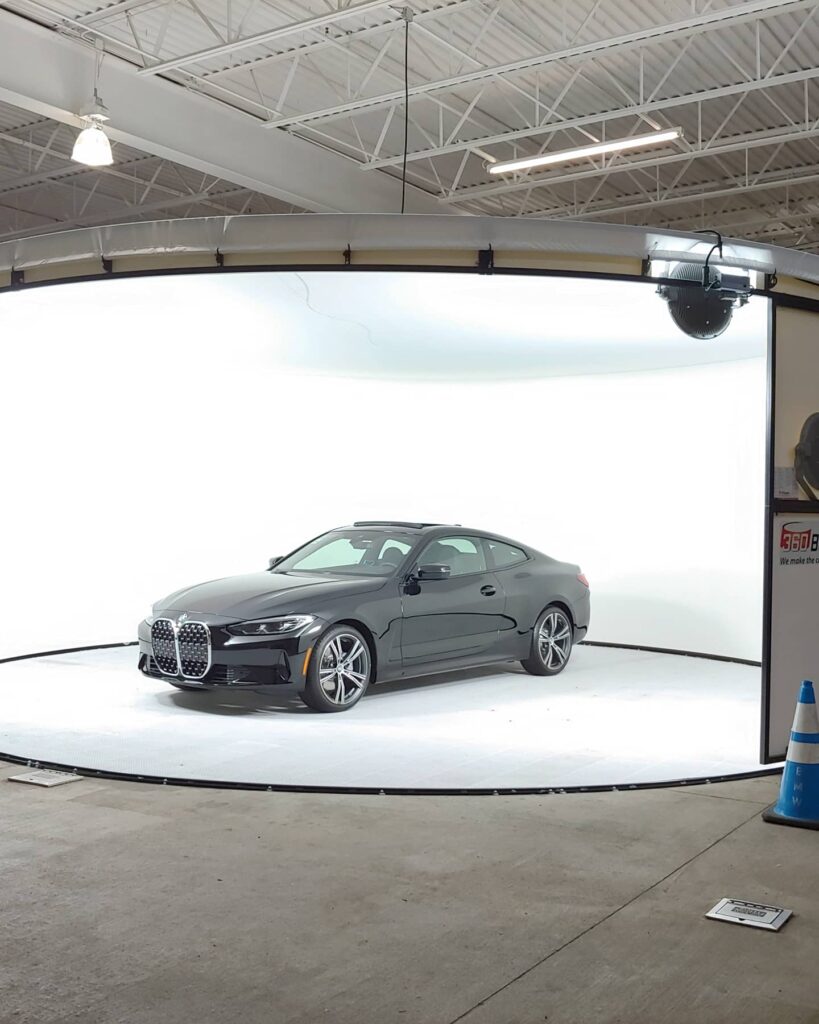
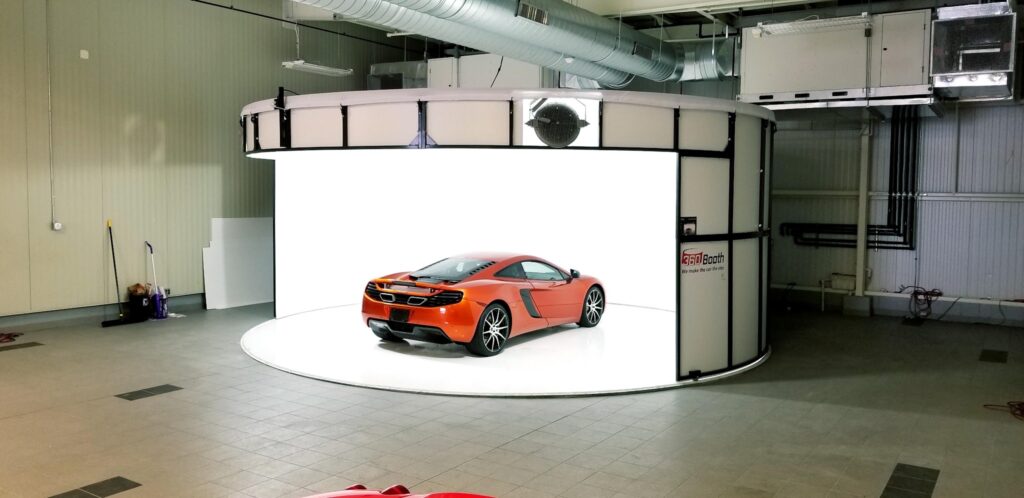
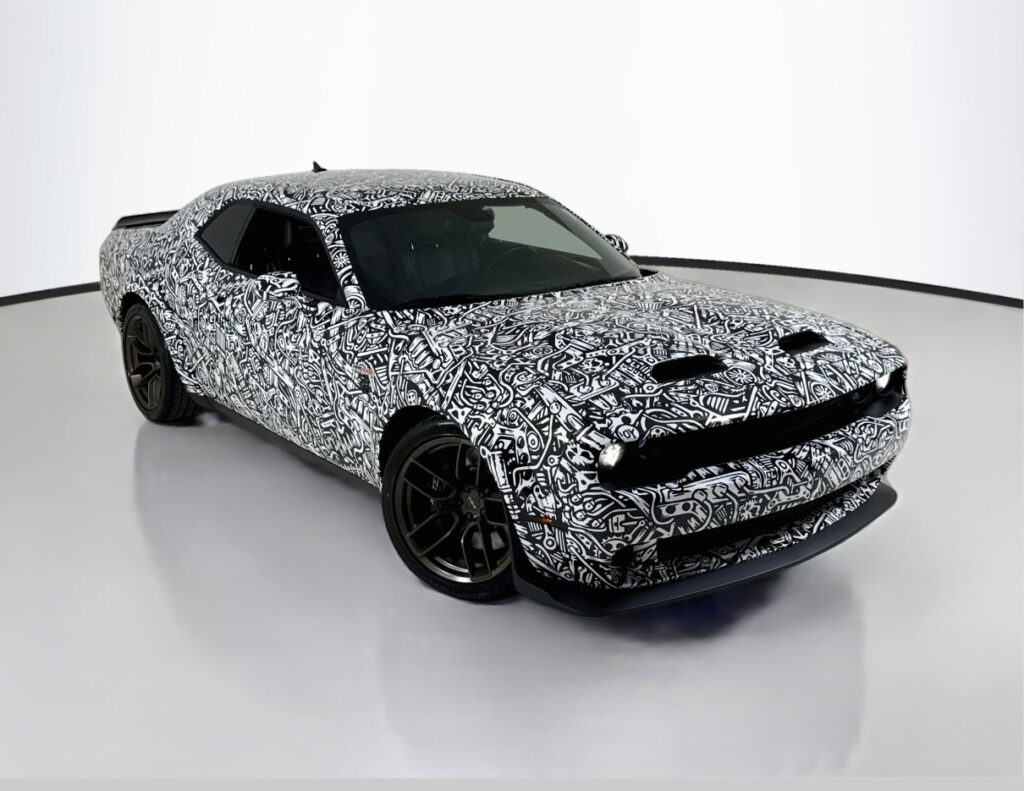
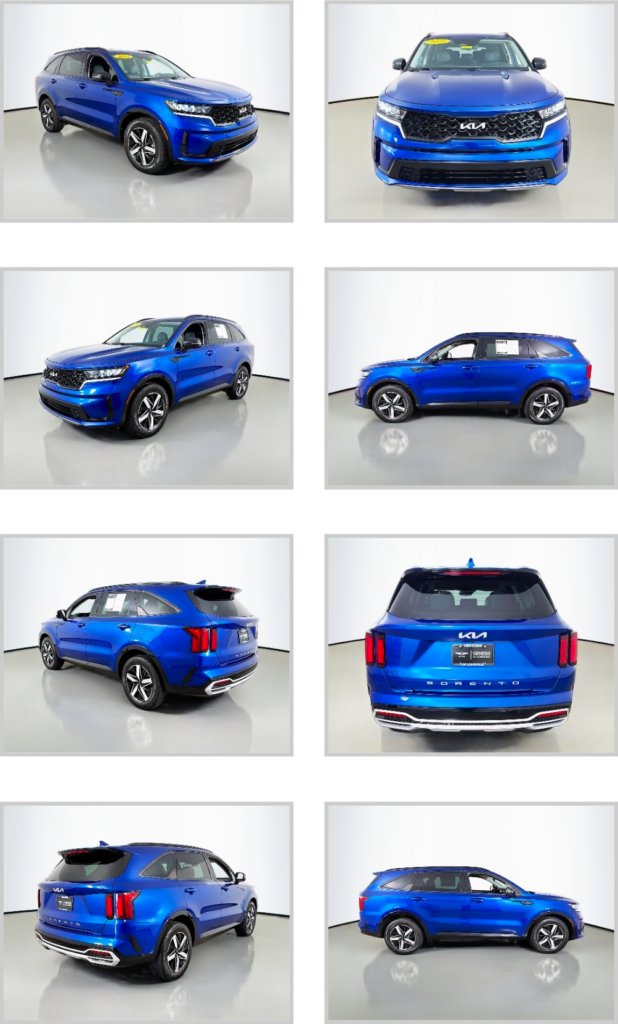
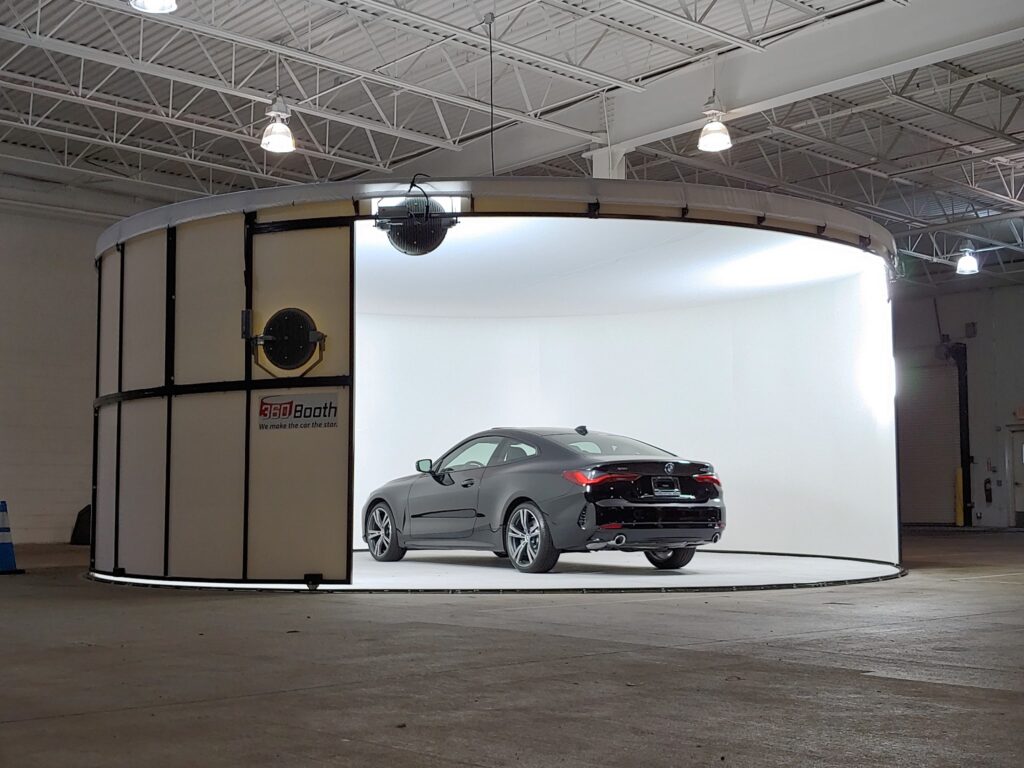
A “virtual booth” is a phone photo taken in your parking lot with a fake studio pasted behind the car. That’s it. The vendor tells you to forget studios and fancy rigs. Of course they do. They don’t have one. They have a picture of one.
The light on your car is still parking-lot light. The reflections are still your lot, your sky, your service drive. The software swapped the wall. It didn’t fix the car.
And the photo is the least of the problems.
They stopped caring about photos
Look at what some of these vendors announce now. AI chatbots. AI sales agents. AI service agents. Photography barely makes the press release, and their imaging pages sit untouched for months.
You’re paying for a product the vendor has already moved past. Nobody is coming to fix it.
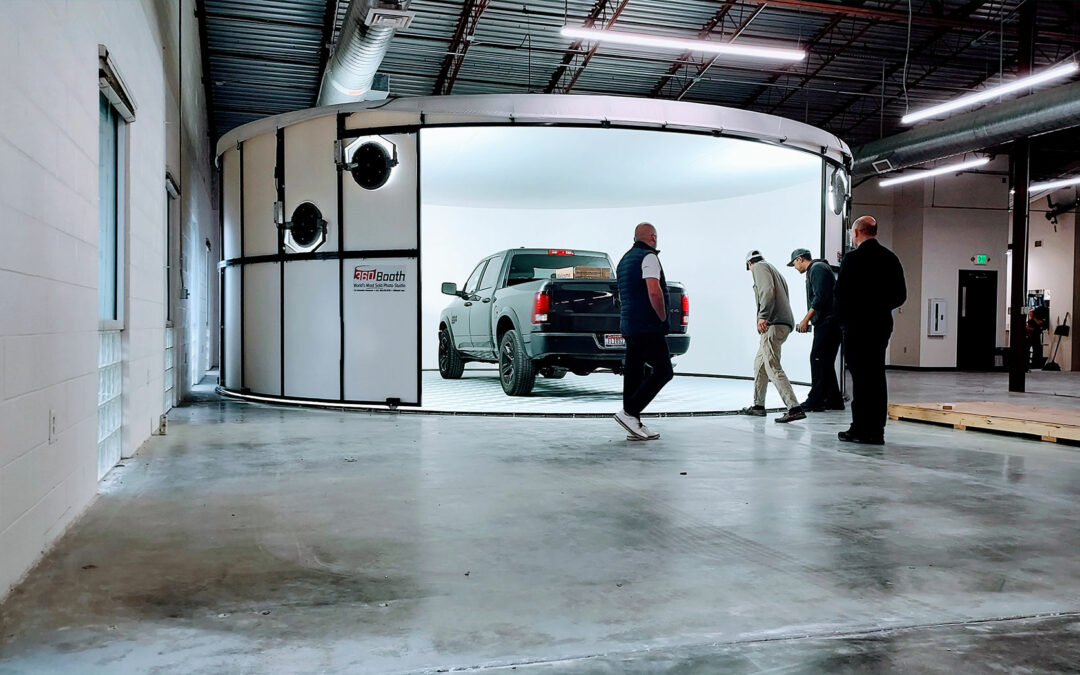
At 360Booth, vehicle photography isn’t a side line. It’s the only line. SHOOTit AI’s intelligence was built from real cars photographed in real 360Booth studios.
Their own users are telling you
Skip the demo. Open the App Store and Google Play and read the reviews from the people who use these apps every day. Low star ratings. Apps that won’t connect. Shoots that fail on the lot.
That’s your photo team’s morning. Every morning. While your fresh trades sit offline.
“No hardware” comes in a box
The pitch is no studio, no rig, no hardware. Then the quote shows up with a hardware kit, billed separately, on top of the software package.
Now read the warranty on that kit. Some vendors give it nothing but the original manufacturer’s warranty. You bought their hardware. They won’t stand behind it.
360Booth stands behind ours for five years. Five-year unconditional warranty. You own the studio outright. No monthly invoice. Zero cost for on-site visits.
The contract is built so you can’t leave
This is where the “easy” software gets expensive. Read the terms and look for:
Auto-renewal at their new price. Not the price you signed. Whatever they say it is next year.
Written cancellation months in advance. Miss the window by a day and you’ve bought another term.
A ransom on your own data. Want to take your photos to another provider? That can cost several times your monthly fee.
Your inventory. Your photos. Their fee to let them go.
A lot of franchise dealers are in an OEM-approved merchandising program and pay for it with co-op dollars. Fine. Keep the program. Keep the money.
Then put a real studio under it. A 360Booth is equipment you own, not another subscription. It feeds your program real photos, shot under real light, on rain days and snow days when the lot is shut down. See When It Rains, Your Photo App Shouldn’t Stop Working.
Stop paying for a picture of a booth
A fake background can’t fix bad light. A buggy app can’t shoot your inventory. A contract you can’t leave isn’t a partnership.
A virtual photo booth is software that replaces the background of a vehicle photo shot on the lot with a studio-style background. The car is still lit by the lot, not by a studio.
Is a virtual booth the same as a real vehicle photo studio?
No. A virtual booth changes only the background. A real studio like 360Booth controls the light, reflections and floor around the car before the photo is taken.
What should dealers check in a photo vendor's contract?
Check for auto-renewal at new prices, how far ahead you must cancel in writing, and any fees to move your data to another provider. 360Booth and SHOOTit AI have no contracts.
Can a dealer in an OEM merchandising program still use 360Booth?
Yes. 360Booth is studio equipment you own, so it works alongside your merchandising program and improves the photos that feed it.
Before your dealership signs up for a fake background service, do one thing most stores skip: read the billing terms. Not the demo. Not the pricing slide. The actual terms of service you click “I agree” to.
Some of those agreements say things a general manager would never accept if a salesperson read them out loud across the desk.
What to look for in fake background billing terms
Non-refundable charges. Some providers state that fees are non-refundable, even if you stop using the service partway through a billing cycle.
Auto-renewal. Subscriptions can renew automatically. Miss the cancellation window and you’ve bought another term.
Dispute penalties. In some terms, if you dispute a charge with your card company, the provider can suspend your account, which shuts off the photos feeding your VDPs, and pass the dispute fees back to you.
Think about what that last one means. Your only leverage on a bad charge can cost you your online inventory photos and an extra bill on top.
A 360Booth vehicle photo studio is equipment your dealership owns. There’s nothing to renew and nothing to dispute.
You own it outright. No monthly invoices.
Zero cost for on-site visits.
No contracts.
5-year unconditional warranty.
And because the studio controls the light before the shutter clicks, there’s nothing to fake afterward. As we wrote in Your Car Doesn’t Need a Filter. It Needs a Room., the room fixes the problem a filter can only hide.
With SHOOTit AI, one simple flat monthly invoice
SHOOTit AI is the smart camera that guides your employees through every shot and catches mistakes at capture. Its billing is built to be as simple as the app:
Before you sign anything, ask: “What happens to my photos and my account if I dispute a charge or want to leave?” If the answer is complicated, the billing is working for them, not for you.
It depends on the provider. Some fake background companies state in their terms that fees are non-refundable. Read the billing terms before you sign up.
What happens if I dispute a charge with a fake background provider?
Under some providers’ terms, a disputed charge can lead to account suspension and the dispute fees being passed back to you. Check the terms before you agree.
Does 360Booth charge a monthly fee?
No. You own the 360Booth studio outright, with no monthly invoices, no contracts, zero cost for on-site visits and a 5-year unconditional warranty.
How is SHOOTit AI billed?
SHOOTit AI uses simple flat monthly invoicing with no contracts and no credit card required. It includes unlimited vehicles, unlimited photos per vehicle, unlimited interior and exterior 360 videos and unlimited training.
Direct answer: SHOOTit AI’s intelligence starts with an in-house AI modeling team, PhD expertise in computer vision and models trained on tens of millions of vehicle photographs captured inside 360Booth vehicle photo studios. That foundation serves one practical purpose: put automotive photography expertise in the employee’s hands, guiding each shot and catching problems while the vehicle is still in front of the camera.
Trained on Real Dealership Vehicle Photos
Vehicle photography demands attention to framing, exposure, positioning and consistency across an entire inventory. Training on real dealership vehicle photos gives the models a clear target: the images a dealership needs to present its vehicles professionally.
Where the Intelligence Shows Up: On the Dealership Floor
An employee picks up an iPhone, starts with the VIN and follows the prompts. SHOOTit AI guides the required photo sequence, stops dark, blurry or poorly centered images, and prompts an immediate reshoot before moving on.
The best camera app must prove its intelligence where your dealership needs it: during capture.
Your employee follows the prompts. The expertise is already built in. SHOOTit AI. Your photos won’t suck.
FAQ
What is SHOOTit AI trained on?
SHOOTit AI’s models are trained on vehicle photographs captured inside 360Booth vehicle photo studios, where lighting and presentation follow a repeatable standard. That gives the models a consistent reference for the image quality a dealership needs.
What does SHOOTit AI check during capture?
SHOOTit AI guides the employee through the dealership’s required photo sequence and stops dark, blurry or poorly centered images, prompting an immediate reshoot before moving to the next shot.
Does an employee need photography experience to use SHOOTit AI?
No. The employee starts with the VIN and follows the prompts. The automotive photography expertise is built into the app, so another employee can pick it up and follow the same process.
Do I need a 360Booth studio to use SHOOTit AI?
No. SHOOTit AI runs on an iPhone and can guide capture anywhere. Paired with a 360Booth vehicle photo studio, the lighting and background are controlled as well, so every car is shot the same way regardless of weather.
Direct answer: Fake background software repairs vehicle photos after the shoot. SHOOTit AI stops bad photos at the shutter. One approach pastes a clean backdrop behind whatever the camera caught, then hands problems back to the dealership hours or days later. The other catches crooked wheels, trash, glare, blur and dirty inventory while the employee, the camera and the car are still in the same place.
That difference sounds small. It isn’t. It decides whether the car reaches the market today or after a second trip through the lot.
A Fake Background Is a Band-Aid on a Sloppy Shoot
Background replacement software does one main thing: it cuts the vehicle out of the photo and drops it onto a digital showroom. What it does not do is change the car.
If the wheels were dusty, they are still dusty. If there was a water bottle in the cupholder, a paper floor mat on the driver’s side or a smear across the windshield, it is still there, now sitting in a spotless CGI room that makes it more obvious, not less.
Even the tools that sell automation admit this. A setup guide for one AI car-listing platform tells users to flag images that need re-photography instead of an AI fix, warning that no amount of post-processing can rescue a badly taken photo.
When the photos are the inspection, a backdrop that never existed is a strange way to earn trust. Regulators have also noticed the gap between pictures and reality. Federal Trade Commission staff have warned dealers that showing a used car as it looked new instead of as it looks on the lot is the kind of ad that gets a dealer in trouble. A fake background isn’t the same thing, but the principle runs in the same direction: show the car the customer will actually get. (See What If the Background Looked Perfect and the Car Didn’t?)
Post-Shoot Software Is an Operational Problem, Not Just a Visual One
The bigger cost of fixing photos after the fact is time.
Run the conservative number. A store that photographs 100 used cars a month and loses two days per car to post-shoot processing and reshoots is carrying 200 extra vehicle-days. At $40 a day, that is $8,000 a month before counting the labor of chasing keys and re-shooting. At $85 a day, it is $17,000. (More on why photos need an owner and a clock in What If Photos Aren’t Even a Step in Your Recon?)
And the wait pays for something that doesn’t show the car the shopper will buy.
SHOOTit AI Fixes It at the Shutter
SHOOTit AI moves quality control to the one moment when fixing a photo costs almost nothing: before the employee walks away from the car.
It guides the dealership’s required 40+ image sequence on an iPhone and flags mistakes as they happen:
Crooked wheels and bad angles. The shot is retaken with the wheels straight and the camera where the sequence calls for it.
Trash, water bottles and paper floor mats. The clutter gets removed from the car, not painted out of the picture.
Blurry frames and harsh glare. The employee reshoots on the spot instead of learning about it tomorrow.
Dirty inventory. The car goes back for a wipe-down now, while it’s already in hand, not after it has been parked across the lot.
A fake background doesn’t clean the car. A 24-hour queue doesn’t sell it. And a rejected photo two days later doesn’t fix anything. It just starts the process over.
Stop pasting fake backgrounds on sloppy shoots. Catch it, fix it at the car, and get real, authentic inventory to market today.
FAQ
Does a fake AI background fix a dirty or cluttered car?
No. Background replacement swaps what is behind the vehicle. Dust, water spots, trash on the seats and paper floor mats are part of the vehicle, so they stay in the photo unless someone edits the car itself, which changes the record of what you are selling.
How long does post-shoot photo processing take?
It varies by vendor. Some AI tools process images in seconds, while outsourced editing commonly runs on 24 to 48 hour delivery windows, and some dealer programs promise processed images within 24 hours. Any photo that can’t be fixed in software still needs a reshoot after that wait.
What does SHOOTit AI check at the moment of capture?
SHOOTit AI guides the employee through the dealership’s required 40+ image sequence and flags problems such as blurry or dark frames, poor centering, crooked wheels and bad angles, harsh glare, trash and paper floor mats, and dirty inventory, so the photo is retaken before the employee walks away.
Do I need a 360Booth studio to use SHOOTit AI?
No. SHOOTit AI runs on an iPhone and can guide capture anywhere. Paired with a 360Booth vehicle photo studio, the lighting and background are controlled as well, so every car is shot the same way regardless of weather.
Yes. A dealership should treat its vehicle-photography iPhone as production equipment rather than depend on an employee’s personal device. SHOOTit AI runs on supported iPhone Pro Max models purchased by the dealership, so the camera, training, workflow and operating standard stay with the store even when staffing changes.
The camera should belong to the process
Dealerships would never build a service process around a technician bringing whatever diagnostic equipment happened to be in their pocket that morning.
Vehicle photography deserves the same discipline.
Once a phone is responsible for documenting dealership inventory, it isn’t just a phone. It’s a production camera. It:
A dealership-owned iPhone keeps the production tool where the production happens. The employee may change. The camera remains.
Which iPhones does SHOOTit AI support?
SHOOTit AI is built around supported Apple iPhone Pro Max devices. Current operating guidance supports iPhone 12 through iPhone 17 Pro Max models, with support for future devices evaluated as new generations are introduced.
The dealership purchases the phone, which also keeps the normal device warranty relationship with the store.
The objective isn’t to force dealers into complicated camera equipment. It’s the opposite. Use a modern smartphone employees already understand, then put an intelligent vehicle-photography workflow on it. As we’ve said before, more megapixels don’t fix a missing process.
SHOOTit AI is more than a camera app
The workflow begins with the vehicle VIN.
SHOOTit AI uses VIN-decoder information to understand the expected vehicle configuration and guide the requested equipment photographs. If an employee tries to skip a requested image and the decoder shows that feature should be standard equipment, SHOOTit AI immediately tells the user to check again.
The employee then continues through the dealership’s required 40+ image process. If a required photo is too dark, blurry or poorly centered, SHOOTit AI stops the workflow and requires a reshoot before continuing. That’s quality control at the vehicle, not after the fact.
The important point: these operating standards live in the dealership’s capture system, not just inside one photographer’s memory.
A dedicated phone makes employee backup easier
Photography should survive staffing changes.
A dealership can train another employee on the same device and the same guided process instead of asking that person to reproduce another photographer’s personal habits. Basic SHOOTit AI instruction takes about three minutes.
That doesn’t make someone a professional photographer in three minutes. It means the employee can understand the guided process quickly enough to start using the system. That distinction matters. The expertise is built into the environment and workflow, so you can stop hiring people just to take vehicle photos.
What if a dealership wants two cameras?
A second active phone requires an additional SHOOTit AI license. Treat that as a capacity decision.
A high-volume dealership may want multiple trained employees or simultaneous capture. Another store may be better served by one dedicated device and trained backup employees. The right answer depends on actual throughput and staffing.
The 360Booth vehicle photo studio controls the physical photography environment. SHOOTit AI controls the guided capture process. A dedicated, dealership-owned iPhone completes the system by giving the store a consistent camera platform.
That creates three layers of standardization:
The room: controlled lighting, background and reflections.
The camera: a supported, dealership-owned iPhone.
The process: SHOOTit AI’s guided, VIN-first capture workflow.
Authentic Capture™ depends on recording the actual vehicle consistently. That starts with the physical vehicle and a controlled environment. Then it requires a capture tool that stays part of the dealership’s process.
The VIN identifies the vehicle.
SHOOTit AI guides what should be photographed.
The iPhone records what is physically there.
Visible wear stays visible. Actual equipment stays actual equipment. And the dealership keeps a repeatable way to create that evidence even when employees change.
Dealer wake-up call
Your vehicle-photography camera shouldn’t belong to the employee. It should belong to the operation.
Buy the phone.
Own the workflow.
Train more than one person.
Keep the process in the dealership.
If one employee can take your entire photography operation home in their pocket, you never really owned the process.
FAQ
Can employees use their personal phones for SHOOTit AI?
The recommended operating model is a dealership-owned supported iPhone dedicated to the photography workflow.
Which phones are currently supported?
SHOOTit AI supports selected iPhone Pro Max generations, currently including iPhone 12 through iPhone 17 Pro Max under current product guidance.
Does a second phone require another SHOOTit AI license?
Yes. Two simultaneously active capture phones require separate licenses.
Can a replacement employee learn the process quickly?
Yes. The guided SHOOTit AI workflow can be introduced in roughly three minutes, although experience improves speed and familiarity.
Does the phone need internet access during capture?
No. SHOOTit AI capture can work offline. Connectivity is required later for upload and delivery.